In simpler times, it would be a safe assumption that the primary purpose of a residency program is to train physicians to provide the best possible medical care.
Clinical excellence should be assumed to be the goal of any medical education program, especially in obstetrics and gynecology programs in which physicians are learning to care for mothers and their babies.
But at the University of California, San Francisco’s Department of Obstetrics, Gynecology & Reproductive Sciences, that assumption would be incorrect.
According to the program’s residency applicant handbook for the 2025-2026 academic year, it seems like clinical excellence takes a back seat to radical ideology.
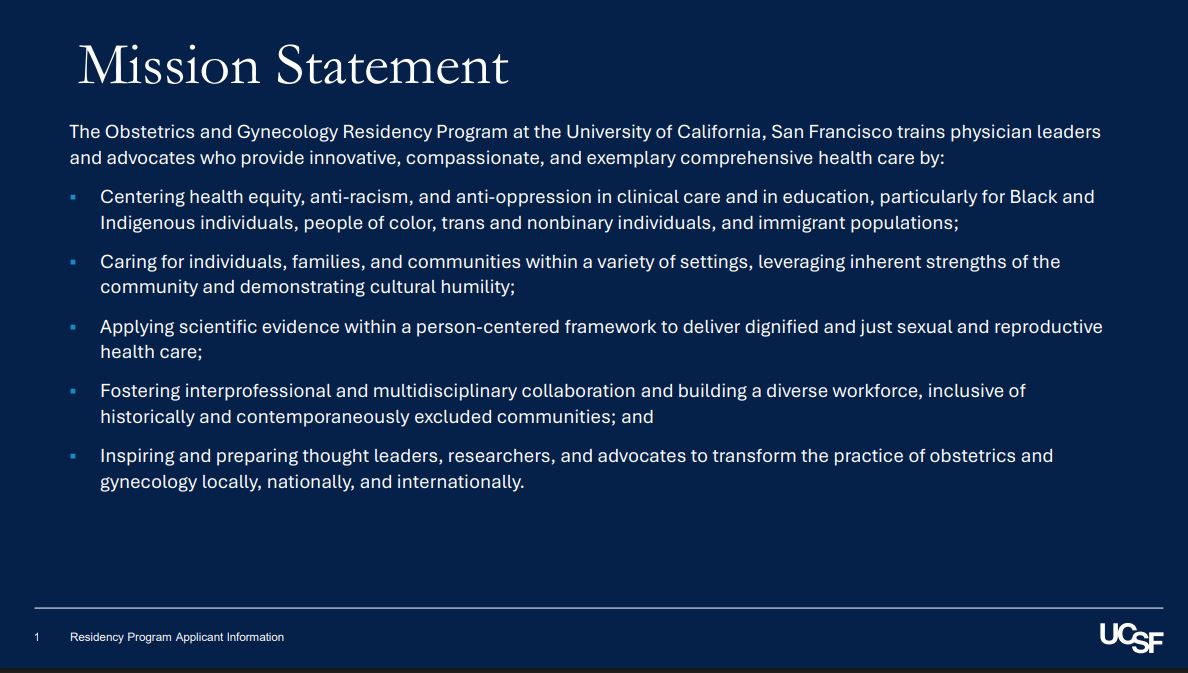
Figure 1. A screenshot of the UCSF OBGYN residency program’s mission statement.
Indeed, in the very first bullet point of the program’s mission statement, UCSF commits to “Centering health equity, anti-racism, and anti-oppression in clinical care and in education, particularly for Black and Indigenous individuals, people of color, trans and nonbinary individuals, and immigrant populations.”
In other words, the residency program will use radical, discriminatory racial politics as the prism through which it teaches crucial medical care.
How disturbing this is doesn’t need to be pointed out. It is absolutely imperative that mothers and babies get the best care possible, regardless of race; their physicians should not be viewing them as members of a racial group, but as individual patients.
But that’s not all.
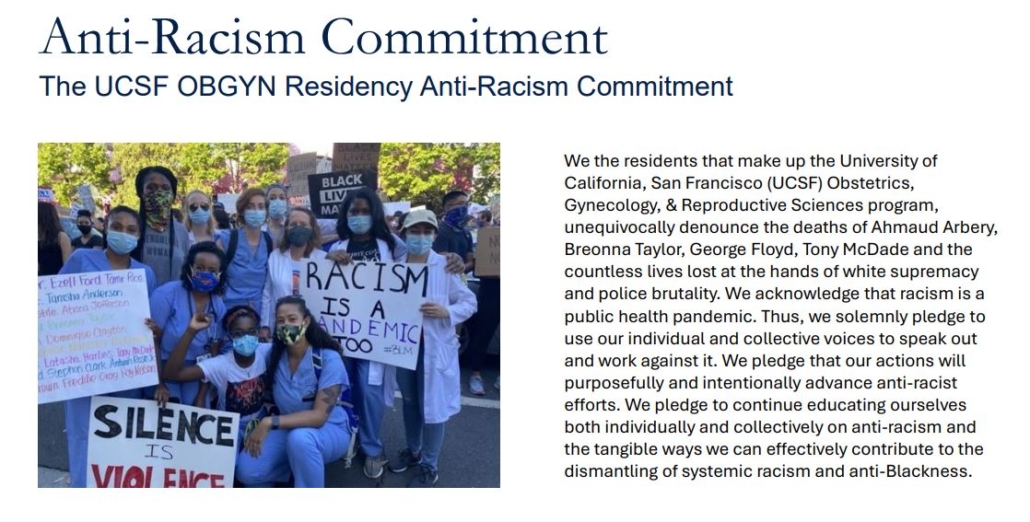
The handbook also includes the school’s “Anti-Racism Commitment.”
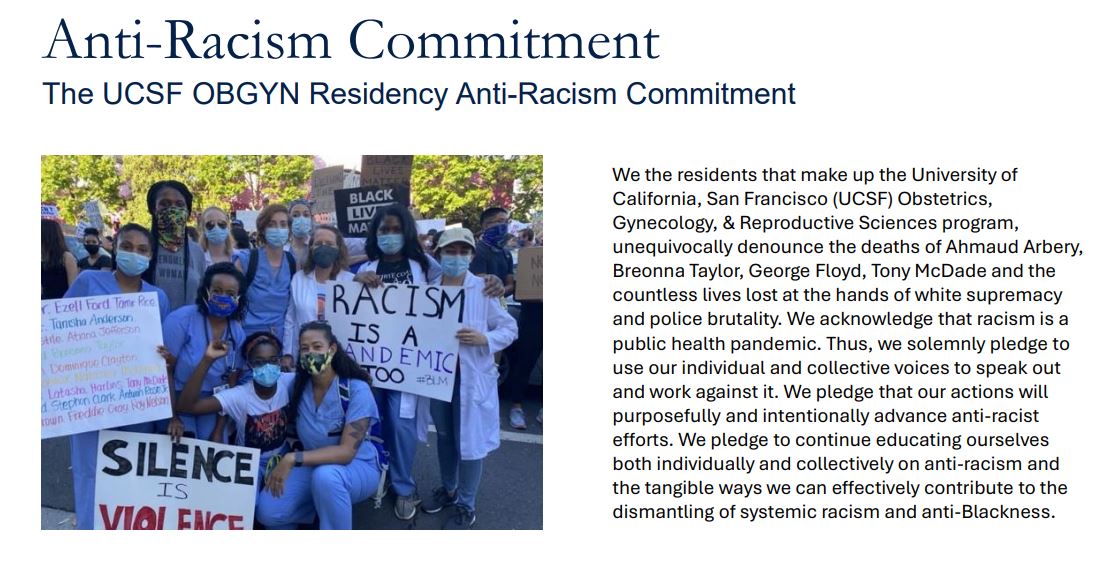
Figure 2. A Screenshot of the UCSF OBGYN program’s “Anti-Racism Commitment.”
“We pledge that our actions will purposefully and intentionally advance anti-racist efforts,” the commitment reads. “We pledge to continue educating ourselves both individually and collectively on anti-racism and the tangible ways we can effectively contribute to the dismantling of systemic racism and anti-Blackness.”
It’s essential to point out what “anti-racist efforts” actually involve. Though it’s not clear what UCSF intends, the phrase is commonly invoked by proponents of racial discrimination.
In fact, the most prolific advocate of anti-racism, Ibram X. Kendi, describes the ideology as follows: “The only remedy to past discrimination is present discrimination. The only remedy to present discrimination is future discrimination.”
How, exactly, will racial discrimination play out in the OBGYN context?
It’s hard to imagine something more ghoulish than physicians trained to prioritize the health of certain racial groups, especially when these physicians are responsible for the health of our most vulnerable.
Beyond the handbook, in December 2025, UCSF’s OBGYN department hosted a grand rounds session titled “Letting Die: Black Maternal and Infant Deaths after Students for Fair Admissions v. Harvard” and hosted by Dr. Khiara Bridges, a professor at the University of California, Berkeley School of Law.
The session focused on ways in which providers could practice “racially concordant” maternal care in the wake of the Students for Fair Admissions v. Harvard Supreme Court decision that struck down race-conscious admissions.
Racial concordance refers to the dynamic in which patients are treated by healthcare professionals of the same race. The notion that this dynamic improves health outcomes is unsupported by the weight of the evidence, as Do No Harm has shown.
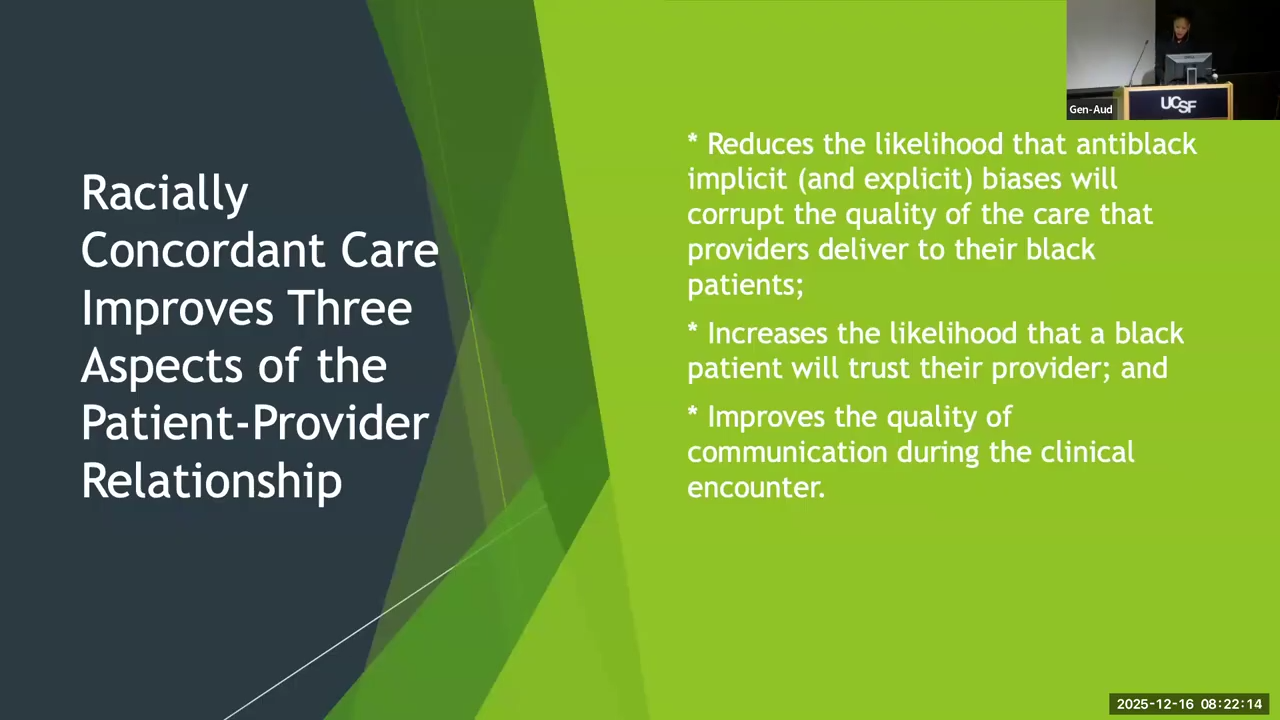
Figure 3. A screenshot of a presentation on racially concordant maternal care hosted by the UCSF OBGYN department.
To support her claim that racially concordant maternal care improves health outcomes, Bridges invoked a long-debunked study claiming that the survival rate of black infants improves when treated by black physicians. However, the researchers behind the study failed to control for the effect of very low birth weight on infant mortality.
When researchers at the Manhattan Institute attempted to replicate the study with the same data, while applying a control for very low birth weight, they found the racial concordance effect disappeared.
Additionally, the researchers
intentionally buried a key finding (that white babies died less frequently with white doctors) because it “undermine[d] the narrative” of the study, according to lead author Brad Greenwood.
So not only is the UCSF OBGYN program hopelessly infatuated with DEI, but it is promoting bad science and debunked medical concepts to justify this radical ideology.
Where to begin with reforming this program?
It’s clear that the UCSF needs to have a long, hard look at what kind of institution it wants to be: one that promotes healing and clinical excellence, or one that is merely a vehicle for an insidious and harmful brand of identity politics.