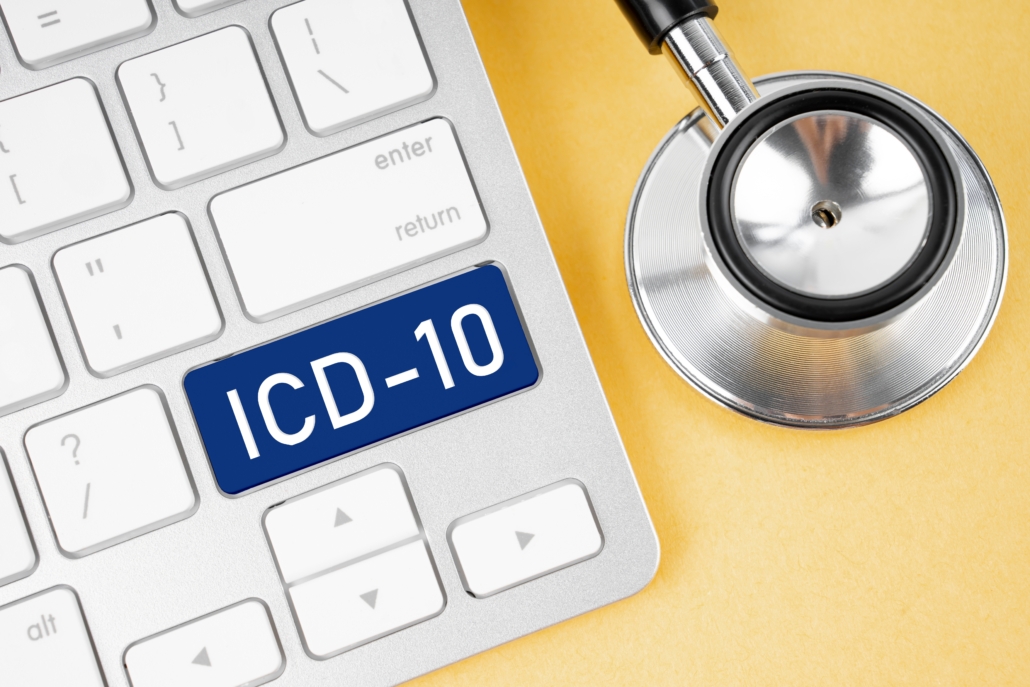
Detransitioners and their advocates have just received good news from the Centers for Disease Control and Prevention (CDC). Beginning October 1, updates to the diagnosis codes used by physicians, insurance companies, and researchers will help ensure that those who desist from their gender dysphoria are seen and counted.
ICD-10 codes allow doctors to categorize patients’ diagnoses for the purposes of medical recordkeeping, billing, and health data collection. Yet, as Do No Harm senior fellow Aida Cerundolo, MD, wrote for the Hill earlier today, there have been until now “no diagnosis codes for patients who resolve their discomfort with their biological gender” or who “want to reverse an attempted sex change.”
One consequence of this absence has been a lamentable official blindness to the very existence of detransitioners. As Dr. Cerundolo wryly notes, a medical system that has a code for “sucked into jet engine” has no excuse for ignoring the clinical reality of desistance or turning a blind eye to detransitioners.
This oversight will henceforth be corrected. Among the ICD-10-CM code updates is F64.A, “Gender Identity Disorder, in remission,” otherwise termed “Gender dysphoria, in remission (desistance).” This code will be applicable to those patients who no longer meet the diagnostic criteria for gender dysphoria — that is, those for whom a marked incongruence no longer exists between their “experienced/expressed gender” and their “assigned gender.”
Other new codes will do good, as well. The trio “Personal history of social gender transition” (Z87.8901), “Personal history of medical gender transition” (Z87.8902), and “Personal history of surgical gender transition” (Z87.8903) will be added for further specificity under the already existing header “Personal History of Sex Reassignment.” This will allow for more accurate recordkeeping and thus improve real-world data collection on the status of patients’ “gender transitions.” (Within this section, two additional codes will also be available to providers: “Personal history of intersex surgery” (Z87.8904) and “Personal history of unspecified gender transition” (Z87.8909).)
Finally, the new code “Personal history of gender detransition” (Z87.893) will be available to describe those who revert back to living in conformity with their sex after having previously “transitioned.”
These ICD-10-CM updates represent a major win for those who oppose pediatric transgender ideology. But they are a victory, too, for those who merely want to see medicine practiced compassionately and with a basis in science.
Thanks to the new diagnosis codes, physicians will be able to more accurately document an individual’s clinical state to support the appropriate delivery of care. The clinical data they provide will have a similar effect, helping to inform future practice and guidelines.
Public-health officials will benefit, too. The new codes will allow researchers to collect valuable real-world health information that has previously been hidden and understand public-health needs in an evolving (and highly politicized) area of medicine.
Finally, the CDC’s move will give visibility to those facing these clinical conditions. As Dr. Cerundolo notes in her aforementioned article, “Well over 14,000 children have received sex-change treatments in recent years. As they get older, many will realize they have made a mistake and understandably want to go back.”
“[T]hese patients deserve a medical system that recognizes them,” Cerundolo continues, “because recognition is the first step to ensuring they get the right care.”
Exactly so. Do No Harm stands with detransitioners and applauds the CDC for taking this significant step.