Earlier this year, Do No Harm released a report demonstrating the ease with which minors may be able to purchase sex-rejecting pharmacological agents on the internet.
While some of the websites we mentioned appear to have since shut down, our more recent trips across the web indicate that gender-dysphoric children can still access inappropriate advice and supplies.
Take, for example, the website diyhrt.wiki. (The acronym stands for “do it yourself hormone-replacement therapy.) Visitors to the site need only click a button attesting “I am 18 or older” to gain access to the main page.
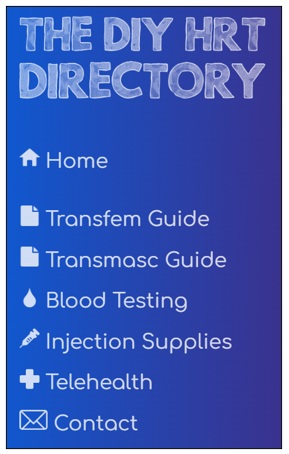
From there, anyone who wishes may view such subpages as “Transmasc Guide,” “Transfem Guide,” and “Injection Supplies.”
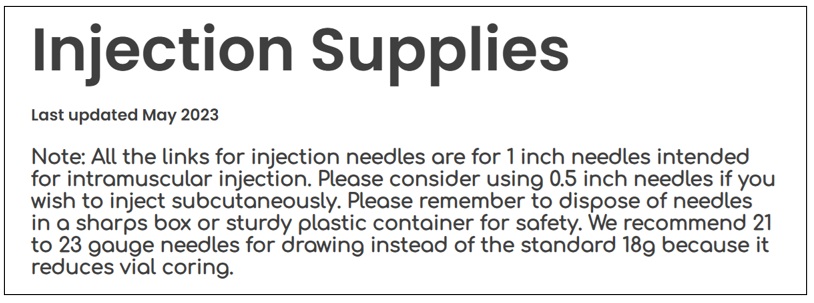
Lest anyone be confused, the last of those pages opens with a note: “All the links for injection needles are for 1 inch needles intended for intramuscular injection. Please consider using 0.5 inch needles if you wish to inject subcutaneously.”
And what will the self-professed “adults” in question be putting into their bodies? The homepage makes it clear: “This website intends to teach transgender people how to safely perform DIY Hormone Replacement Therapy.”

Websites of this kind are among those to which we drew attention in our March report, “The Lack of Barriers to Minors Ordering Cross-Sex Hormones Online.”
Included in our findings were a number of resources directing users to online pharmacies, distribution networks for “homebrew” hormones, and guides on self-administering cross-sex hormones once one has secured them.
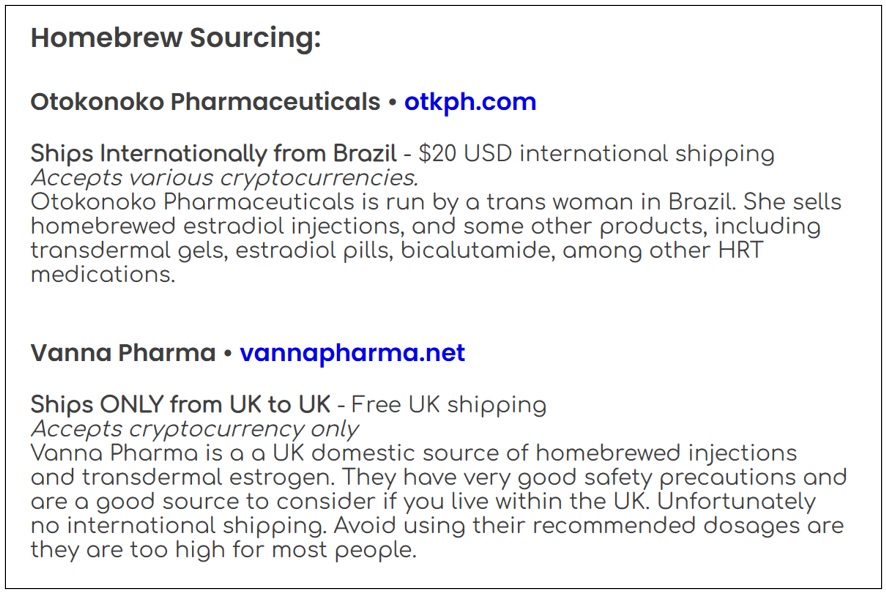
Diyhrt.wiki is exactly this sort of project. In addition to providing sources for “pharmaceutical grade” hormones, the site links to “Homebrew Sourcing” involving the international shipping of, e.g., estradiol injections and transdermal gels.
(Note: Vanna Pharma appears at least temporarily to have closed. Otokonoko Pharmaceuticals’ URL has changed, but the site is easily searchable and relies on an effortlessly bypassed age-verification self-assessment.)
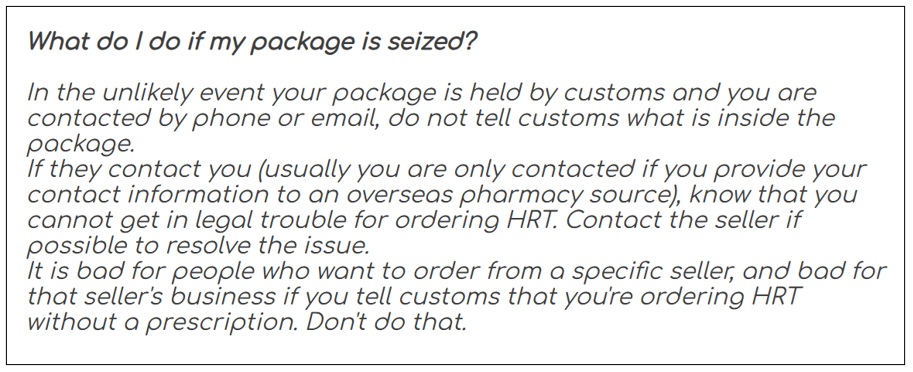
The site also offers advice (e.g., “Is this illegal?” and “What do I do if my package is seized?”) and tells “transfem” and “transmasc” site visitors what levels of estradiol and testosterone to aim for.
Perhaps most disturbingly, it advises secrecy among its users, some of whom could be underage given the absence of meaningful gatekeeping.
“Share the site with those who need it, but not to transphobes: use common sense!,” the homepage warns.

If your package is seized, “do not tell customs what is inside the package.”
Such winking and nodding appears to be a concession to the fact that Americans of any age shouldn’t be buying prescription drugs online without a valid doctor’s order. (Additionally, more than half of states have enacted laws specifically limiting minors’ access to “gender-affirming care.”) Yet the behavior being promoted is not only legally questionable but dangerous on its face.
Because vendors of “homebrew” hormones exist to allow customers (including minors) to bypass legal restrictions on sex-denying interventions, they necessarily sidestep oversight by the Food and Drug Administration (FDA), thus exposing children to unknown risks.
This is unsafe, offers no benefits, and must be stopped.
The FDA should continue investigating online pharmacies selling unprescribed hormones, including the “homebrew” variety.
Moreover, individual states should investigate and prosecute unlawful online sellers to the extent permitted by law. Indeed, new legislation may be necessary if vendors continue circumventing state restrictions on cross-sex hormones for minors.
Finally, U.S. Customs and Border Protection should exercise its legal authority to inspect inbound international cargo as circumstances warrant. “A trans woman in Brazil” should not be providing American children with “medicine” cooked up on “her” kitchen stove.
What we are calling for is common sense. Children mustn’t have unprescribed access to pharmacological agents, and websites that facilitate that access must be shut down.
That solution may not be politically easy, but we should aim for it nonetheless.