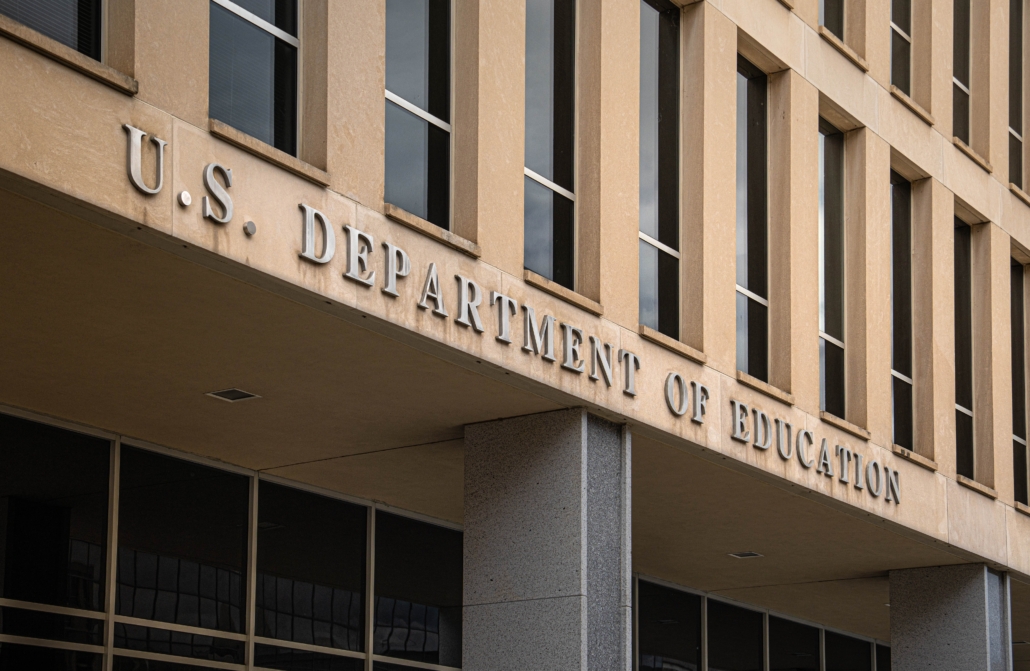
Two months ago, negotiators on the Department of Education’s Accreditation, Innovation and Modernization (AIM) committee reached consensus on a much-needed overhaul of the nation’s higher-ed accreditation system. Reformers have reason to hope that long-awaited changes are on the policy horizon.
A Department of Education press release reveals the breadth of the proposed regulatory alterations. In addition to “ensuring that students can transfer credits that they have previously earned at other colleges,” AIM has agreed to
- “reduc[e] barriers for emerging accreditors,” a move “that will bring increased competition”;
- “simplif[y] the recognition process” by which institutions “change between existing accreditors”;
- “en[d] collusion between program accreditors and related trade associations” in order to combat “credential inflation and unnecessary costs”;
- “eliminat[e] [accreditation] standards that lead to unlawful discrimination” on the part of universities;
- “protec[t] the integrity of academic research”; and
- “prioritize[e] intellectual diversity amongst faculty in order to advance academic freedom, intellectual inquiry, and student learning.”
These are laudable goals, long pursued by opponents of the “Diversity, Equity, and Inclusion” (DEI) takeover of undergraduate and professional programs, including medical schools. As Education Under Secretary Nicholas Kent remarked about AIM’s work,
The changes agreed to today will make it easier for new accreditors to gain federal recognition, introducing competition and choice into a stagnant system. It will make it easier for institutions to leave dysfunctional relationships with legacy accreditors that engage in ideological coercion or interfere in decisions properly reserved for state governments, boards of trustees or institutional leadership.
Do No Harm concurs. We note, too, that executive-branch pushback against DEI is already contributing to an environment in which accreditors abandon long-held “woke” positions.
For example, earlier this year, the Liaison Committee on Medical Education (LCME), the sole accrediting body for allopathic medical schools, quietly updated its 2027–2028 standards, removing the requirement that medical schools inject DEI-oriented content into their curricula.
That move was welcome, but so would be a regulatory landscape in which the LCME can’t force medical schools to indoctrinate students into a discriminatory ideology — not just one in which it chooses not to.
And while introducing a new programmatic accreditor to compete with the LCME would obviously be a major and complicated undertaking, it is reasonable for the federal government to pry open that door.
In a call with Do No Harm members and staff earlier this week, Under Secretary Kent suggested that, under the proposed rules, existing accreditors might move into the professional-program space, resulting in competition between accrediting bodies.
This, too, is good news. Rescuing medical schools from ideologically driven legacy groups may one day be the only reasonable choice left to reformers.
In the coming months, the Department of Education will receive and review public feedback on AIM’s work. If the department issues a final accreditation rule by Nov. 1, the changes will go into effect on July 1 of next year.
Do No Harm will certainly be weighing in. And we will be watching the process with eager anticipation.