A comically woke activist foundation counts among its “partners” a public health-sciences university with more than 2,000 enrollees. What are our future doctors, nurses, and public-health officials learning these days?
If the ARIAH Foundation’s website is any guide, the answer to that question is not encouraging. Standing for the Advancement of Reproductive Innovation through Artistry and Healing, ARIAH “is dedicated to improving the mental and physical health of Black, Indigenous, and People of Color (BIPOC), particularly birthing people” — not women — “through advocacy, education, and healing practices.”
The Foundation’s “goal is to mitigate the lasting impact of systemic racism and oppression on the sexual, reproductive health and birth outcomes within underserved communities.”
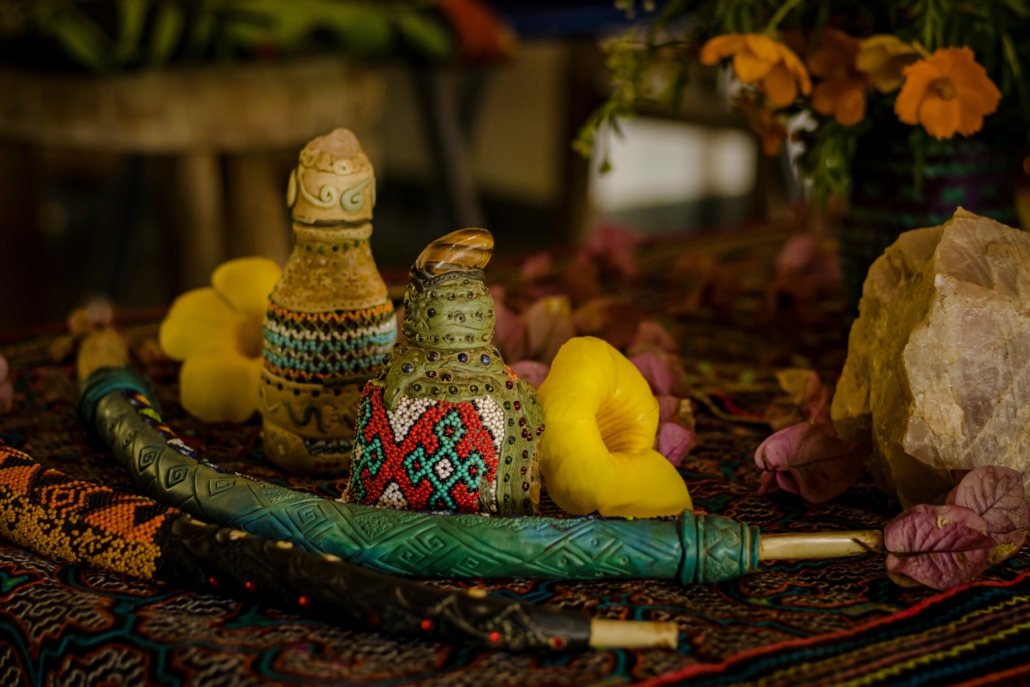
To these ideological clichés, ARIAH adds a dash of outright quackery. Among the projects produced by the Foundation’s “global partnership[s]” is an Indonesia-based “maternal health initiative” focused in part on “indigenous midwifery.”
Clicking “Learn More” beneath that program description takes one to the website of the Bumi Sehat Foundation International, an American 501(c)(3) nonprofit that works with ARIAH on the Indonesia initiative.
Further exploration of that site reveals that “[b]abies are sung earthside by midwives and families,” a practice that presumably illustrates what ARIAH means when it promises “culturally rooted approaches to maternal wellness.”
There is nothing inherently wrong with delivering babies in a way that honors the mother’s beliefs. The problem comes when “indigenous” notions crowd out medical science–based best practices, a concern one can’t help having upon closer examination of both the Bumi Sehat and ARIAH websites.
Bumi Sehat writes, for example, that “[w]omen deserve kind and gentle care.” We agree and expect as much from obstetricians of all backgrounds.
However, the organization also states, on the same page, that “[g]entle birth by nature has fewer ‘man made complications’[;] thus women and their babies are healthier and leave our clinic with their hearts intact” (emphasis added).
This is, to say the least, a perspective that neglects the advances of clinical medicine. Furthermore, one needn’t stretch one’s imagination excessively to envision a scenario in which concern for a patient’s metaphysical “heart” supplants concern for her literal one.
Back on the ARIAH website, one recently plugged event cohosted by the Foundation, the Mother Wit 2026 Series, promises “ancient wisdom” in the form of “holistic healing,” “ancient practices,” and “indigenous technology.”
Our concerns are the same here. If those elements accompany but remain secondary to fetal-monitoring devices and IV infusion pumps, then perhaps they will do some emotional good. If they take the place of scientific medicine, then they very well may do great harm.
We might dismiss all of this as a lamentable curiosity were it not for ARIAH’s advertised partnership with SUNY Downstate Health Sciences University, an institution ostensibly dedicated to “provid[ing] outstanding education [to future] physicians, scientists, nurses and other healthcare professionals” and to “advanc[ing] knowledge through cutting edge research and translat[ing] it into practice.”
Those pledges sit uneasily alongside, say, SUNY Downstate’s hosting of one of the previous year’s Mother Wit events (“The Future of Birthing Is Now”) and its boast that the ARIAH Foundation is one of its “community partners.”
The business of a health-sciences university is first and foremost to teach the health sciences, not “the healing traditions of Indigenous peoples,” however historically or spiritually relevant they may be.
If the ARIAH Foundation and its ilk are going to exist, SUNY Downstate should have nothing to do with them.