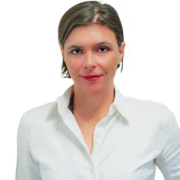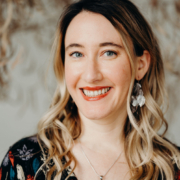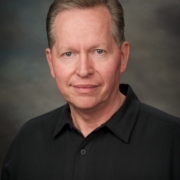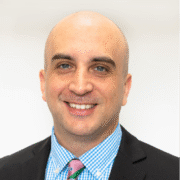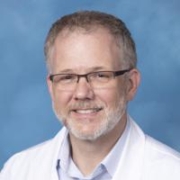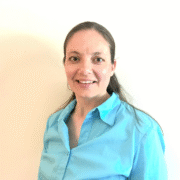

Lindsay addressed members of the Anoka-Hennepin School Board at its October meeting as a concerned parent, just a few weeks before the school board election.

She had heard far too many stories of schools in the district pushing unwanted ideologies onto students at all levels, from elementary to high school. All of them traced back to DEI initiatives that were overstepping boundaries and breaking trust with parents.

“We do not need teachers asking students about their pronouns. And worse, we don’t need teachers asking students if they have a preferred pronoun that they want kept secret from their parents. That is happening in the district.”

As a former teacher, Lindsay had noticed some efforts to provide information for older students, including the now-infamous Gender Unicorn poster.

At the time, these initiatives were largely extracurricular. Meanwhile, staff and faculty were indoctrinated with a sense of virtue around these efforts.

“People don’t realize how much of an echo chamber education really is. You sit in these trainings, and you’re inundated with these messages, and they are really selling these agendas in a way that makes you feel like you’re supporting these students.”

But when the pandemic hit and Lindsay was home with her kids, she was shocked to learn how far these DEI initiatives had gone. 

Through talking with other parents, she learned that students were being asked to provide two pronouns on the first day of school—one preferred, and one to use with parents. There was a teacher in the district who privately admitted that local students were being socially transitioned without their parents’ knowledge.

“We are crossing the line way past doing things to make kids feel safe and seen, and into the territory of ‘grooming.’ When you are purposely keeping secrets between educators and students, away from the parents, that is a very dangerous territory.”

Lindsay also used to teach in downtown St. Paul at the Multicultural Indigenous Academy, which focused heavily on honoring a variety of cultures. She keeps in touch with several students who have since graduated and started families of their own.

The alumni, regardless of race and ethnicity, unanimously object to teaching their children that their white classmates are oppressors and their black classmates are victims. Nearly all had been personally affected by a DEI-driven policy that hurt more than it helped. 

Lindsay knew she had to speak up. She connected with other local mothers on a text chain to bounce ideas off each other on what could be done. When Lindsay addressed the school board, the Anoka-Hennepin Parents Alliance met beforehand to support her and shared the video afterward with as many people in the community as they could.

Not only did they flip two seats in the school board election as a result—the video footage of Lindsay’s statement to the school board was posted on the Daily Mail and went viral.

Lindsay continues to host her podcast to provide a storytelling platform to those affected by these issues. She has also graciously offered to work with Do No Harm as a resource to parents who are looking to take action in their own school districts.

“When you find people who are like-minded, start collaborating together. Bounce ideas off each other. Create a text thread or a Facebook group. Start organizing. Be there for each other. People feel more comfortable speaking up when they know they have support.”

Today’s students are tomorrow’s doctors, nurses, teachers, parents, and more. It’s on us to make sure they get the best education to succeed.
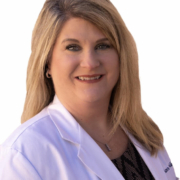
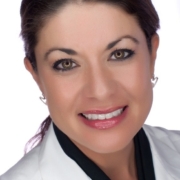
Dr. Amber Colville is always on the side of her patients.

Whether it’s advocating for affordable drug prices or delivering quality medical care in her private practice in Mississippi, Amber is passionate about making sure people live long and healthy lives.

She is sharp, practical, and she cares deeply about her patients. What Amber does not care for, however, is wasting her time on performative wokeness.

“I’ve been an attending for 20 years,” she says. “I graduated medical school in 2000. It wasn’t that long ago, but it was a different world than it is today.”

Over the years, Amber began to notice the medical field was increasingly prioritizing data collection over patient care. It seemed like everyone was more interested in what patients look like than how they feel.

In 2021, the Biden administration proved her instincts correct.

The Centers for Medicare and Medicaid Services quietly implemented a rule giving doctors a financial incentive to make an “anti-racism” plan.

In exchange for additional Medicare payments, offices would have to perform a clinic-wide review of value statements, tools, and practice guidelines to ensure they are “aligned with a commitment to anti-racism.”

Further, the plan must include target goals and milestones, and outline ways in which the office will address racism, including trainings and other methods to detect “implicit bias” and address historical inequities in patient care.

Dangling enhanced reimbursements in front of doctors in exchange for enforcing anti-racism trainings and patient population quotas felt like a bribe.

With the help of Do No Harm, Amber joined a civil rights lawsuit against the Secretary of Health and Human Services and the Administrator of Centers for Medicare and Medicaid Services, arguing the rule violates the Medicare Access and CHIP Reauthorization Act.

“Racial discrimination has no place in medicine, and neither do quotas. I have no control over that. I have no idea what my patients look like until I’m in the room with them.”

Patients need to be treated as individuals, first and foremost. As Amber puts it, race might be a factor in diagnosing specific diseases, but prioritizing one patient population over another because the government will pay you more to do so is flat-out unethical.

“A check-the-box training and hours of additional paperwork are not going to fix the few bad actors in the medical field. That’s not going to change their mind. It’s just going to burn the good doctors out—and our staff too.”

Now, the Trump administration will no longer enforce the rule, and in fact will move to repeal it altogether!

Dr. Colville authored an op-ed in the Washington Examiner recounting her story and crediting the Trump administration for taking action.

“This is a victory for my patients, my medical practice, and the basic American principle of equality. I hope Trump keeps fighting woke racism wherever it exists. It doesn’t belong in medicine or anywhere else.”

We are grateful for her courage, and her dedication to patient-centered care. 

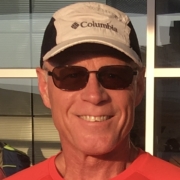
Since Mark joined us a little more than a year ago, he’s filed more than 110 complaints with the Department of Education’s Office for Civil Rights (OCR) against U.S. medical schools for race-based and sex-based discrimination.

Of those, 38 have been opened for investigation so far, and most have been resolved in our favor.

And that’s just since he joined us.

In total, he’s filed federal civil rights complaints over the last five years for more than 2,000 violations of Title VI (race-based discrimination) and Title IX (sex-based discrimination) at colleges and universities.

“There is no ‘good’ form of discrimination, regardless of your intentions. It’s all bad and illegal when it violates the law.”

Almost every U.S. medical school has at least one scholarship, fellowship, clerkship, award, special preference, or academic program that violates federal civil rights laws. Most of them involve favoritism toward students typically considered to be Underrepresented in Medicine (URiM).

Mark recently filed a complaint against two URiM programs at the University of Nebraska Medical Center, a scholarship and a clerkship. In response, the school paused both programs and agreed that if they resume in the future, they will be open to all applicants, regardless of race.

Perhaps the most impressive part of Mark’s impact is that he’s not a lawyer and had no prior background in civil rights. When he filed his first complaint, he was just an economics professor who saw blatant sex discrimination happening at a nearby school and had the courage to legally challenge Michigan State University’s women-only lounge.

The more he paid attention, the more discrimination he witnessed. When the Daily Caller wrote a feature story on his work, Mark explained:

“My goal is to force colleges and universities to protect the federally guaranteed civil rights of all students, staff, and faculty on their campuses … and end the inexcusable double standard in higher education for the selective enforcement of Title VI and Title IX.”

“Simply put, Title VI and Title IX are for all.”

Mark is an inspiring example of how we all have the potential within us to right a wrong in the world when we see one. Thanks to him, hundreds of educational and professional opportunities are now accessible to everyone, equally.

Mark didn’t have to speak up. But he did. And he ended up making a big difference.

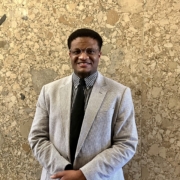
Raheem couldn’t have known that his background in economics and his propensity for research would lead him to become a fearless advocate for the safety of children. But today, he’s exactly that – a researcher who demands data-driven information about children and irreversible medical procedures. 

In 2018, Raheem began noticing that medical news reports were ablaze with mentions of youth “gender affirming care,” “life-saving care,” and “gender ideology.” Williams’ propensity for research told him to dig deeper past the buzzwords. He didn’t like the narrative that he saw. 

“For roughly four years, I was a silent observer, just reading and watching the narrative unfold. But I noticed that the language used by medical professionals and the media was trying to equate transgender youth to gay rights—but fundamentally, it’s not. Challenging the notion of putting kids through medical procedures that are lifelong and completely elective isn’t about gay rights. It’s about one question: Can kids consent?”

Raheem felt compelled by the basic issue of human decency to speak up. “When you see bad things happening and no one speaks up, it gets worse,” he says. 

He finds it particularly disturbing that what medical practitioners and scientists are saying to each other behind closed doors is miles apart from what they’re telling the public. Raheem’s paper, The Trans Youth Phenomenon: Critiques and Hard Questions, forces readers to confront the medical evidence that there’s no biological basis for transgender ideology, along with the ethical dilemmas regarding child consent and the use of puberty suppressors. 

“It’s a fundamental question: What exactly is a minor? Why do we have legal protections for minors? That’s what we need to think about right now. I live in a country where you must be 21 to buy cigarettes but I’m being told that even a 12-year-old can understand the ramifications of a sex change.”

Raheem is doing everything in his power to lift the voices of those impacted by this issue – the children and parents alike. In addition to research, Raheem has been testifying in states nationwide to ensure lawmakers have access to factual data and to call out the misconduct of activist clinicians who scare families into making irreversible, life-altering decisions. 

Raheem is helping Do No Harm bring data and stories together – to break through to new groups of people across all political affiliations, creeds, and races and rally around the powerful conviction that “gender-affirming care” on minors is not a social movement – it’s medical malpractice. 

Nancy’s family valued education as the gateway to a strong future, surrounding her with books, encyclopedias, and anything they could find to help her learn about the world around her. 

This passion for worldly knowledge was driven by her grandfather, who left Eastern Europe for the United States, and in doing so escaped the evils of communism that had affected his other relatives. The stories he told never left Nancy—neither did a memory of her brother’s health scare, and the medical professionals who saved him. 

Nancy attended Duke University and began volunteering at the university hospital, taking a few medical classes along the way. Those classes sparked a passion, and after graduating from Duke she attended the prestigious George Washington University School of Medicine.

Nancy’s classes were challenging and her mentors were exceptional. Her program director used the Socratic method, not telling Nancy what to think, but teaching her how to think.

Her general surgical residency at UNC Chapel Hill was equally rigorous. It gave Nancy a chance to put her strong academic foundation to work in a training environment of high expectations. 

Nancy believes that every medical student deserves this caliber of education. She’s appalled by what they are getting instead. 

For years, Nancy has witnessed the medical field, including her alma mater, replace the pursuit of knowledge with forced participation in anti-racism declarations and implicit bias trainings.

“When I was in medical school and residency, we didn’t talk about each other’s politics. We tried to be objective and were focused on learning the best methods of care for our patients, not who our colleagues voted for.”

Nancy started seeing her alumni newsletters from UNC feature stories about surgeons kneeling in social justice protests, holding up Black Lives Matter signs, and supporting “gender affirming care.” 

When she noticed the UNC pediatrics website had the 1619 curriculum and the “Genderbread Person” listed as resources for pediatrics, she alerted the media. UNC ended up removing the references after significant backlash. 

Enough was enough. Nancy has been pushing back ever since against members of the academic establishment who use their authority to bully students into ideological submission. 

“Even though I’m not practicing right now, I take information from practicing doctors who feel they can’t speak out and I get it out there. I know several doctors who are too afraid to speak out—people who are knowledgeable and greatly respected. The fact that medicine has become like this, where reasonable people cannot say reasonable things, is so scary to me. It reminds me of the stories my grandfather used to tell.” 

“When I read about Do No Harm in the Wall Street Journal, I said, ‘Thank God someone is doing this for medicine.’ People need a support system to speak out. I greatly respect Dr. Goldfarb’s work and everyone associated with it.”

Dr. Andersen, the feeling is mutual. 

Thank you for all you do. 

Dr. Basinski is deeply worried about her alma mater, the Indiana University School of Medicine, which is one of the most radicalized medical schools in the nation.

“Every day, I talk with medical students and faculty at the IU School of Medicine. Their backgrounds and beliefs differ, but they all share the same concern. They see firsthand that IUSM is undermining medical education with divisive ideology. It’s creating a culture of fear and self-censorship that harms them and, ultimately, patients across Indiana and beyond.”

Unfortunately, this isn’t an isolated case. The divisive ideology of “diversity, equity, inclusion, and justice” (DEIJ) is infecting medical schools nationwide. 

As Cindy explains in a blog post for Do No Harm, the agenda goes far beyond fostering trust and understanding between different groups of people. It’s really a means for school administrators to push their personal politics onto students and staff, and silence the free exchange of ideas.

“Before even getting into medical school, [applicants] are asked how they have promoted – or plan to promote – DEIJ objectives.”

Once they get in, those ideas are reinforced in the classroom, often pushing medical science and ethics to the backburner. 

Would you risk losing your dream job to express an opposing viewpoint? This is the choice faced by medical students, who rely on faculty recommendations for jobs and residency programs. It’s safer to stay quiet.

The same goes for school faculty. Those who criticize DEIJ initiatives risk getting fired, punished, or missing out on tenure and other promotions. As Cindy writes, this culture of conformity will have lasting damage across the medical field:

“The most incredible advances in medical history happened because students and faculty pushed the bounds of knowledge and questioned received wisdom. If faculty and future physicians aren’t exposed to a wide variety of views, or even free to share their own perspectives, they won’t move medicine forward. Patients will suffer.”

Cindy is speaking out for the countless students and faculty who cannot speak for themselves. We are proud to share Cindy’s story here and we are grateful for her courage and candor. 

Clete Weigel bravely challenged his hospital earlier this year after they announced that they would implement implicit bias training “to reduce health disparities.”

Following their announcement, Clete submitted comments to hospital administration questioning the efficacy of implicit bias training and providing data that challenged the reasoning behind implementing the training in the first place. 

Rather than engage in a thoughtful conversation about his concerns, hospital administrators met with Clete, disciplined him, and mandated that he take not one but two implicit bias training courses. 

Bravely, Clete resigned his position rather than be forced to participate. He explains:

“Hospital leaders have chosen to make operational decisions based upon ideology. Logic and arguments do not matter; the ideology does. Everything becomes secondary when ideology rules. That includes evidence-based medicine, valuing employees, science, discernment, the exchange of ideas, and yes, common-sense.”

We are proud to share Clete’s full story here and want to thank him for his commitment to the profession and courage in speaking out and letting us share his story. We also fervently agree with his closing sentiments:

“Medicine will not be served by this ideology. Patients will be harmed by a world view that prefers narratives over science and identity groups over individuals. In the end, individual care will suffer as implicit bias training increases suspicion, discourse devolves, and patients are neglected.”

Stephanie is a Licensed Marriage and Family Therapist in the state of Oregon and associate producer of the award-winning documentary, “No Way Back: The Reality of Gender Affirming Care,” featuring young people who regret receiving so-called “gender-affirming care.” 

After working in a wide range of clinical settings with both children and adults, Stephanie noticed a surge in trans-identifying youth in the last decade.

In 2017, Stephanie attended a training on “gender-affirming care” and listened with an open mind. “I think many therapists have this, sort of, attitude that if I’m being told something by an expert in the field that seems counterintuitive or strange to me, it must be because they know something I don’t know,” she explains.

But as she worked with patients with gender identity issues, she noticed several comorbidities not being addressed. Many had histories of sexual trauma, autistic traits, or compulsive disorders

“Some were homosexual and hadn’t seemed to grapple with that, or hadn’t had sexual experiences or relationships yet,” she remembers. Others seemed to be using it as a form of teenage rebellion, or a tool of family conflict. The issues did not go away after switching sexes.

“It was clear the procedures they had pursued, maybe hadn’t resolved all of their problems as much as they thought that they would.”

Stephanie began to feel conflicted. As a therapist, she wanted to affirm the experiences and emotions of her patients. However, she was not convinced that permanent medical interventions were in the best long-term interests of her young, gender-questioning patients. It wasn’t until 2020, after moving into private practice, that Stephanie learned of detransitioners.

“They were not mentioned, as far as I can recall, in the training. And just the idea that anybody ever regretted this had never come up.”

Stephanie began learning as much as she could about detransitioner experiences, and shared what she learned on her blog and podcast, “You Must Be Some Kind of Therapist.” When she participated in the documentary, the personal attacks from trans activists began.

She faced threats against her license and was accused of conversion therapy. She was rightfully cleared of all charges with no disciplinary action, and addressed these experiences in her podcast episode with Helen Joyce, Debunking The Myth of Conversion Therapy. The ordeal has not stopped her from providing patients and parents with the best possible care, though she has stopped working with minors who identify as transgender.

Stephanie continues to give a platform for detransitioners to share their stories, and believes that helping detransitioners heal is essential to restoring integrity to the profession of psychotherapy. “Detransitioners have the most reason out of anybody to mistrust therapists because many of them have been permanently physically harmed,” she says. Many feel a sense of rage toward the doctors, therapists, and others who played roles in their decisions.

“I want to encourage people to trust their compassion and concern, and understand that we have a responsibility to advocate for the populations we serve if we feel they are not being understood or treated properly by our professional communities. Speak confidently and raise awareness.”

Well said. Thank you Stephanie for your courage, your conviction, your willingness to provide a platform for those struggling through detransition, and your commitment to doing no harm.

Over the course of his long and successful career, Tim watched identity politics infect the medical field like a virus.

When he learned about Do No Harm in the Wall Street Journal, he knew it was time for him to speak up against political ideology in medicine.

“If we aren’t successful in our efforts to root out and destroy the DEI virus in medicine, I think that will be the beginning of the end of the medical profession.”

As a child, Tim fell in love with science education (STEM) watching the space race between the U.S. and Russia. He was accepted into medical school in 1973, a time when merit drove admissions and curriculums focused on rigorous training in medical science.

He remembers how faculty members went above and beyond to provide guidance and support for every student, including women and students of color. The class formed a close community, with many living together, studying, and socializing. Discrimination never crossed their minds.

“In my entire career, I have never seen any patient denied top-quality care because of race, or sex, or orientation, or any other demographic. Never.”

In spite of this, as the years passed, Tim felt the attitudes emanating from the upper echelons of the medical profession drift further and further away from the realities of practicing in the field. Identity politics had completely infected the medical profession after he retired in 2010.

In 2019, California enacted a law that forced doctors to complete a training on implicit bias as part of the continuing education required to keep their medical licenses. Attorney General Bonta even demanded to see a list of providers who had not yet taken the training—a clear intimidation tactic for doctors like Tim, who had practiced in the state. 

Do No Harm has since filed a lawsuit against the Medical Board of California to overturn this radical, divisive, and discriminatory requirement.

The American Academy of Otolaryngology–Head and Neck Surgery, Tim’s area of specialty, became a silo of thought control. In 2019, he was suspended from the Academy’s online forum for criticizing a DEI initiative and suggesting that a colleague adopt a more measured response to rare instances of bigoted patient behavior. 

But Tim would not be censored. He used the downtime to write opinion columns for national news outlets such as the Washington Examiner (Is Your Doctor Woke Enough?).

Thank you Dr. Wheeler, for speaking out against identity politics in medicine, and doing your part to ensure that medical students and doctors get the best training possible, for the benefit of us all.

Patients are safer and healthier when doctors put medicine first, not politics.

Update October, 2025 – Ian’s role has changed to Director of the Center for Accountability in Medicine. Find out more of the Center’s work here.

Ian recently joined the Do No Harm team to serve as our Director of Research, bringing with him an extensive public policy research portfolio and stellar reputation. 

He didn’t start his career intending to focus on healthcare. Like many others, his interest and concern with the politicization of healthcare was ignited by public health authorities advising that 2020 COVID-era shutdowns and recommendations against large gatherings could be disregarded when such gatherings occurred under the pretense of racial justice.

Kingsbury’s journey into healthcare policy began in earnest when he was a Research Fellow at the Empire Center for Public Policy in Albany, NY. The organization triumphed in a highly publicized request to receive nursing home death records and tasked him with analyzing the data. The analysis revealed that the directive to transfer COVID-positive patients to nursing homes was associated with about 1,000 additional deaths in New York.

“The State Department of Health had previously said that the directive wasn’t harmful. Then they spun their message to say that they agreed with the conclusion that the directive wasn’t primarily responsible for COVID deaths in New York. Governor Cuomo called our analysis a ‘conspiracy.’

“Health ‘experts’ and medical journals meanwhile didn’t show any inclination to relitigate their COVID mistakes but were intensely interested in race and gender hysteria. I thought to myself, ‘Who watches the watchmen?’”

Several months ago Kingsbury partnered with Do No Harm to analyze peer-reviewed studies cited by advocates of racially discriminatory policies or the sexual transitioning of children. He was appalled by what he observed.

“It’s painfully clear that a great deal of contemporary medical literature is policy-based evidence-making. Advocates pass off their agendas as ‘science’ so they can claim that their worldview is enlightened. They torture data to manipulate results, oversell findings, and mischaracterize other research in plain sight.”

Ian has already kicked-off numerous research projects for Do No Harm to support our efforts to expose instances where ideology is driving “evidence” rather than fact-based science. 

We are excited to have you on board, Ian! 

Scott always knew he wanted to help others, but the patients he sees today aren’t exactly who he initially expected he would be treating. Growing up, he always thought he would enter veterinary medicine. 

That all changed in high school when he chose to become a physician with the goal of becoming a primary care doctor. After experiencing an obstetrics-gynecology program at Wake Forest University Medical School, his lifelong focus became OBGYN. 

Thanks to family and a few great professors along the way, Scott learned the value of compassion and hard work – and to never give up on your dreams. 

“I thought the world was a meritocracy where if you work hard and are qualified you can achieve anything.”

However, Scott has been increasingly concerned about the impact of so-called “diversity, equity and inclusion” policies on medical education and practice.

“You don’t fix disparity by admitting people to college and graduate school with lower credentials. We need to fix it at the beginning, to figure out why certain groups of people are not getting the education they need to qualify for these programs so that there won’t be a disadvantage in the first place. The way we’re doing it now, it’s damaging medicine from the top to the bottom.”

When Scott received a recent edition of the “The Grey Journal” – the research publication of the American Journal of Obstetrics and Gynecology – he noticed it heavily featured recommendations for the implementation of DEI mandates. 

He felt compelled to directly respond to the AJOG.

“There are so many recommendations in this document that are blatantly immoral and racist that I felt I must speak out.”

Scott sent in a letter to the editor that detailed his reasons for concern, including the lack of practicing medical professionals in the drafting of the recommendations, lower standards for select groups of students, potential repercussions when instructors give candid and necessary feedback to students, anti-racism education, Critical Race Theory, and race-based recruitment, stipend, and scholarship practices. These are all things Do No Harm has identified as harmful to the future of medicine and medical education.  

Scott says he was scared to write all of this as he was worried that he would be branded a racist, white supremacist, sexist, or something  else. But he felt that it was time for everyone to be heard and not be shut down by a few.

His letter concluded:

“I sincerely hope you view my statements not as hateful or angry but instead as concerned. I want equality. I want diversity. I want inclusivity. I want them all done fairly to everyone. I don’t want my children to be treated differently and have fewer opportunities because of their race or gender.”

Bravo, Dr. Bovelsky. 

To date, the AJOG has not responded to Scott’s letter. 

Scott recently found Do No Harm by receiving our email newsletters and did his own research to verify much of what we were sharing. 

“I was so glad to see that Do No Harm is actually trying to do something and is doing it right. We’re all scared to do something because we’re scared to lose our jobs and our reputation. But we have to stop – we need to find the solution together – you should be able to express your opinions and work through things and work together to make the world a better place.


“It feels good to have put pen to paper. Sometimes we imagine the feedback will be worse than it is. But if you are reasonable and respectful as you stand up for your beliefs, you’ll be on solid ground. The more of us that speak up, the easier it will be.”

We understand exactly what Scott is saying and commend him for speaking up, pushing back, and for fighting for all of us who seek to Do No Harm.  If you would like to join him, please let us know here.

Like so many of you, Beth was forced to confront the difficult reality that our medical institutions have been infiltrated with woke ideology by seeing it face to face in her workplace. 

But first, she got to see the best of the medical profession up close and personal growing up. Her special needs brother had many critical medical needs that resulted in countless hospital stays and trips to specialists and clinics. 

This experience taught Beth the importance of patient care from the perspective of the families who love and support them.

“Families need to know what’s going on and should be treated with empathy. We need to ensure they are heard and not considered a customer or a number that needs to be processed through a system. We must understand what their needs are too, as they are the primary caregiver to our patients.”

After attending nursing school, Beth spent time working full-time  at Georgetown University Hospital and Children’s National Medical Center in Washington, D.C.

Once she started her family, Beth transitioned to a part-time role in the gastrointestinal unit at Children’s. Beth was well-respected and had earned seniority of schedule. Beth truly loved her job and they loved her back. 

About five years ago, Beth noticed that her team started being assigned regular training modules on LGBTQ+ issues, with one video that lasted two hours, far more than they had experienced in the past. This specific video focused on gender ideology and transition for children, utilizing a gender unicorn as an example of how to assess young children.

This escalated into regular ongoing training that was not focused on medical procedures and new treatments, but instead on how to use correct pronouns and showcase their inclusivity (including a lengthy session on microaggressions). 

Like us, this greatly concerned Beth. She was especially concerned with the idea that she would be forced to treat children undergoing gender transitions and provide them with treatments that she disagreed with. 

She  went to her supervisor with her concerns and was told that they greatly appreciated her work in the hospital and said that she shouldn’t have to worry about it. 

In 2021, Beth was assigned her first young patient who identified as transgender. She returned to her supervisor and shared that if she was required to administer treatments that would be part of the transition, she would be morally opposed and unable to do so.

“When I approached my supervisor about asking for an exemption from participating in gender-affirming care, I made it clear that I would treat the patient with absolute care and respect as I administered any other necessary care that the patient needed. I just couldn’t do anything that promoted gender transition.”

Her supervisor did not have the authority to grant an exemption, and together they brought her request to the nursing director of acute care who brought it to the hospital administration, including a consultation with the American Nurses Association.  Administrators informed her that she would not receive an exemption from participation, she had to use patients’ preferred pronouns and names, but due to her standing at the hospital and their eagerness to keep her on the team, they encouraged her to stay, hoping that she would not encounter that situation again.

However, over the next 12 months, they experienced a rapid influx of teenage girls identifying as transgender. These children overwhelmingly had coexisting mental issues with trauma, sexual abuse, etc. 

“Watching how every member of the medical teams 100% affirmed the male identity of the troubled teen girls admitted to my unit was sad and shocking. It would be obvious to anyone that these girls had much more going on that led them to choose this identity.”

At one point, one to two patients at all times in the 12-bed unit identified as transitioning. It quickly became a situation that Beth could not avoid. 

The hospital did not fire Beth – in fact, they expressed numerous times how much they wanted her to remain. But due to her deep concerns with the treatments being performed on children and with how the medical staff encouraged patients to pursue gender transition without any questioning, Beth had to make a difficult choice.

To avoid putting her supervisor in the position to fire her, she resigned. 

The profession lost a bright, passionate, caring professional in the name of pushing procedures and treatments that lack the proper science to back up their existence.

And Beth isn’t alone. So many others are stuck between their professional ethics to do no harm and the fear that they will be fired, shunned, or punished for expressing those concerns.

“It was sad for me to consider how many very skilled and caring healthcare professionals had to go along with the gender ideology just to continue practicing at Children’s. To those experiencing this, you are not alone. It may seem like everyone you work with is following an ideology that is destructive. Remember that there are many people outside of your institution that agree with you.”

Thank you Beth for your passion, your bravery, your willingness to share your story, and your commitment to doing no harm. 

Meet Do No Harm member Dr. Andrew Hartz, a practicing clinical psychologist and formerly a professor in the clinical psychology doctoral program at Long Island University. 

Most recently, Dr. Hartz and several partners founded the Open Therapy Institute, an organization 

providing mental health services, consulting, continuing education, and research focused on overlooked issues in mental health.

He was inspired to found the Institute due to the politicization of mental health care across the country and around the globe that he has observed through his work. 

“Increasingly, therapists aren’t clinically competent to treat patients with diverse viewpoints,” he shared with us. “They don’t understand huge chunks of the country who  have views they disagree with…. Therapists are bombarded with diversity training that has a very narrow ideological view of society.”

Last summer he penned “Leftist Extremism Is Turning Therapists And Counselors Against Their Own Clients,” a shocking expose of just how political the therapists’ office has become – including the story of a  panel of clinicians who opted to recommend a confrontational approach regarding racism rather than addressing the depression and anxiety the patient was experiencing and his frustration after losing a research fellowship based on affirmative action. 

In fact, not only did they decide to confront him, they also determined that he would be asked to leave therapy if he didn’t recognize his own biases. 

This politicization of mental health services is  frightening and damaging to the patients, profession, and society at large. 

“People need access to a therapist who is not going to insert political ideology into the therapy and make it patient-centered, says Dr. Hartz. “We want to train people to address these populations and to address issues like dialogue and family conflict around issues in society.“

It is also why he is excited to work with Do No Harm. 

“I heard about Do No Harm through the media. Then, Dr. Goldfarb was on a panel with the Manhattan Institute and one of our leaders was also on that panel. It struck me how aligned we are and how important it is to get the word out.”

Political ideology has no place in medicine – from the exam room to the therapy room. I commend Dr. Hartz and the team at the Open Therapy Institute for their groundbreaking work aligning therapy with patient needs, not political bias.

Our team at Do No Harm is contacted almost daily by medical professionals who are disturbed and insulted by requirements that they participate in “Implicit Bias Training” to maintain their professional licenses. 

One of those individuals, Dr. Marilyn Singleton, a board-certified anesthesiologist and a visiting fellow at Do No Harm, shared her thoughts on this practice in a compelling piece published this week in the Washington Post. 

The state of California (where she resides) now requires all physicians to participate in “Implicit Bias Training” every two years to remain licensed to practice medicine. 

Dr. Singleton, a Black woman, is vehemently opposed to the training. Why? She states: 

“I reject the unscientific accusation that people are defined by their race, not by their individual beliefs and choices.”

As part of her reasoning for opposing the mandate, Dr. Singleton details the harm the basic premise behind “Implicit Bias Training” (that white individuals are inherently racist) can cause to physicians and patients. 

“Think about the message this mandate sends to Black physicians. It suggests that I should be wary of my White colleagues because, after all, they’re biased against people like me.”

She continues: 

“The message to physicians is bad enough, but the message to patients is much worse. Black people are, in effect, being told that White physicians are likely to quite literally damage our health. If that’s the case, why on earth would you seek medical care, unless you could be absolutely certain of not being treated by a White physician? And if you do seek medical care, why wouldn’t you doubt every word from a White doctor who is inherently prejudiced against you?”

Dr. Singleton is right. Rather than improve outcomes for Black patients, “Implicit Bias Training” creates divides between those who need care and those who provide it. And, it is in complete violation of the Hippocratic Oath. 

“When we all took our oath to “first, do no harm,” we meant it, and we live it. I can’t imagine spending my entire career thinking my peers can’t uphold that oath without constant racial reeducation.”

If you are being forced to take “Implicit Bias Training” as a condition of your employment and would like our help, please reach out.