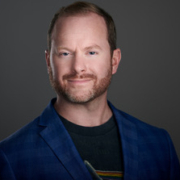
Meet Dr. Ky Dorsey, Utah psychiatrist and Do No Harm member.

Dr. Dorsey is no stranger to treating patients who experience gender dysphoria.

As a psychiatry resident at the Johns Hopkins Hospital in 2015, he had the opportunity to train in the Sexual Behavior Consultation Unit (now Sex and Gender Clinic), gaining knowledge and training across the spectrum of psycho-sexual disorders including gender dysphoria. Even as a novice psychiatrist, he had misgivings surrounding so-called “gender-affirming care.”

“I already had a sense that the idea of gender being purely a ‘construct’ separate from sex was unscientific. The gender-affirmation approach seemed dubious to me even then.”

In the years that followed, the “gender-affirming care” model would come to dominate the landscape of treatment for gender dysphoria. Dr. Dorsey noted that asking critical questions about a patient’s sense of identity, specifically regarding gender, started becoming taboo. Even in the non-academic practice setting in Utah where he worked, practitioners were being expected to use “chosen” pronouns on patient charts, at times receiving e-mails from administration when this did not occur.

But it wasn’t until Dr. Dorsey began working at the University of Oklahoma School of Community Medicine in Tulsa in 2022 that he began to see how dogmatic the culture in academic medicine had truly become.

“It was the height of cancel culture and the DEI movement. It felt like walking on eggshells everywhere you went. Trying to even have an academic conversation about ‘gender-affirming care’ with anything but a sense of agreement was so difficult. There were faculty members who were pushing the idea as a clinical truth and moral right rather than as a subject for investigative discussion… I was even told that ‘misgendering’ someone or not using first-person pronouns at all could be considered harassment or a micro-aggression which might justify investigation.”

Psychiatry, which should have been a field of open scientific inquiry, had instead become a vehicle for top-down political correctness and conformity. It was clear the residents and students had not been given another clinical lens through which to see gender dysphoria or its treatment. So, Dr. Dorsey began having informal conversations one-on-one with trainees who seemed interested in hearing another side of the issue.

“I gave the same disclaimer every time I had ‘the talk’ which was: You never have to agree with me on this topic. This is just how I see things as I understand them. Then I would walk them through some of the history of gender dysphoria as a construct, its treatment, the influence of WPATH and the lack of evidence supporting gender-affirming care. We would talk about the psychiatric underpinnings of identity and the idea that what you think you feel does not necessarily dictate what you are.” 

And to his encouragement, he saw that his ideas were well received in the younger generation of practitioners.

“While not everyone agreed with my point of view, almost everyone appreciated having the conversation. More than a few trainees told me that they feared asking questions or expressing doubts surrounding the gender-affirmation approach. When I left OU-Tulsa this year to move back to Utah, more than one resident thanked me specifically for not backing down on the issue.” 

Now, he’s continuing to speak out as a member of Do No Harm.

But Dr. Dorsey knows from experience that the fight is far from over.

The ideologues pushing this radical agenda haven’t gone anywhere — they’re just laying low. And if the political winds shift, they’ll resume engaging in these harmful practices.

That’s why, more than anything, it’s up to doctors, nurses, and students to stand up for truth and compassion in medicine and reject the intrusion of gender ideology in medicine.

And Dr. Dorsey is setting the example.
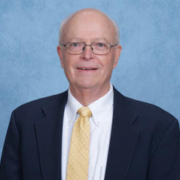
Dr. Sam Lentz may be retired, but he’s not resting.

After more than 35 years of practicing gynecologic oncology at a prestigious academic medical center, his next chapter in life is just getting started. “I wouldn’t be able to lounge around in my retirement if I tried,” he says.

So instead, Dr. Lentz is working with other health care providers and local  legislators to raise awareness of the dangers of “Diversity, Equity, and Inclusion” (DEI) creeping into academic medicine.

“It’s hard to put a specific date on when things began to change. The shifts happened gradually over the years. It’s a radically different environment now than it was when I entered medicine,” he explains.

“The three-legged stool of academic medicine – Patient Care, Education, and Research – has been replaced by the three-legged stool of Diversity, Equity, and Inclusion. And these are diametrically opposed. You cannot maintain excellence when you are prioritizing politics over patients.”

Dr. Lentz was drawn to Do No Harm because we shared his concerns. “I said to myself, I can’t be the only individual out there who thinks this is nuts. So, I started searching online, and came across Do No Harm and Dr. Goldfarb’s book.”

After asking U.S. Congressman Dr. Greg Murphy (NC-03) about Do No Harm and hearing positive things, he decided to reach out and get involved. “I want to be part of the solution,” he says. “There are a lot of folks with concerns who just aren’t comfortable being vocal, or are not in a position where they can be vocal about it. But I can.”

Dr. Lentz is focusing his efforts on educating other health care providers and legislation in his home state. He’s in the process of meeting with several North Carolina legislators to see how he can help move these issues forward, despite some tension between the General Assembly and the Governor’s office.

North Carolina Governor Josh Stein vetoed several bills in 2025 that would prevent public schools, institutions of higher education, and state entities from engaging in discriminatory DEI practices, including hiring and admissions policies. But Dr. Lentz is undeterred.

“I still care about patients, and I’ve spent too much blood, sweat, and tears for this to be the way it’s gonna go. Some people believe the ‘toothpaste is out of the tube,’ and I just don’t think that’s the case – and the people at Do No Harm don’t think so either,” he says.

“Medicine was never just a job for me, it was a calling. It’s worth fighting for.”

Welcome to the fight, Dr. Lentz.

Meet Dr. Melanie Crites-Bachert, a member of Do No Harm.

As a urologist who specializes in pelvic reconstruction, she has seen the irreversible damages of so-called “gender-affirming care” – and now she’s speaking out. 

Dr. Crites-Bachert opened the 360 Pelvic Health Institute to focus on complex female pelvic and incontinence issues. She treats women nationwide, and was shocked to discover how poorly the side effects of hormonal and surgical interventions are understood by the medical community – and how patients suffer the consequences as a result.

“I saw an adult woman transitioning to male, who was referred to me by her doctor back home after being prescribed very high doses of testosterone,” she says. 

“She started experiencing chronic pelvic pain, and her doctor assumed the issue was urological. In reality, the clitoris had become engorged and was simulating a male erection. Her prescribing doctor had no clue what was happening – he didn’t know the side effects of the testosterone he’d prescribed. If doctors can’t provide true informed consent to their adult patients, they certainly can’t provide it to children.”

Dr. Crites-Bachert is on a mission to make sure that patients and parents know the facts.

“No, these puberty blockers are not reversible,” she explains. “These are medicines that I’ve used on men with prostate cancer and that society uses to chemically castrate prisoners and pedophiles. These are not medications for kids.”

“Remember – if you undergo hormonal or surgical interventions, you will never be 100% what you used to be. You can have breasts put back on, but they won’t be natural. You’re always going to be putting hormones into your body, one way or another. Everything is going to be artificial, scarred, and malfunctioning in some way that will require continuous care for the rest of your life.”

Her advice to parents? Slow down, do your research, and listen to your gut.

“There is so much pressure on parents now,” she says. “Don’t fall for the emotional manipulation. You know what is best for your child. Be brave. Do your own research. Get a second, third, fourth opinion. Break out of the echo chamber and focus on the evidence.”

“Puberty is something that’s been happening since the beginning of time. Puberty has not changed – outside influences have changed, and children are hurting in ways they never used to hurt before. Dr. Miriam Grossman has a terrific book that helps parents prepare for these conversations.”

Dr. Crites-Bachert warns parents to also be on the lookout for “sanctuary states” that allow gender clinics to operate in the shadows. “I recently got a letter from the State of Massachusetts inviting doctors with revoked medical licenses to come practice in the state. It basically stated that if the doctor lost their license for practicing ‘gender care’ in another state, Massachusetts won’t disclose the revoked license on its website. It also won’t share information across state lines, or take steps to extradite the doctor. Furthermore, if these doctors prescribe hormones, their names don’t even need to appear on the prescription bottle – only the clinic would be listed. They are eliminating all traces of accountability and transparency.”

When Dr. Crites-Bachert began participating in interviews on gender medicine and pelvic function, she quickly learned of Do No Harm, using its website for occasional research. “When you are in this space and you start speaking out, you know Do No Harm,” she says.

Since making the decision to speak out, negativity from social media and select colleagues has started slowly trickling in. “That’s okay, I’m ready for it,” she says. “It’s worth it because the stakes are high. We are saving children. It’s our responsibility to keep them safe.”

Thank you Dr. Crites-Bachert for using your voice to shine a light on the dangers of hormonal and surgical interventions on children, who are not able to give informed consent. Parents need a full picture of what is going on before they turn their children into patients for life.

“I was wrong.”

It’s one of the hardest things a person can say. 

It’s why pushing back against gender ideology takes evidence and empathy – and perhaps nobody balances them better than Dr. Lauren Schwartz, a psychiatrist, a mother of 3, and a senior fellow at Do No Harm. 

Several years ago, Dr. Schwartz’s young children started coming home from elementary school with age-inappropriate questions about sex and gender. Her instincts knew that something was off.

Dr. Schwartz dug deeper, and found the school was trying to keep up with guidance from top national associations, which all claimed to be evidence-based and focused on the best interests of children.

But the evidence didn’t hold up. Behind the scenes, ideology was overruling rigorous science and a long history of child and developmental psychology used successfully in schools – and vulnerable children were paying the price. Families, schools, and practitioners were being led down a dangerous path by the “experts” who should have been protecting them.

“What was most disturbing to me as a mother and as a psychiatrist, was that these supposedly ‘evidence-driven’ programs were being promoted by my own professional association (the American Psychiatric Association), as well as nearly every other national association in education, mental health, and medicine. My own field was pushing this – and because schools rely on and trust these organizations, they take them at their word.” – Dr. Lauren Schwartz

Dr. Schwartz soon realized parents, professionals, and policy makers across the nation were doing the same thing, taking national associations at their word without thoroughly examining the evidence themselves. While working with Dr. Miriam Grossman on her book, Lost in Trans Nation, Dr. Schwartz decided to start engaging her peers and the public with the facts, doing so with courage and compassion.

“To truly change course, a tremendous amount of healing and support will be needed, for patients, families, and practitioners. We have adolescents with bodies forever changed, who aged out of their pediatric gender clinics at 18 and were pretty much abandoned to find their own care. We have detransitioners who don’t have anywhere to go because their clinics turned their backs on them. I’ve talked with parents through Do No Harm and other advocacy organizations who say, ‘what have I done to my child, the experts told me to do this, but now my child is worse,’ and I’ve talked with young adults who say, ‘I blame myself, I did this to myself’. And that part is heartbreaking, because they didn’t. The medical community did this to them.” – Dr. Lauren Schwartz

Together with Do No Harm fellows Dr. Miriam Grossman and Dr. Aida Cerundolo, and Dr. Carrie Mendoza, Dr. Schwartz co-authored an open letter to the APA in 2024, calling the minimizing of risks and lack of evidence within its new Gender-Affirming Psychiatric Care textbook, “unacceptable, unethical, and unsafe.” It has since been signed by more than 7,200 medical professionals and concerned citizens from around the world. 

Her plea to families, schools, and practitioners? Slow down, stop the rush to medicalize, and find the root causes of the child’s pain. “There cannot be a rush to medicalize, especially with our most vulnerable patients, children,” she says. “The distress these kids and young adults are feeling is real, and our job as physicians and mental health providers is to consider all contributing factors.”

“Is the distress a very normal reaction to a hard situation? Did he or she go through a significant loss or trauma? Did a relationship fall apart? Are they being bullied at school? As adults we can certainly validate feelings – but validating and ‘affirming’ are not the same thing. It is a critical part of our job as parents and caregivers to hold reality for our children when it feels impossible or overwhelming to them to do so themselves.”

“Some children are going to show distress around these temporary phases of life. Get them support if they struggle. But if it gets to, ‘I need to make a change in my body right now so that I can be happy in this moment,’ you’ve veered in a dangerous direction. There has been no other time in medicine that we have altered healthy, developing bodies, sacrificing future health and wellness for a current, underdeveloped perception of self.”

Similar to her approach with patients, Dr. Schwartz engages her colleagues and peers with respect, dignity, and compassion. She knows that to fix a broken system, you need to stay firm on the facts while giving people a path forward – and that’s not always an easy thing to do.

“There are so many layers to how we got here and how it all went wrong. We need to come together as a medical community and give space and grace to those who are just waking up and realizing they’ve been on extremely harmful, misinformed paths. Remember, this was pushed as a ‘model of care’ by the very associations that print our textbooks. You could see how there was an easy path for practitioners to feel like they were doing the right thing. When we show them the evidence, and they realize they’ve been horribly misled, we need to give them space to pivot.” – Dr. Lauren Schwartz

Most recently, Dr. Schwartz penned a chapter on gender-affirming ideology in the newly published book, The War on Science: Thirty-Nine Renowned Scientists and Scholars Speak Out About Current Threats to Free Speech, Open Inquiry, and the Scientific Process. It’s officially on the shelves, so check it out!

Thank you, Dr. Schwartz, not only for speaking out against the harms of pediatric gender medicine, but for the way you do it. Your one-two punch of empathy and evidence is a gold standard.

Meet Dr. Rishi Mahabir, Michigan psychiatrist and Do No Harm member. 

In the last few years, Rishi has felt DEI ideology slowly creeping into his workplace. It got worse in 2020, when Governor Gretchen Whitmer mandated that all licensed workers take “implicit bias” training in order to keep treating patients.

“Within the first 10 minutes of the presentation, it felt like indoctrination,” Rishi says. “It all felt so forced and accusatory. The implication was that we are all racists, and we just don’t know it.”  

Feeling manipulated, Rishi sat down at his keyboard to search for doctors who felt the same way, and our website topped the search results. “It was refreshing to see a community of physicians sharing my concerns,” he says.

Rishi works in a group practice with pro-DEI policies, and feels uneasy about how it pushes divisive labels onto practitioners and patients. 

“Implicit bias training doesn’t have anything to do with actual patient care. About 98% of my patients lean Left in their politics, and that has never mattered either way. To give patients the best care, we have to leave opinions and biases at the door and focus on care. Implicit bias asks us to do the opposite. It divides us into categories, which is unhealthy for the populations I work with, who are vulnerable to these types of divisive frameworks.” 

Since the rise of DEI, Rishi has seen an uptick in anxiety and depression in his patients, along with a decline in resiliency. “They are quick to be offended, quick to shut down,” he says. Their children are also quick to fall victim to social contagions like sex confusion.    

Rishi works with many parents of teenagers with Rapid Onset Gender Dysphoria who left home for college and announced they wanted sex changes shortly thereafter, seemingly out of left field.

“It’s very disheartening to hear their stories. Many parents — who are politically progressive — feel their kids have gotten caught up in a cult. College environments are pushing a social agenda onto students who are fresh out of high school, who are looking to form an identity, who want to feel like part of a group. People encourage them to attach themselves to these labels, and to pursue interventions that have permanent effects like infertility. It is predatory behavior.”

Rishi fears retribution at work for speaking out against radical DEI and gender ideology, but he’s not letting that intimidate him into silence.

“Finding groups like Do No Harm has given me the courage to speak out,” he says. “Our minds are a  very powerful thing, and we have to be careful about the way that we frame things for our patients, and if they are helping or hurting.”Dr. Mahabir will have to take another DEI training soon, as mandated by the Governor of Michigan. This time, he plans to take Do No Harm’s version. If you’re faced with a similar mandate, please let us know – and find out if your state allows our course to satisfy their requirements.

When something doesn’t quite add up, Dr. Vikram Madireddy can’t let it go. 

Born and raised in New York City, Vikram grew up thinking he might become a detective – and in a way, he did. “I like walking into a new mystery every day,” he says. “We don’t get to pick our patients, we don’t know anything about them when they first walk in the door and we have to step up and solve the medical whodunit.”

So, when Vikram started to notice one DEI roadblock after another on his path to become a doctor, he set out to find some answers. It just didn’t add up. 

Vikram was the ideal candidate for medical school. In undergrad, he was an EMT on an ambulance, and a medic for the ROTC. He collected medical textbooks from around the world and studied them for fun, and got nearly perfect scores in the science sections of the MCAT. 

Despite his exceptional passion and academic performance, only one medical school accepted him out of the 75 he applied to – the University of Tennessee. Only three others offered him interviews. 

“I understand this process is competitive, and that Ivy League schools reject a lot of people. But not even getting interviews from Rutgers? Hofstra? Stony Brook? So many generic form letters from so many schools. Something wasn’t sitting right. It was clear that I was falling into some kind of category.”

It only got worse from there. 

The next DEI roadblock hit during medical school, when Vikram was in the first class of students to take Step 1 of the U.S. Medical Licensing Examination under its new pass-fail system – an overhaul driven by pressure from DEI activists prioritizing identity over excellence.

The idea was to make it easier for less qualified students to seem indistinguishable from those who truly meet the highest standard, and it worked. Despite applying to more than 50 residencies in the U.S. with exceptional scores, only the University of Tennessee extended Vikram an offer. But accepting it would have told future employers that he couldn’t succeed without a home-field advantage.

Out of options in the United States, Vikram did what he needed to do to continue his dream – he let his lease expire in Tennessee, renewed his passport, and went on an adventure that would earn him the moniker, “The Medical Nomad.” Five months and four continents later, he had studied in the UK, Japan, Germany, and Australia, learning from experiences the United States wasn’t willing to give.

In Australia, Vikram saw his mentor diagnose a man with a rare infectious brain disease based on the contents of his bag. In Germany, Vikram presented his own research paper, winning an award for its findings. 

In Japan, he was invited to learn endovascular techniques from some of the best in the field, assist on extremely rare and complicated cases, and teach Japanese medical students how to do intakes with patients in English. 

The rest of the world did not care what identity boxes Vikram checked. They quickly recognized the passion, talent, and merit that he brought to the table. And when the University of Tokyo School of Medicine offered him a residency as its first foreign trainee and researcher, it was an easy yes.

“Yes, the field benefits from having different perspectives. All that I’ve learned from doctors and patients around the world is living proof of that. But not at the cost of quality and safety, those are the two fundamental things. That’s not good for patients and it destroys trust in the profession.”

His original plan was to return to New York after medical school. Now he’s continuing to work on his brain mapping research and studying Japanese to take the Ishi Kokka Shiken exam. If he passes, it will be the fourth country to issue him a medical license. “Nothing is set in stone anymore,” he says. 

Vikram is moving on, but the detective inside of him is not letting go. 

“I don’t normally get vocal about things. I’m not politically active, and at this point living abroad, I barely read American news. But I’m hoping that by sharing my story and asking hard questions, the people issuing these rejections will have to be honest about what they are doing. At least give us a sense of – for whatever category you’ve placed us in – why you don’t think we are qualified.”

We eagerly await the answer.

As mother-of-three Amber Lavigne prepped her 13-year-old daughter’s room for a painting project, the last thing she expected to find was a breast binder. But there it was – and her daughter told her it came from a social worker at her public school in Maine. 

She was gobsmacked. 

Her daughter had been struggling with mental health and meeting with a female social worker at school. “As far as I knew, they talked about anxiety, normal kid stuff,” Amber said. “I own a mental health agency, so I thought it was nice they had social workers in the schools to support kids.” 

Little did Amber know that at the beginning of eighth grade, the Great Salt Bay Community School had re-assigned her daughter to a different social worker. This one was 26 years old, transgender, and only had a conditional license to practice social work. 

The school never told Amber about the switch and the social worker didn’t bother reaching out to the preteen’s therapist for additional context. He began her social transition in secret. 

First, the school started referring to Amber’s daughter using male pronouns and a male name. Then they did the unthinkable – they provided the preteen with equipment that could cause physical pain and permanent changes to her body. 

“The school won’t give me the records, but from what I can gather, he met with her for two, 30-minute sessions and once for a check-in. At some point during one of those three meetings, he gave her two breast binders.”

The school will not disclose how they measured Amber’s daughter for size, and to what degree any physical contact between the male social worker and the young girl took place. 

When Amber raised her concerns, the principal and superintendent sided with the social worker. The school board dismissed her with a “thank you for your comments.” The nightmare continued when child services agents showed up at her door to investigate allegations of emotional abuse. Incidentally, they showed up about a week after Amber had filed complaints on both of the social workers’ licenses.  

Amber filed a federal lawsuit with the help of the Goldwater Institute. The story went viral and when the school began receiving threats, the district wrote to parents implying Amber was to blame. 

“I am a Democrat living in a very progressive town, so at first it was very hard to go out of the house, even just filling up the car with gas. I was treated poorly at some of my favorite stores, so I stopped going. I’d try to leave town to go grocery shopping. It just felt like I had this spotlight on me that was really negative for a long time. I connected with January Littlejohn of Do No Harm within days of going public with this, and she sat on the phone with me for the better part of two hours, just listening to me sob and giving me support. I really needed to hear from a momma who had been through it.”

Amber’s lawsuit is currently being heard by the First Circuit Court of Appeals, where the attorneys general of 12 states have all filed briefs supporting her constitutional rights. In the meantime, she frequently travels to the Maine State House to advocate for parental rights. 

We are in awe of Amber’s unwavering resolve to hold schools accountable and to protect children from gender ideology. If you are a parent in a similar situation, know this: you are not alone. You have every right to know what happens to your kids at school, and Do No Harm is here to help you get answers.

Paul is a tireless advocate for patients in Oregon, especially children with autism. 10 years ago, he helped win a major lawsuit in federal court, A.F. v. Providence, which held that since autism was a mental health condition, Oregon and federal law required health insurers to cover all “medically necessary” evidence-based care.

It was a huge win for mental health parity. 

To build off the momentum, Paul reached out to other mental health advocacy groups across the state to notify them of the ruling – including groups focusing on gender dysphoria. 

His goal was to extend the benefits of the ruling to patients with other mental health conditions seeking similar access to medically necessary, evidence-based care.

Oregon later wrote an administrative rule codifying the court decision into policy for autism and gender dysphoria, and it felt like a win. Paul even helped write some of the language for it. 

But years later, he realized a harsh truth: the state of Oregon had dramatically lowered its evidence standards when it came to gender medicine. Worse, Oregon was burying its own research findings that found there was virtually no evidence of benefit – and hiding them from the public for partisan political reasons.

“Since the rule was created, the definition of ‘medically necessary’ for gender medicine has morphed into just ‘whatever care people want,’ missing that important evidence-based part. For autism services, we had to undergo an extremely rigorous evidence review. I had assumed the groups working on gender dysphoria were being vetted with the same level of rigor that we were. But I was mistaken.”

When Paul dug into the evidence supporting Oregon’s policies covering gender services, he was stunned by what he found.

“There was no 900-page AHRQ report, like there was with autism. Instead, there was just a 12-page brief saying there was ‘insufficient evidence’ to even get started with. And I remember thinking, ‘You’re kidding me, right?’ You can’t help transgender individuals by fast-tracking them into highly aggressive care without evidence of benefit.”

Now, Paul worries that Oregon’s watered-down standards are opening the floodgates to highly invasive treatments for patients struggling with gender identity – with no evidence of benefit.

“If you try an autism therapy and it doesn’t help, you might get frustrated, but no body parts have been cut off,” Paul says. “It’s scary to see how many people in my social circle wrongly assume there is rock-solid evidence for the absolute necessity of gender medicine, when the state of Oregon’s own (suppressed) research report found a ‘paucity of evidence.’”

But Paul’s not giving up. He is currently encouraging his home state to develop a more responsible approach to defining the terms that dictate how gender-related policies are applied.

“For people with gender dysphoria in the United States, we have thrown out all of the patient protections that we normally extend to ensure that the care we are providing is safe, effective, and clinically appropriate for the individual patient. The real victims here are transgender individuals – especially children, adolescents, and their parents – who are being oversold on the necessity and benefits of dangerous and unproven medical interventions.” 

Welcome to the fight, Paul. 

Any defender of evidence-based medicine is an ally of Do No Harm. 

A self-proclaimed “lifelong learner to a fault,” Travis has completed medical training in five separate specialty departments, exposing him to a wide range of physician perspectives and patient needs. 

He’s worried about the changes in the profession that he’s observed over the years.

“When I was in school, we had four years of evidence-based medicine,” he told Do No Harm. “I’m not confident that the same kind of training is going on today.” 

When a friend told him about Do No Harm, he became one of our first members. 

“Empathy has to be guided by evidence. You can’t really help people if you’re not based in the real world, and instead you are just trying to get them to conform to your opinion. You have to have evidence to actually help people.”

Earlier in his career, Travis provided “gender-affirming care” for adults – but when he saw members of the field pushing gender ideology on children years later, he was horrified. 

“Anybody who has taken physiology, or pharmacology, or helped do this kind of stuff for adults should understand that it is totally off limits for kids,” he says. “Treating kids with ideology instead of evidence is abhorrent to me as a doctor.” 

He had to speak up. 

Travis started a group called Colorado Principled Physicians to promote non-partisan physician values, like free speech and evidence-based medicine. He joined the Colorado Medical Society (CMS), where he accepted positions including a position on the DEI committee. He continues to submit evidence-based policy proposals to CMS for its consideration.

“We can’t just let academia and medical organizations go to whoever wants it. We have to speak up for our position. If these issues are not being driven by the evidence, then they aren’t going to be stopped by evidence alone – they have to be stopped by people speaking up. And of course, you always want somebody else to do it. I would much rather just go hiking with my kids. But somebody has to do it.” 

While the United Nations held its largest gathering on gender equality and women’s empowerment, the most important conversations on protecting women were taking place across the street.

On March 13, a standing-room only audience was glued to a panel discussion featuring Miriam Grossman, MD, psychiatrist and a senior fellow at Do No Harm, along with others who are leading the resistance against radical gender ideology.  

Dr. Grossman pulled no punches. She called out the lack of medical evidence for benefits of “gender-affirming care,” and detailed the irreversible damages of breast binding and puberty blockers on adolescent growth, chronic pain, brain development, bone health, sexual function, fertility, and mental health.

“Too many of my medical colleagues have forgotten that the body has its own wisdom. Puberty is a natural, organic process, not a disorder. We cannot assume, as “gender-affirming care” does, that it can be turned on and off synthetically, without paying a price.”

She called out the United Nations as complicit in the advance of radical gender ideology, despite the costs and confusion it brings to real children and families:

“It’s deeply troubling that our children are taught—and the UN pressures the developing world to teach—that sex is ‘assigned’ at birth, as if it’s a random decision that might very well be incorrect. Students are told their identity is completely independent from the physical reality of their bodies. They are led to believe that if a boy feels like a girl—whatever that means—then he IS a girl.”

She concluded her remarks with a scathing rebuke of the World Professional Association for Transgender Health (WPATH) for its shameless promotion of medical experimentation on children—and its complete disregard for ethics, evidence, and informed consent.

“WPATH launders its extreme views through medical organizations. It’s a sinking ship, and it will take others down with it.”

We’d like to thank the Heritage Foundation for inviting us to participate on the panel, and to thank the Conference on the State of Women and Family for doing what the United Nations failed to do: give a platform to the healthcare professionals who are fighting to protect vulnerable young girls from the social contagion of gender incongruence.

You’ll continue to find Do No Harm on the front lines of this battle to keep political ideology out of medicine for good.

Michelle, a certified oncology and palliative care nurse practitioner, brings more than two decades of clinical expertise and three years of dedicated experience in healthcare technology to Do No Harm.

Throughout her nursing career, Michelle was passionate about clinician education, striving to be a voice for clinicians and patients alike. So when she started to notice that patients and clinicians were losing their individual voices as a result of Diversity, Equity, and Inclusion (DEI) initiatives – particularly in the wake of the pandemic – she knew she had to speak up.

Michelle reached out to Do No Harm while still working in the healthcare industry, helping us build our nursing coalition and empowering other nurses like her to find their voices and fight back against DEI initiatives that were reducing the quality of patient care. For Michelle, empowering nurses was personal.

“Nurses are the beating heart of healthcare – we’re often the ones who are spending the most time focused on patient care,” Michelle says. “DEI initiatives in medicine just don’t make sense. Patients have a whole life outside of what you treat them for. They are not defined by their condition. We can’t define them by one thing, and we can’t lump everyone into one bucket. Everyone is an individual, and needs to be treated that way.”

We have no doubt that Michelle will bring that individualized approach to our work here at Do No Harm as she fights on the front lines to restore sanity to healthcare.

Welcome to the team, Michelle.

Brad McDowell has been a registered nurse for 16 years.

In 2021, he began working in the emergency room at Meritus Medical Center in Maryland, and it didn’t take long until he was promoted to oversee other nurses on the team.

Maryland requires all healthcare professionals to take “implicit bias” trainings, largely due to the myth that racism is to blame for higher mortality rates among black mothers. Brad was instructed to attend a training, and left appalled at the lack of evidence surrounding the accusations being made.

Brad stopped going to the trainings – and no one from the hospital seemed to care until last month, when he challenged the idea of “implicit bias” trainings on his private Facebook page. His employer was not mentioned anywhere in the post or in his profile.

Brad was placed on administrative leave the next day, and fired days later.

“It’s fine to oppose diversity, equity and inclusion as long as you keep it to yourself,” Brad writes in the Wall Street Journal. “The moment you speak out, you have a target on your back.”

You deserve to hear Brad McDowell’s story in his own words. Read his commentary here.

Dr. Jared L. Ross was nine years old when the Northridge earthquake hit.

“It was a cold January night, and my brothers and I were sleeping next to the fireplace,” he remembers. Early the next morning, the living room began to shake and a brass sculpture fell off the mantle, landing inches from Jared’s head and nearly killing him.

“From that moment on, I’ve been drawn to emergencies. I want to help people in their most vulnerable moments, in whatever setting they take place,” he says.

Jared has been a first responder, EMT, paramedic, firefighter, SWAT team member, and an Emergency Medical Services educator. When Do No Harm spoke with him, he had just returned from providing on-site safety and medical services at the Arizona Flying Circus, an event with aviation, pyrotechnics, flame throwers, and firearms. The week after, he planned to work in an emergency room at a city hospital.

The scope of scenarios that Jared encounters in these environments is wide, but they all have one thing in common: They are urgent. He worries the creep of Diversity, Equity, and Inclusion (DEI) into the medical field will poison the dynamic between people in crisis and those trying to save them.

“If you want to find a primary care doctor, or a dentist, you can take time to find someone that is a good fit and get multiple opinions. In emergency medicine, you don’t have that luxury. If someone has been told that white males give them worse medical outcomes, and a white male EMT arrives on the scene, or they end up in the ER with a white male doctor, there may be a lack of trust. And that can be deadly in a life-threatening situation.”

Not only is there social pressure to subscribe to DEI ideology — it’s now required in order to stay certified with the American Board of Emergency Medicine (ABEM).

In order to keep his certification, Jared is being forced to sign a Code of Professionalism stating that he will, “mitigate both implicit or explicit biases based on race, gender, age, sexual orientation, disability, national origin, or religion when providing patient care.” 

“I can’t mitigate something that I don’t believe exists in the first place. But if you start challenging things like implicit bias, you are putting your livelihood at risk. There are plenty of things we can debate as emergency physicians—we can have an academic discussion about the best antibiotics to treat an open fracture, or what medication should be first line for atrial fibrillation with rapid ventricular response. But DEI is not open for discussion.”

Jared knows the risks of not signing the code. Losing his certification would make it hard, if not impossible, to work in any sort of hospital or medical establishment, even as an outside consultant. He’s still not going to sign it.

His certification is valid through the end of 2029, and ABEM is already making his job more difficult by restricting access to ongoing education requirements until he signs the code.

“They are looking for me to engage in racism and sexism in the name of equity. But equity and equality are inherently incompatible,” he says. “I won’t do it. It’s dangerous.”

Jared is holding strong on what he believes is safest for his patients. We are grateful for his courage and dedication to putting patient care before politics, regardless of the costs.

Dr. Klein knows a thing or two about the human condition, and he believes the principles underlying DEI initiatives are not only illogical—they’re dangerous.

“DEI activists are coming for my profession, and it’s making a mockery of it. I’m not going to give up the seriousness of my field without a fight.“

In 2020, the American Psychoanalytic Association (APsA) created the Holmes Commission to find evidence of racism within the association. Three years later, it released a stunning 421-page report calling for the restructuring of the entire field of psychoanalysis.

It instructed therapists to “apply an analytic lens to the matters of race, racism, and white supremacy.” It also tasked entities associated with the field to hire a DEI ombudsman and “monitor resistance to change.”

Amazingly, the authors of the report admitted they didn’t have any data to prove systemic racism in the field, and that its findings were enhanced with the “personal experiences of commission members.”

For Dr. Klein, enough was enough. He published a pointed takedown of the report’s findings on his professional APsA listserv. It set the field ablaze for a few weeks.

“I received a torrent of private support from psychoanalysts throughout the country and throughout the world, and I’m still getting positive responses from analysts. It’s not surprising, but it is sad they felt they had to do so privately.”

Dr. Klein is working with Do No Harm to give a voice to his colleagues who are too scared to speak out, and you can read more about his story on our website here. In the meantime, he is already seeing the consequences of DEI seeping into his practice. He often meets new patients who walk in the door feeling anxious about the possible politicization of their experiences.

“I’ve had patients come to me worried I’m going to view their experiences through the lens of race. I’ve had parents of teenagers worried I’m going to trans their kids,” he says. “Each went to other therapists first who brought up concepts about race and gender when they were not applicable.”

We are grateful for those at the top of their fields like Dr. Lucas Klein who are willing to defend the integrity of their profession for patients and future generations. The stakes could not possibly be higher.

You can get in touch with Dr. Klein through his website linked here.

“Hello, I’m looking for a black therapist. I saw your profile. I’m looking for a black guy, I need someone who can relate to me.”

Rodney Long Jr., MSSA, LISW-S, has lost track of how many times this voice message, or something similar, has been left on his work phone.

Rodney is a mental health therapist with a private practice in Ohio. He’s also biracial, and feels that is wholly irrelevant to the way he approaches his work.

“I grew up in poverty with parents in addiction. I work with black doctors, lawyers, and teachers. A lot of times, our backgrounds don’t relate over anything except our skin color.”

In Ohio, the pressure to define and divide people based on race is coming from the top. The Counselor, Social Worker, and Marriage & Family Therapist Board — which oversees critical parts of the behavioral health field in Ohio — uses discriminatory practices to select who is eligible to join the Board. Specifically, it prioritizes race over levels of expertise.

Rodney feels this is dangerous. He’s relieved nobody told him he was a “victim” when he was a young man because he may not have worked to overcome his difficult childhood and build the life he has today.

Rodney’s story deserves more space than an email can provide, so you can read the rest of his story, and learn why he’s so passionate about Do No Harm’s mission here.

Do No Harm is delighted when one of our members publicly pushes back on the false narrative that racism and bias are widespread and pervasive in medicine. Which is why we were pleased to see a recent Letter to the Editor penned by Dr. James Lally, a Do No Harm member in Naples, Florida.

It reads:

“The recent article in the Naples Daily News from the Center for Public Integrity that contends: “documented and widespread biases and racism contributing to disparate health outcomes for certain populations” is a seriously flawed and cynical attempt to infect medicine with the unwarranted charge of systemic racism. Just one example shows how controversial data has been cherry-picked. The authors reference the landmark study from the Institute of Medicine, Unequal Medicine, and report that: “bias, stereotyping and prejudice could be playing a contributing role.” A role in disparate health care outcomes. A close reading of that extensive report in the summary of part 4 has quite a different statement: “In summary, the committee found no direct evidence that racism, bias, or prejudice among health care professionals affects the quality of care for minority patients.” Do No Harm is an advocacy group of health care professionals that seeks to treat patients with dignity without the cloud of racism and prejudice marring that encounter. In their mission statement they aim to: “protect patients, physicians, and health care itself from radical, divisive ideology.”

We thank Dr. Lally for his support, and for highlighting the facts surrounding the oft-repeated narrative related to so-called “implicit bias” in healthcare.

Do No Harm is proud to stand with Rick McCarthy as he cancels his membership in the California Association of Marriage and Family Therapists (CAMFT). 

Rick felt deep concern with CAMFT’s aggressive approach to so-called “gender affirming care” in its December 2022 issue of The Therapist. In response, he wrote a Letter to the Editor detailing those concerns and it was printed, in full, in the March 2023 issue. 

What followed can only be called a capitulation to radical activists within the organization who sought to cancel McCarthy rather than engage in a robust dialogue about a critical issue facing its members. Not only was his letter fully retracted, but CAMFT wrote a lengthy apology to its members for publishing it in the first place. 

And it didn’t stop there – but we’ll let Rick’s powerful open letter to the President of CAMFT canceling his membership tell the full story. 

Please read it, share it with your networks, and if you are a member of CAMFT, we encourage you to let them know your thoughts as well. 

Wes Ogilvie used to see his role as a paramedic as a stress reliever.

The Austin, Texas based lawyer found that solving problems in an hour or two during his paramedic shifts — despite being high-risk, life-threatening problems — was a relief from a law career where problems spanned years at a time.

But right before the COVID pandemic shut the world down, Wes started noticing something that didn’t bring him any relief: Conversations among medical “professionals” on social media were all colored with a one-sided political tint.

The social justice initiatives that followed in 2020 and beyond put the politicalization of medicine on a rocket path, and Wes watched as this trend started seeping into his own role as a paramedic.

“Catch all phrases” like health equity and disparate impact started showing up in the professional bios of the very physicians who were acting as medical directors within the EMS system.

“If you question, ‘hey, that sounds a little political,’ the first response is, ‘why aren’t you doing better?’ And that’s their foot in the door, and now you see courses at medical conferences that are DEI-focused on implicit bias.” 

Wes has noticed the increase in DEI initiatives at conferences and within continuing education classes.

“We need a certain number of hours in continuing education to maintain EMS certification, and we have a limited amount of time to fulfill the requirements. I have to ask, ‘does a class on implicit bias best serve the patients who I take care of? If I take that class versus one on patient care documentation, which course offers more benefit to my patients, myself, or the organization I’m with?’” Wes says.

Wes has opted to spend his time in courses focused on patient care, but he’s concerned with the DEI trends he’s witnessing in the EMS field.

“This DEI training is optional now, but I’ve seen this as a lawyer — you’re going to see it pushed more and more, and if it doesn’t become a mandate to licensure, you’re going to have organizations and departments push it.”

Wes’ concern is rooted in his care for the patients he sees–patients who don’t have the luxury of calling to make an appointment with their practitioner of choice when they call for a paramedic or an EMT. The more time the EMS leadership spends on promoting DEI initiatives, the less time they can spend on emergency, life-saving care. 

“The impact on patients is simple–and it’s bad. If I’m spending an hour on implicit bias training, that’s an hour I’m not spending on airway management. That’s an hour I’m not spending on pharmacology, or the latest updates in cardiology.”

We are thankful that there are practitioners like Wes who have the courage to speak out and advocate for patients.