
• Link to X
  • Link to Facebook
  • Link to Instagram
  • Link to LinkedIn
  • Link to Youtube
  • HAVE YOU SEEN OR EXPERIENCED THE IMPACT OF DEI OR RADICAL GENDER IDEOLOGY AT YOUR INSTITUTION? CLICK HERE TO SHARE YOUR STORY.
Do No Harm
  • About Us
    • ABOUT
    • TEAM
    • FAQS
    • WHAT OTHERS SAY
    • VOICES OF DO NO HARM
  • OUR WORK
    • NEWSROOM
    • ISSUE AWARENESS
      • IDENTITY POLITICS (DEI)
      • GENDER IDEOLOGY
    • FEDERAL POLICY
    • STATE POLICY
    • LEGAL ACTION
    • RESEARCH
    • RESOURCES
    • CENTERS
  • GET INVOLVED
    • SUBMIT A TIP
    • BECOME A MEMBER
    • CAREERS
  • MEDIA INQUIRIES
  • Search
  • DONATE
  • Menu Menu

DEI By Any Other Name? Kaiser Med School’s Rebrand Leaves ‘Diversity’ Commitments Intact

Uncategorized California DEI Kaiser Pemanente Bernard J. Tyson School of Medicine Medical School Commentary Do No Harm Staff

Like many medical schools over the past several years, the Kaiser Permanente Bernard J. Tyson School of Medicine (Kaiser) has undergone a bit of a facelift. 

At some point in the past six months, Kaiser rebranded its Office of Equity, Inclusion, and Diversity to its Office of Inclusive Excellence; indeed, the link to the former office now redirects to the latter.

Yet the actual content of the current webpage still makes clear that Kaiser is committed to DEI, with the maxim “Diversity Unites Us” front and center.

“We believe diversity brings us together. It inspires us to respect the experiences and perspectives of others,” the page reads. “Diversity encompasses much more than culture, race, and religion.”

What’s more, from an archived version of the DEI office’s webpage, the staff members leading both offices are the exact same people.

Nevertheless, there have been some changes. For instance, a 2024 version of the webpage included the statement that “equity, inclusion, and diversity are woven into every aspect of Kaiser Permanente Bernard J. Tyson School of Medicine, including pipeline efforts, admissions, staffing, curriculum, student support, and community.”

It’s hard to see how the pursuit of racial diversity could be “woven into” admissions and staffing efforts in a way that would not be discriminatory: any effort to increase the number of students from certain racial groups invariably comes at the expense of other racial groups.

Additionally, resources that cataloged DEI activities at Kaiser are no longer present.

These include an overview of Kaiser’s DEI commitments that includes explicit admissions of racial discrimination.

Here are few highlights:

  • “[Kaiser] has embedded anti-racism and related topics throughout its curriculum…”
  • “Our commitment to diversity is illustrated in the composition of our student body, which is among the most diverse in the country.”
  • “Our approach to student admissions is to evaluate the full experience of each individual, including academic, personal, and other characteristics that contribute to defining the whole person. This approach increases the likelihood of admitting students from diverse backgrounds.”
  • “For all recruitment of board members, administrators, faculty, and staff, whether by search firms, human resources professionals, or faculty committees, the school has been intentional in its goal to hire and appoint individuals from a diversity of backgrounds and experiences.”

And there are many, many more examples.

Another resource no longer present on the Office of Inclusive Excellence’s webpage is the school’s 2021 “Anti-Racism and Equity, Inclusion, and Diversity Plan.”

That plan included activities that the school had taken such as:

  • “Development of an anti-racism curriculum for students.”
  • “Intentional and equitable board, leadership team, faculty, and staff recruitment.”
  • “Universal equity, inclusion, and diversity training for faculty, staff, and students.”

Although these resources have since been removed from the school’s website, evidence of racially discriminatory behavior remains.

Indeed, Kaiser’s webpage on its admissions requirements outright says that the school uses a “holistic review” process for the purposes of pursuing diversity.

“However, know that your test scores and coursework will be reviewed in the context of your experiences, milestones, and personal attributes,” the webpage reads. “We believe this holistic review process will not only help us form a multidimensional portrait of each applicant, but also recruit and admit a diverse, inclusive, and highly qualified class.”

Moreover, according to 2024 admissions data reviewed by Do No Harm, Kaiser actually experienced an increase in the number of black and Hispanic matriculants following the Supreme Court’s decision holding that race-conscious admissions were unconstitutional. This is contrary to what one would assume following the implementation of a color-blind admissions regime. This is because black and Hispanic applicants had, on average, lower MCAT scores than their Asian and white counterparts, so one would expect their share of Kaiser’s matriculating students to decrease.

As Do No Harm’s “Skirting SCOTUS” report notes, this “casts serious doubt about adherence to the Court’s ruling against affirmative action.”

So, how should we examine these facts? On one hand, Kaiser has deleted much of the more egregious public-facing examples of its DEI commitments. But on the other hand, many DEI references remain.

And there is data suggesting that, well after the Supreme Court’s ruling, the school is still engaging in race-conscious admissions. 

Taken together, all of this evidence suggests that Kaiser is removing only the most egregious and obnoxious references to DEI ideology while deep down, nothing has changed.

https://donoharmmedicine.org/wp-content/uploads/2025/04/shutterstock_663739642-scaled-e1745267226110.jpg 1067 1860 Ailan Evans https://donoharmmedicine.org/wp-content/uploads/dono-logo.png Ailan Evans2026-01-09 15:41:032026-01-09 15:41:03DEI By Any Other Name? Kaiser Med School’s Rebrand Leaves ‘Diversity’ Commitments Intact

Do No Harm’s DEI Tracker Flags 36% of U.S. Medical Schools

Uncategorized Resources
https://donoharmmedicine.org/wp-content/uploads/iStock-1401401407-1.jpg 1410 2126 dnhprod https://donoharmmedicine.org/wp-content/uploads/dono-logo.png dnhprod2026-01-08 20:15:252026-01-08 20:15:25Do No Harm’s DEI Tracker Flags 36% of U.S. Medical Schools

Michigan State Medical Society’s DEI Training: Ideology Masquerading as Medicine

Uncategorized Michigan DEI Medical association Commentary Do No Harm Staff

After reviewing the DEI training published by the Michigan State Medical Society (MSMS) as part of the “Addressing Health Equity in Michigan Webinar Series,” it’s clear that yet another organization has become enamored with its own ability to produce woke propaganda. 

These sessions, which fulfill the Michigan Department of Licensing and Regulatory Affairs (LARA) “implicit bias training requirement,” have little to do with improving patient care and everything to do with advancing a particular ideological agenda.

The first red flag appears immediately in the module “DEI: Past, Present and Future.” 

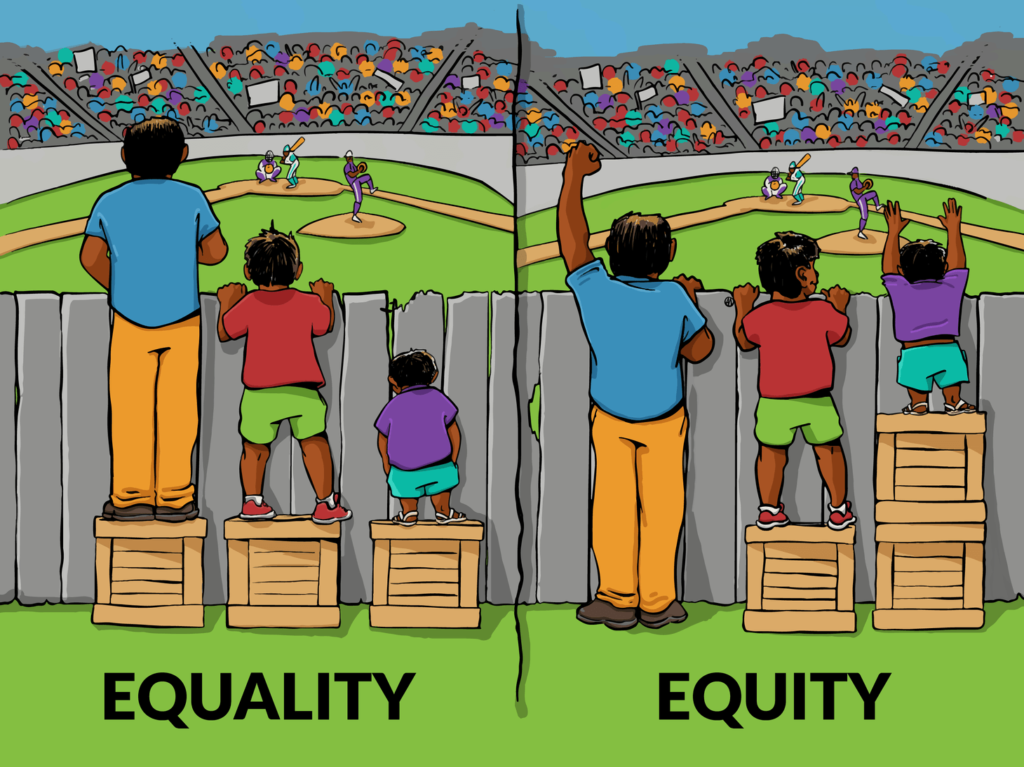
The module begins by comparing DEI to a “party”: diversity is being invited to a party, inclusion is being asked to dance, and equity is “leveling the playing field” and “dancing without barriers.” Accompanying this is the misleading illustration of children on boxes watching a baseball game.

Figure 1. From “DEI: Past, Present and Future.” (Interaction Institute for Social Change | Artist: Angus Maguire.)

But here’s what’s missing: in practice, “equity” here means discriminating based on race and other immutable characteristics to achieve predetermined outcomes. The Civil Rights Act of 1964 explicitly prohibits such discrimination, a fact the training materials themselves acknowledge when citing the Act and Executive Orders 10925 and 11246. 

The irony is apparently lost on the presenters.

Later in the presentation, we encounter this little tidbit: race has become “ambiguous” because it’s now about one’s internal self-identification and has lost any degree of objectivity. 

Let’s think this through. If race is whatever someone identifies as, then why can’t anyone identify as anything that advantages them? And if they can, doesn’t that render the entire DEI framework meaningless? 

One can’t simultaneously claim that racial categories are socially constructed fictions and use them as the basis for medical policy and resource allocation. 

The training also includes “The Gardener’s Tale” video, adapted from Dr. Camara Jones, meant to illustrate “institutional racism” via the analogy of a gardener who prefers red flowers over pink, and therefore grows the red flowers in more fertile soil. 

It patronizes black Americans by suggesting they cannot succeed without external intervention to overcome systemic barriers – barriers that, conveniently, only the DEI apparatus can identify and remedy.

This paternalistic approach is deeply condescending. It treats minority patients not as autonomous adults capable of navigating the healthcare system, but as victims requiring constant accommodation. 

Scholars such as John McWhorter have pointed out that this methodology treats concepts like systemic racism more like a religion than a working theory about society, and in so doing, ignores the multitude of factors – such as personal choice, biological factors, and medical comorbidities – that lead to disparities. 

Understanding the true causes of outcome disparities, for example, matters in the context of healthcare and requires moving past the simplistic assumption that all difference is the product of “systemic racism.”

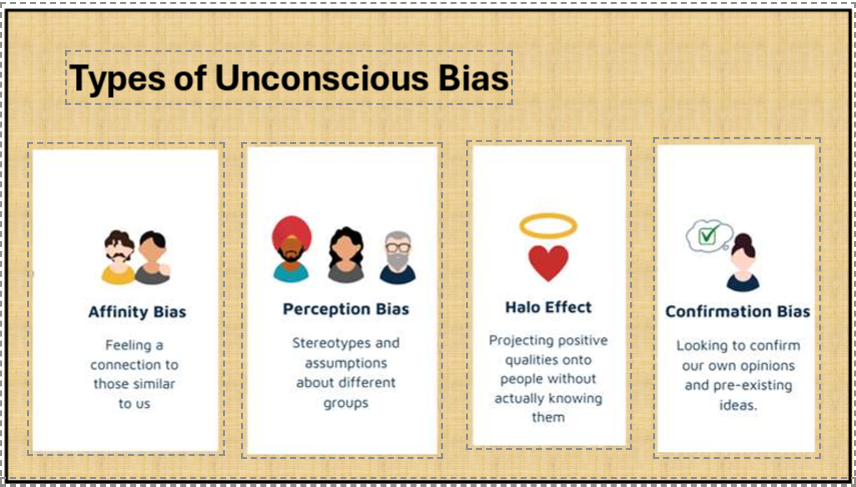
Additionally, the module on “Implicit Bias and its Impact on Health Equity” lists several types of unconscious bias: affinity bias, perception bias, the halo effect, and confirmation bias. 

Figure 2. From “Implicit Bias and its Impact on Health Equity.”

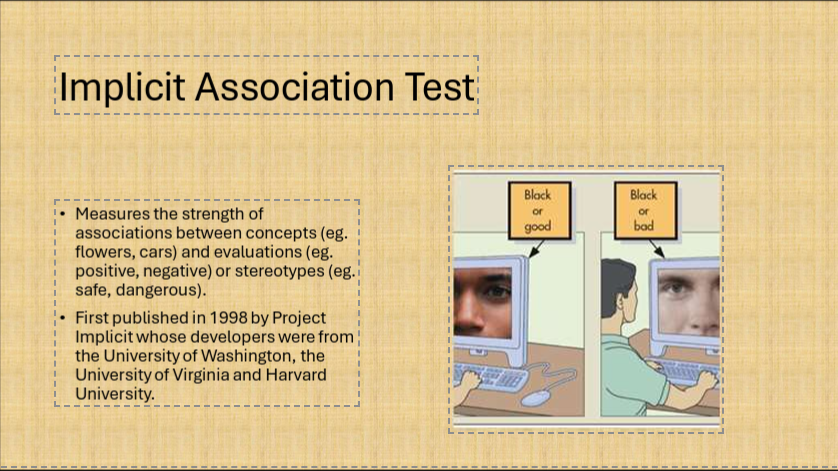
When discussing implicit bias, the training cites the Implicit Association Test (IAT) as evidence of bias. 

Figure 3. From “Implicit Bias and its Impact on Health Equity.”

However, the IAT has been thoroughly debunked as a predictor of discriminatory behavior. Even its creators have backed away from strong claims about its validity. Yet here it is, presented uncritically as scientific fact in physician training.

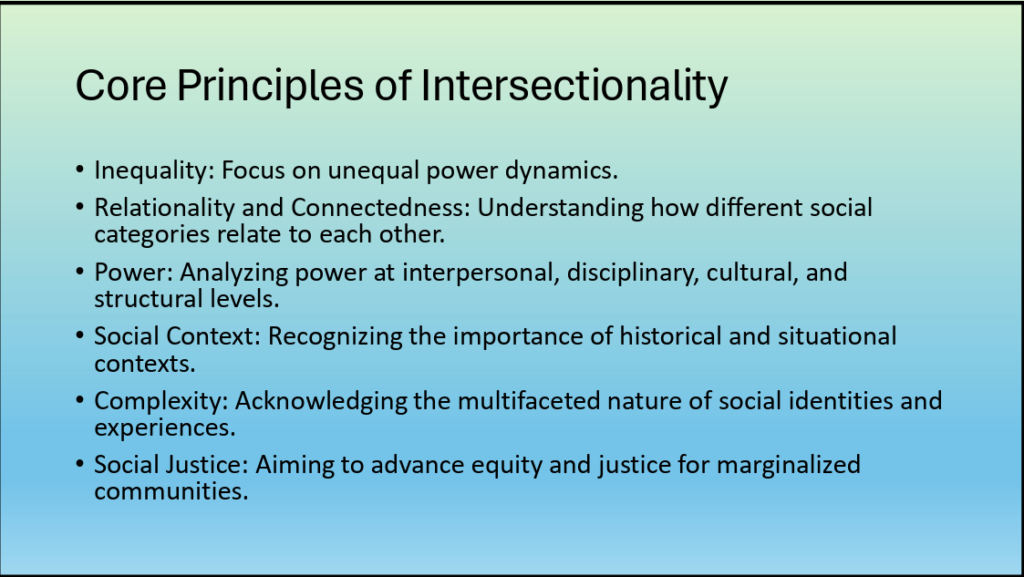
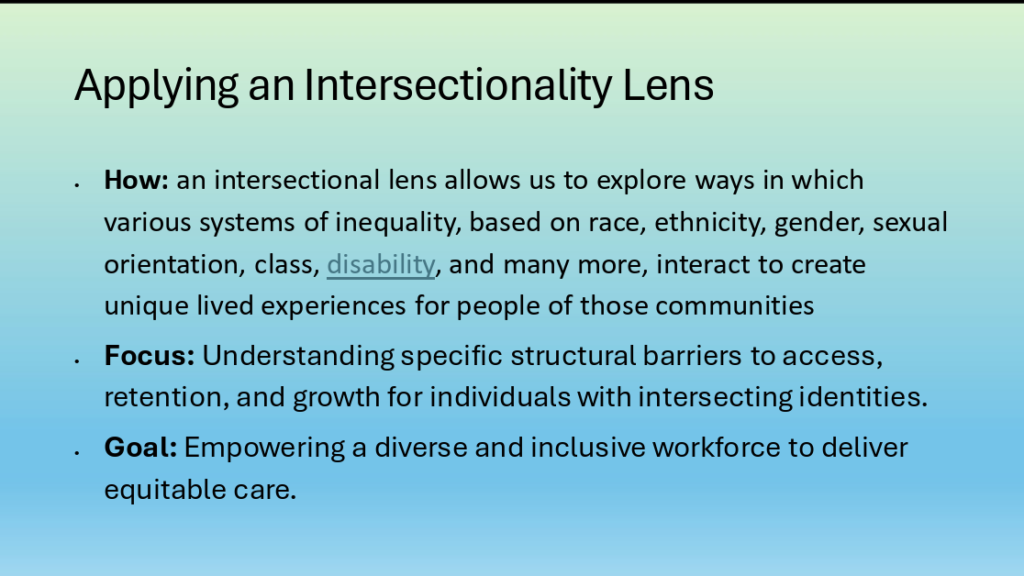
The module “Beyond Equity, Diversity, and Inclusion: The Power of Intersectionality in Addressing Bias” takes things even further. Slide after slide smuggles in radical ideology under the guise of healthcare improvement. 

“Intersectionality” – a framework borrowed from critical theory that is used to combine different categories of how one identifies, such as being a certain race, religion, and sexuality – is presented as an established fact.

Figure 4. From “Beyond Equity, Diversity, and Inclusion: The Power of Intersectionality in Addressing Bias.”
Figure 5. From “Beyond Equity, Diversity, and Inclusion: The Power of Intersectionality in Addressing Bias.”

These ideas explicitly advance a vision of healthcare that treats individuals in accordance with their group identity, and one in which the pursuit of social justice is central to shaping care within that framework.

So much for doctors focusing on their trade of providing good, quality medical care; now they’re called to be social justice warriors.

What is particularly concerning is that these training sessions represent thousands of hours of physician time and mental energy diverted from actual medical education and patient care. Instead of learning about the latest clinical evidence or honing diagnostic skills, Michigan physicians are subjected to ideological indoctrination that treats them as presumptively bigoted and in need of political re-education.

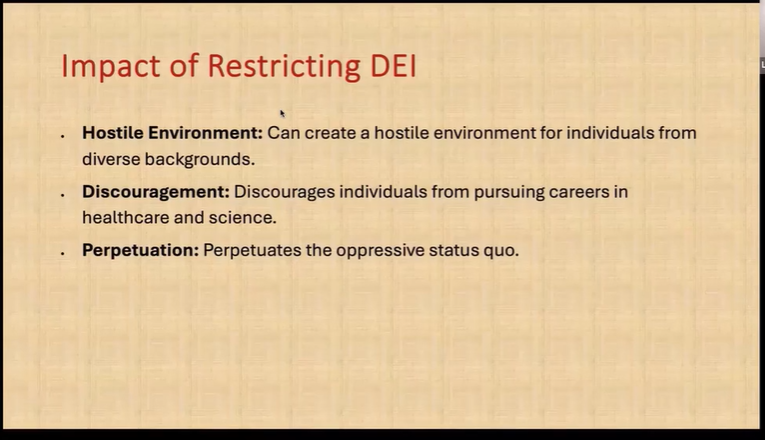
The presentations, taken as a whole, indicate a clear desire to radicalize participants rather than educate them. For example, it treats any attempt to restrict these divisive DEI programs as a sort of bogeyman; as if it would be disastrous to curb their efforts, but no evidence is given to back up this notion.

Figure 6. From “Beyond Equity, Diversity, and Inclusion: The Power of Intersectionality in Addressing Bias.”

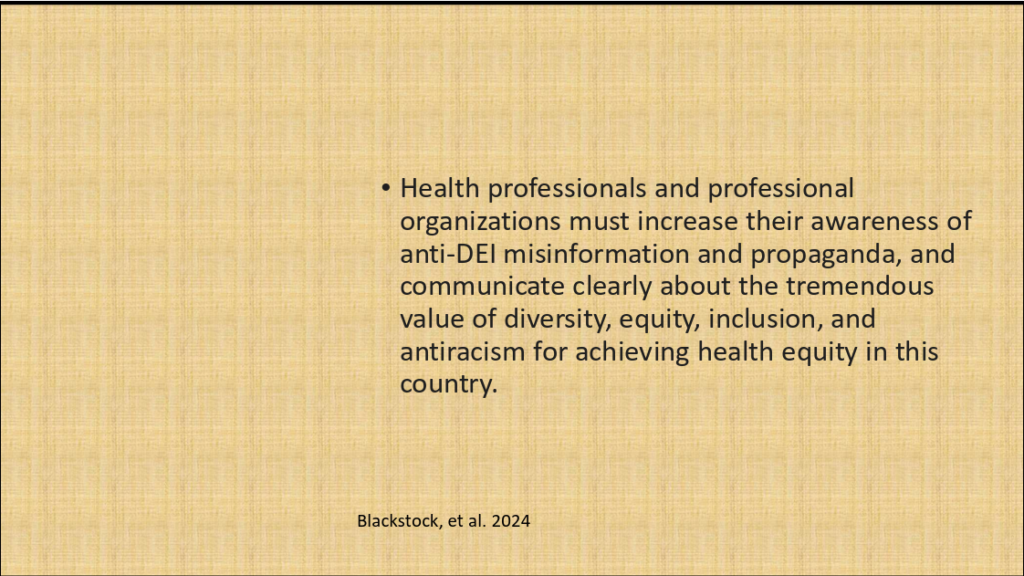
At one point, the materials state: “Health professionals must increase their awareness of anti-DEI misinformation and propaganda, and communicate clearly about the tremendous value of diversity, equity, inclusion, and antiracism.”

Figure 7. From “Beyond Equity, Diversity, and Inclusion: The Power of Intersectionality in Addressing Bias.”

Translation: anything opposed to the standard line about DEI is misinformation and propaganda, and healthcare professionals should not entertain the possibility of another theory.

Is that how medical science is advanced – through dismissing competing ideas as misinformation?

The Michigan State Medical Society should ask itself a simple question: Are Michigan patients receiving better healthcare because their physicians attended these training sessions? That’s doubtful, particularly given the lack of supporting evidence.

What’s clear is this: Medical care should be based on clinical evidence, individual patient needs, and the physician’s judgment – not on contested theories about social construction, intersectionality, and systemic oppression. Our patients – all of them – deserve better.

https://donoharmmedicine.org/wp-content/uploads/equality-equity.jpg 627 851 Ailan Evans https://donoharmmedicine.org/wp-content/uploads/dono-logo.png Ailan Evans2026-01-08 18:03:042026-01-08 18:03:04Michigan State Medical Society’s DEI Training: Ideology Masquerading as Medicine

Major Nursing Org Embraces Racial Discrimination and DEI Activism

Uncategorized United States DEI Medical association Commentary Do No Harm Staff

The Association of Women’s Health, Obstetric and Neonatal Nurses (AWHONN) has the ostensible mission to “support nurses caring for women, newborns, and their families.”

However, several of the organization’s position statements reveal another agenda: advocating for injecting radical identity politics into healthcare.

AWHONN’s position statement on “Racism and Bias in Maternity Care Settings,” citing several examples of racial disparities in health outcomes, asserts that the role of nurse should include advocacy to confront supposed systemic racism in healthcare.

“Nurses must seek to change the structures, institutions, attitudes, beliefs, and practices that have legally or otherwise perpetuated racism, discrimination, mistreatment, and lack of treatment of Black women in the U.S. healthcare system,” the statement reads.

One such way nurses can do this, the position statement suggests, is through confronting “implicit bias.” Keep in mind that “implicit bias” is a poor predictor at best of any real-world health outcomes.

Nevertheless, AWHONN maintains that it will work to “[e]ncourage all states and territories to develop legislation such as the California Dignity in Pregnancy and Childbirth Act (2019), which requires perinatal health providers and staff to receive training on implicit bias.”

Other policy recommendations are to:

  • “Encourage states and health care organizations to provide funding for nurses to receive anti-racism, bias, and cultural competency education during clinical training and practice”;
  • “Expand equitable access to models of care that provide the most optimal outcomes, such as community-based programs, full spectrum doulas, and midwifery care”; and
  • “Expand funding to support research efforts to examine the role and impact of racial bias.”

Most disturbing, however, is the statement that AWHONN will “[s]upport programs and initiatives to diversify the current nursing and health care workforce.”

It’s unclear how, exactly, AWHONN aims to achieve this without calling for explicitly discriminatory hiring and recruiting practices.

But we don’t have to speculate. 

AWHONN’s “Nursing Workforce Diversity” position statement is rife with explicit commitments to engage in these discriminatory practices.

Here are just a few recommendations that make clear how AWHONN is committed to DEI:

  • Ensure that recruitment and educational materials represent a diverse nursing workforce.
  • Implement holistic admission review policies by academic institutions.
  • Provide equitable clinical opportunities for students based on course and program outcomes.
  • Identify barriers that hinder admission for and successful graduation of underrepresented students.
  • Expand tuition assistance and other financial agreements for underrepresented students.
  • Increase recruitment of diverse nursing faculty and academic leaders.
  • Recruit, hire, and support a diverse workforce of nurses that represents the communities they serve.
  • Provide training and educational resources that support and represent workforce diversity.

Several of these recommendations are worth expanding on.

“Holistic review” refers to admissions practices that devalue metrics of academic achievement in favor of “softer” factors such as personal traits. That AWHONN believes implementing this process will increase diversity is extremely telling, as it’s suggesting that holistic review is really a proxy for racial discrimination. And for what it’s worth, in the medical school context, we have strong evidence that it is.

Providing “equitable clinical opportunities” would appear to entail some form of discriminatory system that allocates opportunities to acquire clinical experience on the basis of race. This is, admittedly, speculative, but does seem par for the course when viewed in conjunction with the other recommendations.

All told, it’s clear that AWHONN is intent not only on serving as a vehicle for DEI activism in healthcare, but also as an engine of discrimination in nursing.

Racial discrimination has no place in healthcare: not only is it unethical and unfair, but it degrades the quality of the healthcare workforce by prioritizing identity over merit.

https://donoharmmedicine.org/wp-content/uploads/2023/12/shutterstock_2213352297-scaled.jpg 1708 2560 Ailan Evans https://donoharmmedicine.org/wp-content/uploads/dono-logo.png Ailan Evans2026-01-06 18:55:372026-01-06 18:55:37Major Nursing Org Embraces Racial Discrimination and DEI Activism

DEI Runs Wild Within the American Shoulder and Elbow Surgeons 

Uncategorized United States DEI Medical association Commentary Do No Harm Staff

“Diversity, equity, and inclusion are not just buzzwords. They represent an essential element of our society.”

That’s what Dr. Joaquin Sanchez-Sotelo, then-president of the American Shoulder and Elbow Surgeons (ASES), said in a January 2025 video promoting the organization’s DEI committee and various diversity efforts.

The video specifically highlighted the ASES’s various DEI initiatives and attempts to boost diversity in this orthopedic subspecialty.

Diversity is key to better patient care, innovation, and a stronger medical field. At Nth Dimensions, we’re committed to increasing diversity in specialty medicine through mentorship and opportunities. #DiversityInMedicine #Innovation #NthDimensions pic.twitter.com/AOkZM2fwTt

— Nth Dimensions (@nth_dim) February 5, 2025

For instance, one of the co-chairs of the ASES’s DEI committee, Dr. Sara Edwards, discussed the partnerships and programs the ASES engages in to further these goals.

“[W]e also give several scholarships to our residency programs […] and get [residents] exposed to shoulder, elbow again in an attempt to recruit more diversity within our field,” Dr. Edwards said.

Both Dr. Edwards and Dr. Sanchez-Sotelo discussed ASES’s partnership with nonprofit organization Nth Dimensions.

According to an archived version of Nth Dimensions’ “About” webpage, Nth Dimensions’ mission was to create a talent pipeline “to address the dearth of women and underrepresented minorities (URMs) in orthopaedic surgery.”

However, that language has since been removed from the organization’s website.

Additionally, the “Become an Nth Scholar” webpage previously advertised the organization’s “ongoing mission to diversify the physician workforce.”

Indeed, in the ASES January 2025 newsletter, the organization characterized Nth Dimensions’ summer internship program as helping “build professional relationships as well as mentorship opportunities for under-represented minorities while giving these young medical students the chance to learn more about Shoulder and Elbow surgery.”

The ASES newsletter also hints at several other initiatives that suggest potentially discriminatory recruiting patterns: “There are a number of DEI achievements we can celebrate […]: advisory role when faculty is selected for various programs, selection of scholars for the Nth Dimensions summer internship, funding support for underserved individuals that wish to attend the ASES Fellows and Residents Course, and further collaboration with Nth Dimensions and other organizations to bring high school, college and medical students to our Annual Meeting and expose them to what ASES has to offer.”

The ASES DEI committee’s mandate explicitly furthers these goals.

Taken together, it’s clear that the ASES is hyper-fixated on increasing diversity within this orthopedic surgery subspecialty and engaging in potentially discriminatory practices to achieve this goal.

This undermines the very foundation of medicine, which should prioritize competence, training, and skill above all else.

Limiting opportunities based on group identity rather than individual merit is inherently discriminatory and contrary to basic principles of fairness and excellence in patient care.

https://donoharmmedicine.org/wp-content/uploads/2023/09/shutterstock_2013632891-scaled.jpg 1308 2560 Ailan Evans https://donoharmmedicine.org/wp-content/uploads/dono-logo.png Ailan Evans2026-01-06 14:42:072026-01-06 14:42:07DEI Runs Wild Within the American Shoulder and Elbow Surgeons 

Georgetown’s Emergency Medicine Residency Program Makes DEI A ‘Top Priority’

Uncategorized Washington DC DEI Hospital System Commentary Do No Harm Staff

The Georgetown University Hospital/Washington Hospital Center Emergency Medicine Residency Program appears intent on inserting DEI into its core educational activities.

First, the residency program, operated in conjunction with MedStar Health, explicitly states that “diversity and inclusion” is a “top priority.”

“We understand that an inclusive academic program will enrich our learning environment and improve care of the patients we serve,” the program’s DEI page reads. “Our program is dedicated to recruiting and retaining a diverse group of residents and faculty.”

If that seems like just the usual jargon paying lip service to DEI, think again. 

The program boasts a $1,500 diversity scholarship intended to “[r]ecruit and retain a diverse residency class to best reflect the diverse population that our program serves.”

This appears to be a subtle, indirect gesture at the (debunked) notion that patients experience better health outcomes when treated by physicians of the same racial group.

The scholarship description also states that applicants will “ideally” have an “interest in diversity & inclusion in the equitable delivery of healthcare.”

While the scholarship criteria disclaim any overt racial discrimination in the application process, they do state that 4th-year medical students “from groups underrepresented in medicine” are especially encouraged to apply.

Next, DEI is incorporated into the program’s curriculum. The program’s diversity page states it best:

Diversity and inclusion permeates all aspects of our curriculum. Every clinical shift our residents have the opportunity to care for and learn from a profoundly diverse patient population. We offer elective rotations focused on the care of unique populations. During didactics, we address the importance of diversity and inclusion via lectures, journal clubs, workshops, small group discussions, and simulation. We highlight the importance of understanding and mitigating implicit bias.

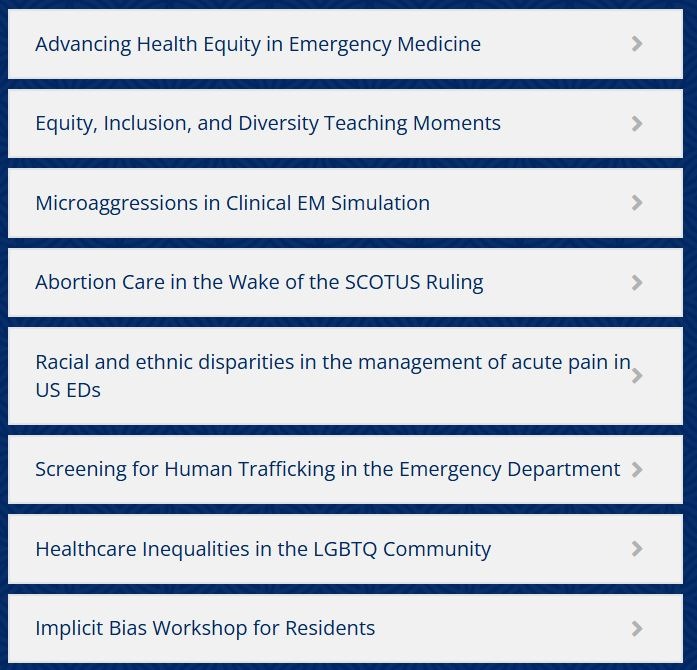
Indeed, the curriculum contains a host of political and DEI-related sessions including “Advancing Health Equity in Emergency Medicine”; “Microaggressions in Clinical EM Simulation”; and “Implicit Bias Workshop for Residents.”

Additionally, much of the scholarly work listed on the program’s diversity webpage matches the political nature of the program’s curriculum, with ample references to DEI and related concepts.

In this case, we don’t need to read between the lines. 

As the program’s diversity page states, “diversity and inclusion permeates all aspects” of the Georgetown University Hospital/Washington Hospital Center Emergency Medicine Residency Program’s curriculum.

Unfortunately, Georgetown’s program seems more concerned with indoctrination and ideology, and less concerned with training the next generation of emergency physicians to be as competent as they can.

https://donoharmmedicine.org/wp-content/uploads/2024/06/shutterstock_1189798267-scaled.jpg 1440 2560 Ailan Evans https://donoharmmedicine.org/wp-content/uploads/dono-logo.png Ailan Evans2025-12-23 22:55:592025-12-23 22:55:59Georgetown’s Emergency Medicine Residency Program Makes DEI A ‘Top Priority’

New Medical School Is Already All-In on DEI

Uncategorized New York DEI D'Youville University College of Osteopathic Medicine Medical School Commentary Do No Harm Staff

A new medical school hasn’t even begun its classes, yet it is already fully onboard with DEI ideology.

D’Youville University College of Osteopathic Medicine (DYU-COM) is set to welcome its inaugural class in the fall of 2026. And already, the school has broadcast its intent to advance and implement woke policies, procedures, and, concerningly, admissions standards.

The school boasts a lengthy DEI policy replete with references to diversity, implicit bias, and so on. The policy appears to have been submitted for the purposes of accreditation from the American Osteopathic Association’s Commission on Osteopathic College Accreditation (COCA). However, COCA has since suspended its diversity requirements.

Most disturbing, however, is the school’s admissions and recruitment practices related to DEI.

The DEI policy states that the College endeavors “to interview every applicant who belongs to an underrepresented minority (URM) group who meets minimum admission qualifications.”

This is blatantly discriminatory. Applicants who do not belong to these groups are not automatically granted face time with admissions officials. Not only is this a huge disadvantage to qualified applicants, but otherwise undeserving applicants who merely meet the minimum standards are given an unfair leg up.

This naturally creates an admissions process that punishes merit in favor of ideology and incentivizes admissions officials to promote less-qualified applicants so long as they check certain boxes. Invariably, this will degrade the quality of medical education, to the disservice of future patients.

Additionally, the DEI policy states that the school should “as much as possible, create a diverse hiring committee that includes individuals from underrepresented groups and across various departments.”

Assuming “underrepresented” refers to minorities, this also appears to be an example of textbook discrimination. Moreover, this method for assembling the committee is itself anti-meritocratic, and appears less concerned with promoting the best and brightest applicants and more with adhering to ideology.

Next, the DEI policy states that future employees must embrace DEI ideology wholesale to be sufficiently aligned with DYU-COM’s mission.

The policy reads as follows:

“When assessing whether an applicant is aligned with an inclusive and mission-driven culture, a candidate should:

  • Demonstrate a broader understanding of social identity characteristics.
  • Demonstrate an appreciation for D’Youville University’s mission and heritage and/or a willingness to delve deeper into it.
  • Demonstrate self-awareness of their cultural perspective, identity, biases, power, privilege, etc.
  • Demonstrate a willingness to support the mission and the efforts of diversity, inclusion, and equity on campus.
  • Integrate mission, equity, inclusion, and diversity concepts into their responses to questions without being prompted.
  • Use inclusive language.”

Additionally, the policy requires that when making hiring decisions, school officials ask applicants “one question related to diversity, equity, and inclusion as well as one question related to mission.”

Putting all these pieces of evidence together, it’s clear that racial and ideological preferences will play a significant role in DYU-COM’s admissions and hiring decisions.

For the sake of its future students, DYU-COM should adjust course immediately and excise all divisive, discriminatory practices from its admissions and recruiting strategies. And seeing as COCA suspended its diversity requirements, DYU-COM should no longer feel obligated to promote discrimination.

https://donoharmmedicine.org/wp-content/uploads/2024/09/shutterstock_2370773689-scaled.jpg 855 2560 Ailan Evans https://donoharmmedicine.org/wp-content/uploads/dono-logo.png Ailan Evans2025-12-22 20:02:182025-12-22 20:02:18New Medical School Is Already All-In on DEI

Is medical school culture replacing academic rigor?

Uncategorized DEI Medical Journal Media Mention Kurt Miceli, MD

Medscape recently released a report entitled, “A Constant Evolution: The Unique Culture of Medical School: Medscape 2025 Report.” The report’s underlying premise is that a warm, welcoming, and supportive culture in medical school allows students to not only “survive” their training, but to truly “thrive” in their educational journey.

Yet, reading between the lines, this emphasis on “culture” and environment also poses a very different question: Has medical education subtly morphed into a consumer-driven enterprise, where feelings of belonging trump the rigorous mastery of knowledge and skills needed to produce competent physicians? With only one question focused on study time, the survey is otherwise absent any mention of academics or the learning that takes place. To that end, the report’s noted cultural “evolution” leaves unanswered what remains of the academic culture that should be at the heart of any medical school.

Read the full article at KevinMD.com.

https://donoharmmedicine.org/wp-content/uploads/2024/01/shutterstock_2235597941-scaled.jpg 1440 2560 Ailan Evans https://donoharmmedicine.org/wp-content/uploads/dono-logo.png Ailan Evans2025-12-22 15:35:252026-01-20 14:41:14Is medical school culture replacing academic rigor?

The AAMC Does More Damage Control on DEI 

Uncategorized United States DEI Association of American Medical Colleges Commentary Do No Harm Staff

This week, Do No Harm reported on how the Association of American Medical Colleges (AAMC) spent much of its annual meeting discussing ways to advance DEI priorities.

These sessions demonstrate that, despite the AAMC removing much of its DEI programming from its website, DEI is still integral to the organization’s institutional priorities. 

Nevertheless, the AAMC has continued to remove more of its overtly pro-DEI resources from its website.

Roughly one year ago, Do No Harm unveiled an exhaustive report examining the AAMC’s various DEI initiatives, many of which the AAMC openly advertised on its website.

Now, many of the DEI resources highlighted by Do No Harm have either been rebranded to include more innocuous language, altered to redirect to less-overt endorsements of DEI, or removed entirely.

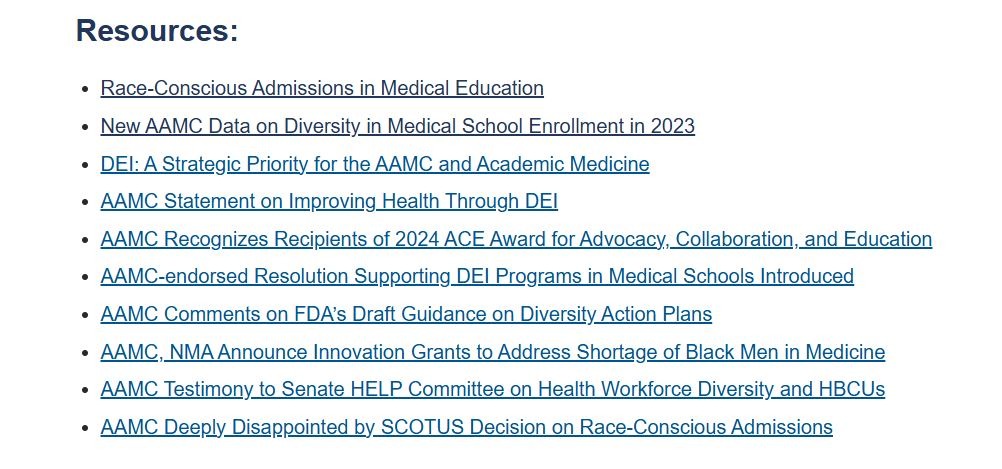
For instance, the AAMC’s webpage titled “Investing in Healthier Communities” is no longer live; the website previously hosted a slew of DEI resources. These included endorsements of race-conscious admissions in medical schools, DEI initiatives in the federal health bureaucracy, and wide-scale DEI programming.

Figure 1. A screenshot of the AAMC’s archived Investing in Healthier Communities webpage.

Now, the webpage redirects to the AAMC’s advocacy webpage. 

No such full-throated endorsements of DEI remain.

Also redirecting to the AAMC’s advocacy webpage is the “Workforce Legislative Policy and Priorities” page.

That webpage also featured the AAMC’s political advocacy efforts, but was significantly more ideological and replete with DEI activism.

For instance, the page included:

  • Support for increased immigration on the grounds that immigrants “add diversity of culture and experience to our nation’s workforce.”
  • Support for programs that “invest in scholarship, loan repayment, and mentorship programs for future health care professionals from underrepresented minority, rural, and disadvantaged backgrounds.”

As another example, the AAMC’s “Medical Minority Applicant Registry” has been discontinued, according to the organization’s website.

This tool was explicitly designed to get students from “historically underrepresented” groups into medical school; the eligibility criteria stated that students must either be “economically disadvantaged” or members of underrepresented racial groups such as “African-American/Black, Hispanic/Latino, American Indian/Alaska Native or Native Hawaiian/Pacific Islander.”

The webpage of the program remains up, however, with the following disclaimer: “The AAMC is committed to a culture of excellence in academic medicine, where physicians from all backgrounds, perspectives, and experiences are welcomed and respected.”  

Additionally, one of the “affinity groups” formerly advertised on the AAMC website, the Group on Diversity and Inclusion or GDI, has been removed entirely from the AAMC’s website. 

There is now the Group on Collaboration, Engagement, and Community (GCEC), which per the AAMC “supports the efforts of AAMC-member institutions and academic medicine to foster an environment where people of all backgrounds and perspectives have an equal opportunity to thrive.”

And finally, the link to the AAMC’s “Advancing Health Equity” guide is no longer live. That guide was chock full of DEI resources and concepts.

It’s true that the AAMC’s decision to actually discontinue DEI programs is encouraging.

But, as recent events have demonstrated, the AAMC hasn’t ditched DEI wholesale just yet. It must publicly distance itself from DEI completely and recommit itself to excellence in medical education.

https://donoharmmedicine.org/wp-content/uploads/2025/05/shutterstock_2303902473-scaled.jpg 1497 2560 Ailan Evans https://donoharmmedicine.org/wp-content/uploads/dono-logo.png Ailan Evans2025-12-19 13:40:532025-12-19 13:40:53The AAMC Does More Damage Control on DEI 

Do No Harm Applauds U.S. House of Representatives’ Passage of the Do No Harm in Medicaid Act, Blocking Taxpayer Funding for Child Sex Change Interventions

Uncategorized United States Gender Ideology Press Release Do No Harm Staff

RICHMOND, VA; December, 18, 2025 – Today, Do No Harm released a statement celebrating the U.S. House of Representatives passing the Do No Harm in Medicaid Act, which prohibits federal Medicaid funding from being used for child sex change interventions.

“We applaud our elected officials who took a critical step towards ending one of the worst medical scandals our country has ever seen,” said Stanley Goldfarb, MD, Chairman of Do No Harm. “Pediatric sex-change interventions have no place in the American medical system, and it is outrageous that taxpayers have been forced to subsidize these procedures. Protecting children who cannot consent to such life-altering mutilative procedures is common sense and should have been a unanimous vote. The Senate should not delay in taking up and passing this important bill.”

Key Points:

  • The bill, introduced by Representative Dan Crenshaw (R-TX), amends the Social Security Act to prohibit federal Medicaid funding for sex change procedures for minors.
  • Prohibited procedures under this legislation would include surgeries, cross-sex hormone therapies, and puberty blockers.
  • The bill also preserves funding for medically necessary treatments for conditions such as precocious puberty, genetic disorders, or life-threatening illnesses.

See the full text of the bill here.


Do No Harm, established in April 2022, has rapidly gained recognition and made significant strides in its mission to safeguard healthcare from ideological threats. It has over 50,000 members, including doctors, nurses, physicians, and concerned citizens across all 50 states and 14 countries.


https://donoharmmedicine.org/wp-content/uploads/2022/11/DNH_ContentCards_PressRelease.png 675 1200 Ailan Evans https://donoharmmedicine.org/wp-content/uploads/dono-logo.png Ailan Evans2025-12-18 21:00:232025-12-18 21:00:23Do No Harm Applauds U.S. House of Representatives’ Passage of the Do No Harm in Medicaid Act, Blocking Taxpayer Funding for Child Sex Change Interventions

Do No Harm Applauds HHS Rule Barring Hospitals That Perform Transgender Procedures on Minors from Receiving Federal Funds 

Uncategorized United States Gender Ideology Press Release Executive Do No Harm Staff

RICHMOND, VA; December 18, 2025 – Today, Do No Harm, a medical watchdog group dedicated to removing identity politics from medicine, issued a statement supporting the Department of Health and Human Services’ latest efforts to protect children from gender ideology. These include a proposed rule to bar hospitals from performing transgender procedures on minors as a condition of participating in Medicare and Medicaid programs. 

“President Trump and HHS are taking another critical step to protect children from harmful gender ideology. The proposed rule – banning hospitals from performing sex change interventions on minors as a condition for Medicare and Medicaid participation – is common sense, evidence-based, and morally imperative,” said Do No Harm Chairman Stanley Goldfarb, MD. “Many so-called gender clinics have already begun to close as the truth about the risks and long-term harms about these drugs and surgeries on minors have been exposed. Now, hospitals that receive taxpayer funds from these federal programs must follow suit. Do No Harm will continue to be a source for sound science and expertise to support this rule-making process and ensure American taxpayer dollars do not fund sex-change operations on minors. This is just the beginning, but it marks a major step toward delivering a crippling blow to the child transgender industry.” 


Do No Harm, established in April 2022, has rapidly gained recognition and made significant strides in its mission to safeguard healthcare from ideological threats. It has over 50,000 members, including doctors, nurses, physicians, and concerned citizens across all 50 states and 14 countries.  


https://donoharmmedicine.org/wp-content/uploads/2022/11/DNH_ContentCards_PressRelease.png 675 1200 Ailan Evans https://donoharmmedicine.org/wp-content/uploads/dono-logo.png Ailan Evans2025-12-18 19:34:422025-12-18 19:34:42Do No Harm Applauds HHS Rule Barring Hospitals That Perform Transgender Procedures on Minors from Receiving Federal Funds 

Do No Harm Co-Signs Citizen Petition Asking the FDA to Take Action on the Off-Label Use of Estrogen in Males

Uncategorized United States Gender Ideology Press Release Executive Do No Harm Staff

RICHMOND, VA; December 18, 2025 – This week, Do No Harm proudly signed onto a citizen petition sent to the Food and Drug Administration (FDA) requesting it address the risks and scientific uncertainty of widespread off-label prescription of estrogen to males in gender medicine.

Filed Wednesday evening, the citizen petition reflects growing concern among clinicians, researchers, affected individuals, and public health stakeholders about increased off-label estrogen use and regulatory gaps concerning its harmful and irreversible effects. 

“The evidence makes clear that off-label use of cross-sex hormones for males is extremely high risk. The FDA has a duty to protect Americans from harm and safeguard their health by ensuring patients and their doctors have the most accurate, science-based information about these medications,” said Kurt Miceli, MD, Medical Director for Do No Harm. “By implementing the recommended changes, the FDA would be taking significant steps to protect Americans from a harmful ideology that has promoted the use of estrogen in male patients with incomplete information and little consideration for the associated risks. This administration has taken extraordinary steps to end the gender medicine scandal, and we urge them to continue their track record of common-sense patient protections by adopting these recommendations.”

The petition urges the FDA to take two immediate actions: open a dedicated docket to evaluate the safety and potential effectiveness of off-label estrogen use, and convene a Part 15 public hearing to gather expert and patient testimonies on its risks and benefits.

The coalition of petition signers urges the FDA to also consider the following recommendations to protect public health and spread awareness to patients:

  • Mandate a boxed warning on all relevant estrogen-containing products detailing the severe risks associated with their off-label use in males. 
  • Conduct a comprehensive safety review and implement robust Risk Evaluation and Mitigation Strategies to ensure any potential benefits outweigh the risks.
  • Mandate enhanced adverse event reporting to establish post-market surveillance of the use of off-label estrogen and guide clinicians to report any serious adverse events the drug creates for patients.

The petition goes on to share substantial evidence confirming the serious and growing risks associated with the use of estrogen in males. This includes a 10-fold increase in the risk of stroke after six years, an annual incidence of testicular cancer that is more than 26 times higher than the general population, and an 80% increased risk in the standardized mortality ratio.

The petition was signed by fifteen organizations representing a politically diverse group of advocacy and clinical organizations, as well as more than 220 individuals, including over 60 health care professionals, five men who are former patients of gender medicine, and numerous concerned citizens. Co-signing the petition is a continuation of Do No Harm’s work to support clinicians and patients who deserve adequate warning of these irreversible harms. 


Do No Harm, established in April 2022, has rapidly gained recognition and made significant strides in its mission to safeguard healthcare from ideological threats. It has over 50,000 members, including doctors, nurses, physicians, and concerned citizens across all 50 states and 14 countries.


https://donoharmmedicine.org/wp-content/uploads/2022/11/DNH_ContentCards_PressRelease.png 675 1200 Ailan Evans https://donoharmmedicine.org/wp-content/uploads/dono-logo.png Ailan Evans2025-12-18 15:47:112025-12-18 15:47:11Do No Harm Co-Signs Citizen Petition Asking the FDA to Take Action on the Off-Label Use of Estrogen in Males

The AAMC’s Annual Meeting Shows That DEI Is Still Alive and Well

Uncategorized United States DEI Association of American Medical Colleges Medical association Commentary Do No Harm Staff

The Association of American Medical Colleges (AAMC) has in recent months attempted to rebrand its initiatives to scrub mentions of DEI and racially discriminatory policies, removing statements and program descriptions that include references to these practices.

But, as Do No Harm previously revealed, these efforts have largely been cosmetic.

And, as multiple sessions at the AAMC’s November Learn, Serve, Lead annual meeting further demonstrate, the organization has yet to distance itself from DEI in any substantive capacity.

For instance, several sessions discussed ways in which the medical education field could promote tenets of DEI, such as through ideological trainings as well as initiatives to increase diversity in medical education.

Perhaps most explicit of these was the AAMC’s session on holistic review, which refers to admissions practices that emphasize factors unrelated to objective metrics of academic achievement.

The AAMC has outright admitted that the practice of considering these non-merit-based factors in admissions is a means of achieving greater racial diversity among medical students.

The session included an anecdote discussing UConn Health’s efforts to “recruit residents for its health equity track” using a tool called Thalamus Cortex, which is designed to facilitate the holistic review process. 

“Programs can selectively blind application data to reduce conscious and unconscious bias while promoting a diverse screening process, taking applicants’ entire profiles and accomplishments into account,” the tool’s website states.

Another session, called “Centering Narratives and Framing Opportunity: How Black Men Charted Their Pathways in Medicine,” discussed efforts to boost the number black male physicians in the medical field, such as the AAMC’s Action Collaborative for Black Men in Medicine.

The details on how these efforts would or will work in practice are scarce, but the session description made clear that such efforts would include “financial support for medical school applications, individualized advising, mentorship networks, and fostering inclusive environment.”

“Attendees were encouraged to engage with the Action Collaborative initiatives and contribute to ongoing efforts to create equitable pathways for Black men in medicine,” the session description stated.

The “Promising Practices for Leadership in a Changing Landscape” session included a discussion “about navigating Texas laws restricting diversity, equity, and inclusion work while previously participating in the AAMC’s HEDIC program.”

The session refers to the now-paused Health Executive Equity, Diversity, & Inclusion Certificate (HEDIC) program that was explicitly aimed at “organizing and implementing equity, diversity, and inclusion initiatives and strategies within healthcare institutions and communities.”

Other examples included sessions dedicated to: recognizing “leaders advancing equity in medicine”; an AI tool designed to “flag potential bias” in medical education evaluations; and diversity initiatives in graduate and continuing medical education.

Beyond DEI, the sessions also included discussion of political topics such as support for increasing immigration and climate change.

Indeed, one session, titled, “How U.S. Medical Schools are Integrating Climate Change in their Medical Student Curricula,” urged medical education to play a “critical role” in addressing climate change. This apparently includes “the role of student advocacy in driving curricular change, the importance of culturally sensitive planetary health diet counseling, and the role of medical legal partnerships in enhancing adaptive capacity.”

If this seems like an attempt to twist the mission of medical education toward outright political advocacy, that’s because it is.

In short, if the AAMC’s annual meeting is any reflection of the organization’s institutional priorities, it’s clear that DEI still has a substantial foothold.

The AAMC must publicly reject divisive, discriminatory ideology and remove the pervasive influence of radical identity politics if it wishes to live up to its mission to promote the best possible medical education.

https://donoharmmedicine.org/wp-content/uploads/2024/05/shutterstock_2054953619-scaled.jpg 1707 2560 Ailan Evans https://donoharmmedicine.org/wp-content/uploads/dono-logo.png Ailan Evans2025-12-17 17:18:292025-12-17 17:18:29The AAMC’s Annual Meeting Shows That DEI Is Still Alive and Well

How AAIM’s Equity-Based Grading Reforms Threaten Merit and Competency in Medical Education

Uncategorized United States DEI Medical association Commentary Do No Harm Staff

The Alliance for Academic Internal Medicine (AAIM) states that it “promotes the advancement and professional development of its members,” who are involved in educating future internal medicine (IM) physicians. 

Considering that IM specialists are experts in diagnosis and non-surgical treatment of patients with complex medical conditions, it’s vital for the most qualified candidates to enter this field.

Yet, AAIM appears to be more interested in achieving “equity” over merit in undergraduate medical education (UME). The August 2025 edition of AAIM’s “Diversity Now” newsletter references an October 14 webinar on “Enhancing Equity in Assessment within the UME Grading Process – A Data Driven Approach.” 

It turns out that AAIM has addressed this topic before; indeed, it maintains a resource on its website titled “Recommendations to Reduce Bias in Grading.” 

This document outlines desired changes for the assessment of IM clerkship participants so that “no one is disadvantaged from achieving [their full learning] potential because of structural or social barriers.” 

Faculty must complete training in “implicit bias” and “microaggressions” on an ongoing basis to “mitigate against potential effects of the individual bias of those responsible for assigning grades.”

But that isn’t enough to achieve equity, according to the AAIM:

If standardized exams are used in clerkship grading, limit the weight that standardized exam scores, including National Board of Medical Examiner’s subject or shelf exams, have in determining a student’s grade. Differences between population group outcomes in standardized examinations likely reflect unequal opportunities afforded to underrepresented in medicine (UIM) students. In addition, deemphasizing exam scores might allow students to shift their attention to other important patient skills that they need to develop.

This is a remarkable statement. Essentially, AAIM is arguing that merit and achievement should be devalued, because focusing on these objective metrics of competency might disadvantage certain racial groups.

This naturally compromises the quality of medicine to advance perverse ideological goals, and drives everyone – of all races – to mediocrity.

And, although the original work for these recommendations was published in 2021, AAIM continues to host the material on its website.

AAIM’s proposed grading reforms represent more than procedural adjustments. They signal a willingness to subordinate merit-based assessment to identity-based considerations in the name of equity. 

The question is straightforward: Should medical students be evaluated primarily on their clinical competency and medical knowledge, or should assessment systems incorporate identity-based considerations to achieve predetermined demographic outcomes? The answer has profound implications for the future of IM education and, ultimately, the quality of patient care.

https://donoharmmedicine.org/wp-content/uploads/2024/12/shutterstock_2491577653-scaled.jpg 1709 2560 Ailan Evans https://donoharmmedicine.org/wp-content/uploads/dono-logo.png Ailan Evans2025-12-16 22:05:362025-12-16 22:05:36How AAIM’s Equity-Based Grading Reforms Threaten Merit and Competency in Medical Education

CMS Takes a Crucial Step Toward Ridding Medical Education of DEI

Uncategorized United States DEI Federal government Commentary Executive Do No Harm Staff

Recently, the Centers for Medicare & Medicaid Services (CMS) incorporated proposals by Do No Harm and Defending Education in a final rule establishing additional protections to keep unlawful discrimination out of medical residency programs for graduate medical education.

These protections are aimed at preventing graduate medical education accreditors, like the Accreditation Council for Graduate Medical Education (ACGME) and others, from requiring or otherwise encouraging or promoting hospitals to implement discriminatory criteria in their medical residency programs.

Under the final rule, hospitals may continue to receive federal payments for direct and indirect graduate medical education costs for accredited medical residency programs. 

However, for payment purposes, CMS will only deem an accredited program “approved” where the accreditation organization “does not use accreditation criteria that promote or encourage discrimination on the basis of race, color, national origin, sex, age, disability, or religion, including the use of those characteristics or intentional proxies for those characteristics as a selection criterion for employment, program participation, resource allocation, or similar activities, opportunities, or benefits.”

In practice, this means that accreditors continuing to force discriminatory standards in accreditation requirements for graduate medical education will place accredited hospital programs at risk by imposing potentially significant financial burdens to hospitals, who may not be able to recoup costly graduate medical education expenses.

The final rule’s implementation of these anti-discrimination provisions directly reflects the language Do No Harm and Defending Education proposed in a comment to the agency earlier this fall. 

In September, Do No Harm submitted a responsive comment to CMS’s proposed rule, warning the agency that the rule’s anti-discrimination protections may be susceptible to circumvention in which accreditors “engag[e] in word play to circumvent the proposed rule’s reach.”

Given various, ongoing circumvention efforts, our comment laid out the very real possibility that accreditors might easily evade the rule through word gaming and cosmetic changes that merely cloak the continued practice of DEI.

As Do No Harm has documented in our “Zombie DEI” report and elsewhere, many institutions simply rebrand their DEI programs and initiatives while continuing to engage in racially discriminatory practices and promote radical identity politics.

CMS took our concerns seriously.

Indeed, in issuing the final rule, CMS explicitly credited these concerns as motivating its decision to revise the final language.

The agency further stated that it “agree[s] that the regulations should more explicitly specify the types of practices that will be prohibited under [the] finalized policy,” confirming that CMS would “add language to the regulations that would prevent accreditors from engaging in word play as a means of circumventing the proposed policy.”

Do No Harm applauds CMS for taking action to address this urgent problem in medical education.

The role of accreditors in injecting racially discriminatory policies and practices not just in graduate medical education, but throughout medical and healthcare education, is often overlooked. But accreditors, due to the immense power they wield, can effectively extort these programs into implementing DEI policies as a condition of accreditation.

Do No Harm’s March report on medical and healthcare education accreditors highlighted this dynamic. 

We examined ten such accreditors, including the Liaison Committee on Medical Education (LCME), the Council on Podiatric Medical Education (CPME), and the Commission on Dental Accreditation (CODA), and found that each of them imposed various DEI mandates upon professional healthcare degree programs.

These ranged from explicit requirements to maintain DEI offices and programs to more indirect encouragement of efforts to achieve certain diversity-related outcomes. 

And in April, the Trump administration took notice of this problem; President Trump issued an executive order directly targeting discriminatory accreditation standards in medical education. 

The order specifically directed the Department of Justice, the Department of Education, and the Department of Health and Human Services to “investigate and take appropriate action to terminate unlawful discrimination by American medical schools or graduate medical education entities that is advanced by the Liaison Committee on Medical Education or the Accreditation Council for Graduate Medical Education or other accreditors of graduate medical education, including unlawful ‘diversity, equity, and inclusion’ requirements under the guise of accreditation standards.”

Following the executive order, many of the accreditors began to ditch overt language in their accreditation standards that required medical and healthcare education programs to implement DEI policies and/or engage in racial discrimination.

For instance, in May, the LCME voted to eliminate Element 3.3, a requirement that forced medical schools to have in place “programs and/or partnerships” aimed at achieving diversity.

And in September, the ACGME not only eliminated DEI requirements from its accreditation standards, but closed its DEI department. 

CPME, another accreditor of graduate medical education, suspended diversity requirements for podiatric medical colleges and residency programs following the executive order.

The CMS final rule implements crucial protections to cleanse graduate medical education of unlawful DEI mandates, including shutting down surreptitious discrimination in accreditation standards advanced by entities like the ACGME and CPME. Such a rule is necessary given these institutions’ long histories of DEI activism.

The ACGME has been particularly vocal in its endorsements of DEI: back in 2024, the ACGME’s then-DEI officer bemoaned efforts to disband DEI programs as “insane.”

And at its 2023 annual education conference, the ACGME hosted no fewer than 11 sessions dedicated to advancing DEI in medical education. 

These examples underscore the need for strong federal action to ensure that DEI is removed from medical and healthcare education.

In summary, the CMS rule is a crucial step forward toward ridding graduate medical education of harmful racial discrimination.

https://donoharmmedicine.org/wp-content/uploads/2023/08/shutterstock_1919186000-scaled.jpg 1709 2560 Ailan Evans https://donoharmmedicine.org/wp-content/uploads/dono-logo.png Ailan Evans2025-12-15 21:04:202025-12-15 21:04:20CMS Takes a Crucial Step Toward Ridding Medical Education of DEI

University of Maryland’s Med School Has a Strategic Plan: Go All In on ‘Health Equity’ and Anti-Racism.

Uncategorized Maryland DEI University of Maryland School Of Medicine Medical School Commentary Do No Harm Staff

Last year, the University of Maryland School of Medicine (UMSOM) unveiled its new strategic plan for 2025-2030.

But unfortunately, the plan is replete with commitments to promote identity politics in medical education.

Goal 4 of the school’s “Community” sub-plan is for the school to “[l]ead the city, state, and national conversation on mitigating health disparities and improving health equity.”

Perhaps in a vacuum, to a person unfamiliar with the “equity” jargon employed in medicine and medical education, this goal might not seem so troubling. But as Do No Harm has demonstrated, “health equity” is often interchangeable with efforts that seek to equalize outcomes between racial groups through discrimination.

Indeed, when the plan provides more granular detail on how UMSOM will achieve this goal, it’s clear that these efforts will encompass ideological indoctrination. 

For instance, the school aims to “[i]ntegrate concepts of health equity, anti-racism, population health, community care, and social determinants of health into curricula”; additionally, it will “[d]eliver training modules on antiracism, health equity, and social determinants of health to educate any UMB faculty, student, or staff member involved in a community project.”

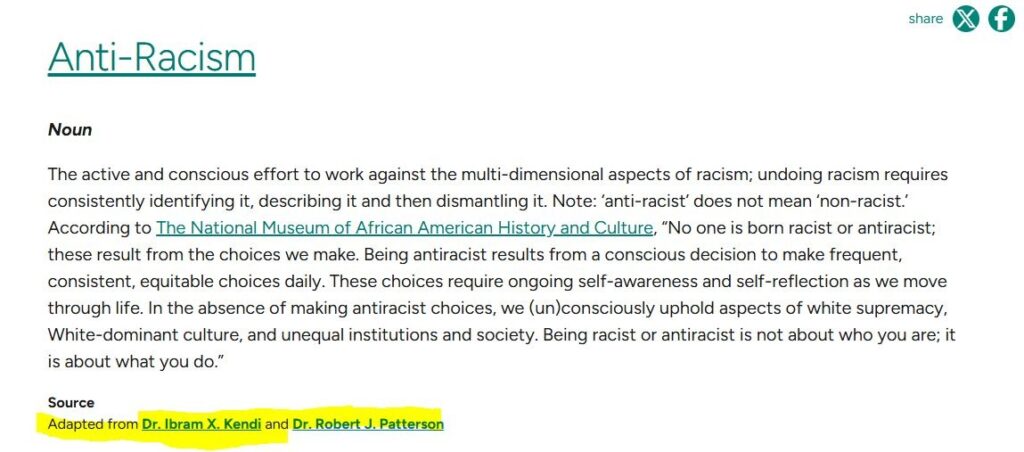
To highlight just a few issues with these goals, “anti-racism” as understood by its most prolific proponent, Ibram X. Kendi, essentially seeks to address systemic racism in society through racial discrimination.

Social determinants of health, meanwhile, refer to the pseudoscientific concept that differences in social and economic conditions cause disparities in health outcomes between certain groups. Although there is certainly a correlation between these conditions and health outcomes, the “social determinants of health” theory is at best oversimplified and ignores other factors such as individual agency and health decisions that contribute to health outcomes.

If these goals seem like mere distractions that don’t reflect UMSOM’s core institutional commitments, think again.

Elsewhere in the strategic plan, UMSOM pledges to “[c]ommit resources to become a national leader in health equity research” and to “[e]xamine all current and emergent generational health challenges through the lens of health equity.”

UMSOM is about as clear as it can be that identity politics is the primary means by which it understands its role in medical education.

Additionally, UMSOM aims to engage in what can only be described as quasi-political activism.

For instance, the strategic plan includes pledges to “[e]ngage with community leaders, Baltimore City Fire Department, and the UMB Community Engagement Office to identify community priorities and barriers to care”; “[c]reate documentaries, educational videos, and media toolboxes in partnership with Baltimore’s emergent Black film makers to highlight the needs and successes, as well as to amplify the voices of the West Baltimore community”; and “[f]oster and grow a cohort of students, faculty, and staff committed to restorative justice and motivated to ensure health equity.” 

It intends to recruit students in these efforts as well; one pledge is to “[i]nvolve students in purposeful community outreach, clinical care, and partnered programs.”

Ethical considerations aside, this is simply not the role of a medical school; UMSOM’s goal should be to train the best physicians possible, not delve into local politics.

In summary, this strategic plan reveals a profound, institutional infatuation with identity politics and a willingness to inject these ideas into students’ learning experiences.

UMSOM should ditch these goals at once and affirm its commitment to providing the best medical education possible.

https://donoharmmedicine.org/wp-content/uploads/2023/01/shutterstock_549470497-scaled.jpg 1440 2560 Ailan Evans https://donoharmmedicine.org/wp-content/uploads/dono-logo.png Ailan Evans2025-12-15 20:29:382025-12-15 20:29:38University of Maryland’s Med School Has a Strategic Plan: Go All In on ‘Health Equity’ and Anti-Racism.

Is Accountability Finally Coming for the Child Transgender Industry?

Uncategorized Florida Gender Ideology Medical association Commentary Do No Harm Staff

For years, Do No Harm has sounded the alarm over the false and misleading claims promoted  by the child transgender industry and echoed by major medical associations.

Too often, these organizations refuse to meaningfully engage with study after study finding a lack of credible evidence to support sex-denying medical interventions for minors. 

And too often, these organizations gloss over the harms and consequences of life-altering medical procedures, instead falsely downplaying their severity.

Now, it seems like for some organizations, their history of promoting dangerous and misleading statements may be catching up with them.

Earlier this week, Florida Attorney General James Uthmeier announced a lawsuit against the World Professional Association for Transgender Health (WPATH), the Endocrine Society, and the American Academy of Pediatrics, accusing them of violating Florida law prohibiting unfair and deceptive trade practices.

The lawsuit points to the organizations’ promotion of sex-denying medical interventions for children, which lack credible evidence to support their use.

In 2023, @GovRonDeSantis signed legislation to ban so-called "gender-affirming care" for kids. Now it’s time for accountability!

Today, my office sued @wpath, @AmerAcadPeds, and @TheEndoSociety for mutilating kids and misleading families. pic.twitter.com/RrbIfYEFEq

— Attorney General James Uthmeier (@AGJamesUthmeier) December 9, 2025

The lawsuit highlighted the claim that puberty blockers are “reversible” as an example of a deceptive statement.

Puberty blockers can cause diminished bone density in minors, with research showing that they negatively affect “bone mineral density, especially at the lumbar spine, which is only partially restored after sex steroid administration.” Artificially preventing a child from going into puberty is inherently experimental.

Moreover, research shows that nearly all children subjected to puberty blockers go on to take cross-sex hormones, which carry long-term risks of infertility and impaired sexual function.

“The years-long coordinated campaign by WPATH and other medical organizations to disregard the serious health risks of sex change interventions on minors will go down as the most egregious medical scandal in modern history,” said Do No Harm Medical Director Kurt Miceli, MD.

“These groups have obfuscated risk and misrepresented the low quality of evidence to support puberty blockers, cross sex hormones, and surgeries for children—interventions that can cause lasting harm,” said Dr. Miceli. “It is encouraging to see our elected officials hold these organizations accountable for spreading misinformation.” 

Accountability is a critical step to restoring public trust in medicine.

https://donoharmmedicine.org/wp-content/uploads/2024/08/shutterstock_2387894327-scaled.jpg 1707 2560 Ailan Evans https://donoharmmedicine.org/wp-content/uploads/dono-logo.png Ailan Evans2025-12-11 21:34:092025-12-11 21:34:09Is Accountability Finally Coming for the Child Transgender Industry?

Do No Harm Medical Director Issues Statement in Response to Texas Health Record Lawsuit

Uncategorized Texas Gender Ideology Press Release Do No Harm Staff

RICHMOND, VA; December 11, 2025 –Today, Texas Attorney General Ken Paxton announced a lawsuit against electronic healh record company Epic for allegedly engaging in deceptive practices that restrict parental access to their children’s medical records.

The lawsuit follows a report from Do No Harm earlier this year explaining how hospitals and electronic health record companies have worked to undermine parents’ access to their children’s medical information. According to the Texas Attorney General’s announcement, Epic automatically hides certain information about a child’s medical history from parents when the child turns twelve years old.

Do No Harm Medical Director Kurt Miceli, MD, issued the the following statement in response:

“A recent report by Do No Harm revealed how woke electronic health record vendors like Epic are limiting parents’ ‘proxy’ access to their children’s medical records. It is encouraging to see Attor­ney Gen­er­al Ken Pax­ton hold Epic accountable for placing children directly in harm’s way by removing parental protections, allowing activist physicians to funnel minors into the gender cult without parental knowledge or consent. This lawsuit is a critical step to restoring lawful parental access to their children’s medical records during their child’s developmental years.”

Do No Harm’s full report on parental access to their children’s medical records is available here.


Do No Harm, established in April 2022, has rapidly gained recognition and made significant strides in its mission to safeguard healthcare from ideological threats. It has over 50,000 members, including doctors, nurses, physicians, and concerned citizens across all 50 states and 14 countries. 


https://donoharmmedicine.org/wp-content/uploads/2022/11/DNH_ContentCards_PressRelease.png 675 1200 Ailan Evans https://donoharmmedicine.org/wp-content/uploads/dono-logo.png Ailan Evans2025-12-11 19:30:102025-12-11 19:30:10Do No Harm Medical Director Issues Statement in Response to Texas Health Record Lawsuit
Page 2 of 56‹1234›»
COPYRIGHT © DO NO HARM 2025. ALL RIGHTS RESERVED.
  • Contact
  • Privacy
  • Disclaimer
  • Link to X
  • Link to Facebook
  • Link to Instagram
  • Link to LinkedIn
  • Link to Youtube
Scroll to top Scroll to top Scroll to top