• HAVE YOU SEEN OR EXPERIENCED THE IMPACT OF DEI OR RADICAL GENDER IDEOLOGY AT YOUR INSTITUTION? CLICK HERE TO SHARE YOUR STORY.
Do No Harm
  • About Us
    • ABOUT
    • TEAM
    • FAQS
    • WHAT OTHERS SAY
    • VOICES OF DO NO HARM
  • OUR WORK
    • NEWSROOM
    • ISSUE AWARENESS
      • IDENTITY POLITICS (DEI)
      • GENDER IDEOLOGY
    • POLICY WORK
    • LEGAL ACTION
    • RESEARCH
    • RESOURCES
    • CENTERS
  • GET INVOLVED
    • SUBMIT A TIP
    • BECOME A MEMBER
    • CAREERS
  • MEDIA INQUIRIES
  • Search
  • DONATE
  • Menu Menu

The American Medical College Application Service Puts An Even Bigger Emphasis On Identity Politics for This Year’s Prospective Physicians

Uncategorized United States DEI Commentary Do No Harm Staff

Last year we revealed that the American Medical College Application Service (AMCAS) had started collecting information on applicants’ race and background, and planned to add “Social Justice/Advocacy” in the work experience section. Sure enough, the 2024 version of the AMCAS had done this, and shows it is going even further down the identity politics wormhole.

The AMCAS, administered by the Association of American Medical Colleges (AAMC), is the centralized system prospective medical students use to submit their applications to multiple schools. Scores of prospective doctors participate in the AAMC’s informational webinars each application cycle, such as the one held on April 23, 2023. Titled Navigating the 2024 AMCAS Application Cycle, the presentation offered a review of the application with an emphasis on the new elements for 2024.

Figure 1. From the AMCAS update webinar April 26, 2023.

One area the webinar addressed was the “AMCAS GPA.” Once all courses are entered into the application, AAMC verifies the coursework and the student’s completion status. Then, AMCAS converts those grades into “AMCAS grades,” which creates the AMCAS GPA. “The AMCAS GPA provides the medical schools with a standardized way to compare each applicant’s background,” the narrator stated.

Figure 2. From the AMCAS update webinar April 26, 2023.

But is the AMCAS actually providing standardization in evaluating the background of future medical students? The new additions to the application indicate that the AAMC plans to collect and report more than just objective data on academic achievement.

Figure 3. Changes to the 2024 AMCAS application (April 26, 2023).

The new “experience type” of Social Justice/Advocacy was added to the application based on recommendations collected over a couple of years. The FAQs page (archived link) on the AAMC website explains that the “Social Justice in Medical School Admissions Working Group” was formed in 2021 “to further explore the value medical schools place on advocacy and social justice,” and defined how this information can be considered during the admissions process.

Figure 4. “Social Justice/Advocacy” experience type in the 2024 AMCAS.

“A social justice or advocacy experience is one in which you work to advance the rights, privileges, or opportunities of a person, group of people, or cause,” the webinar narrator stated. “It is not tied to any particular ideology,” the instruction continued, “and is inclusive of all personal understandings of social justice and advocacy.” Examples of acceptable activities given in the presentation include:

  • Registering people to vote
  • Climate activism
  • Advocating for civil rights
  • Decreasing health inequities
  • Addressing food deserts
  • Building awareness for a particular cause or health condition
  • Advocating for vulnerable populations such as children or homeless people
  • Assisting with policy change or development

These topics include causes and activities that are addressed by other disciplines within healthcare. Social workers – not physicians – are better suited to evaluate and assist patients with socioeconomic issues. Gathering this new category of information suggests an effort to discover applicants who will accept further indoctrination to becoming activists first, and physicians second. The AAMC says as much when it describes “holistic review in medical school admissions:”

Medical schools are continuing to assess their admissions policies and processes in recruiting a future physician workforce who will help to further address these complex and complicated issues and solutions within their communities.

The webinar also addressed the pending Supreme Court decision on affirmative action in college admissions, but made it clear that for now, applicants can share any information they want on their applications. “While we cannot predict the outcomes of these cases,” according to the presentation, “any prescription from the court will be directed at the school’s behavior, not applicants.” But, regardless of the Supreme Court’s decisions, “schools will likely continue to prioritize mission alignment when evaluating applicants,” the narrator concluded.

Figure 5. From the AMCAS update webinar April 26, 2023.

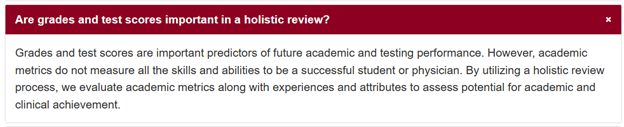
The AAMC is continuing to load the AMCAS with ammunition for admissions officers to use in support of the “holistic review” process. Naturally, personal background and life experiences have a dramatic effect on one’s character and are important factors in what makes each person unique. But issues of identity cannot replace the role that merit and achievement plays in determining who will be a good doctor, and attempting to create physician advocates for various social causes does not train them to be optimal diagnosticians and healers.

As one med school applicant told us last year, “As a future physician, I commit to striving for the highest quality of treatment within my scope to all my patients, regardless of skin color. I hope we can pay that same commitment to the physicians of the future.”

We couldn’t agree more.

Have you seen questions on a healthcare education program application that values identity politics over student achievement? Do No Harm wants to hear from you, and you may remain anonymous if you wish.

https://donoharmmedicine.org/wp-content/uploads/2023/05/AMCAS3-and-cover.png 299 543 Laura Morgan https://donoharmmedicine.org/wp-content/uploads/dono-logo.png Laura Morgan2023-05-19 15:13:192023-05-19 15:13:19The American Medical College Application Service Puts An Even Bigger Emphasis On Identity Politics for This Year’s Prospective Physicians

The Office for Civil Rights Is Investigating a Discriminatory Program at Washington University in St. Louis Institute for Public Health

Uncategorized Missouri DEI Washington University School of Medicine in St. Louis Medical School Commentary Executive Do No Harm Staff

The U.S. Department of Education’s Office for Civil Rights (OCR) has opened a federal civil rights investigation of a discriminatory program at Washington University in St. Louis (WUSTL) Institute for Public Health.

Earlier this year, Do No Harm program manager Laura Morgan filed a complaint with the Kansas City OCR requesting a review of the “SummerR ReseArch DIversity ProgrAm iN Cardiovascular Disease & HEmatology (RADIANCE)” program for its racially discriminatory eligibility criteria.

Figure 1. Eligibility criteria for the RADIANCE program from the WUSTL website.

To be eligible, “Participants must meet one or more of the following categories:

  • Individuals from racial and ethnic groups who are underrepresented in health-related sciences on a national basis*
  • Individuals with disabilities
  • Individuals from disadvantaged backgrounds

*The following racial and ethnic groups have been shown to be underrepresented in biomedical research: Blacks or African Americans, Hispanics or Latinos, American Indians or Alaska Natives, Native Hawaiians and other Pacific Islanders.”


A promotional flyer for the RADIANCE program shows the same eligibility requirements.

Figure 2. Promotional flyer for the RADIANCE program at WUSTL Institute for Public Health.

Because Title VI of the Civil Rights Act of 1964 prohibits discrimination on the basis of race, color, or national origin, OCR opened an investigation into the 8-week program, which starts on June 5, 2023. Participants receive a stipend and support for travel expenses.

https://donoharmmedicine.org/wp-content/uploads/2023/05/shutterstock_2012352206-scaled.jpg 1707 2560 Laura Morgan https://donoharmmedicine.org/wp-content/uploads/dono-logo.png Laura Morgan2023-05-17 17:32:212023-05-17 17:32:21The Office for Civil Rights Is Investigating a Discriminatory Program at Washington University in St. Louis Institute for Public Health

The American Society of Dermatologic Surgery: Still “The True Skin Experts”?

Uncategorized Illinois, United States Gender Ideology Medical association Commentary Do No Harm Staff

The American Society of Dermatologic Surgery (ASDS) says it has represented its members as “the true skin experts” for more than 50 years. Yet, it has clouded objective standards in favor of demonstrating its woke bona fides.

ASDS was an early adopter of diversity, equity, and inclusion initiatives, as it created a DEI Work Group and strategic goals in April 2020. The “value statement” of the work group included a commitment to anti-racism and advancing health equity. ASDS produced an official position statement, which stated:

In an effort to further fulfill ASDS’s commitment to caring for diverse populations. Including Black, Indigenous and People of Color (BIPOC); sexual and gender minority (SGM) persons,” the statement says, “the following positions are hereby recognized:

  • Systematic efforts to uncover, confront and address implicit bias in the culture and practice of dermatology.
  • Comprehensive research that will expand knowledge of social determinants of health and mitigate health disparities facing BIPOC communities as well as LGBTQ/SGM individuals.
  • Both public and private health insurance coverage of gender affirming treatment.

ASDS said the position statement “is intended to service as a guidepost” for the organization to deliver “equitable” care to patients. Among the references used for their position statement is a 1989 publication by Kimberle’ Crenshaw (the primary developer of the concept of “intersectionality”) that describes “feminist theory and antiracist politics.”

This is not the only time the ASDS has waded into the choppy waters of gender ideology.

On April 12, 2021, the American Society for Dermatologic Surgery Association (ASDSA, which is the advocacy and education arm of the ASDS) issued a letter to the nation’s governors and lawmakers. The message urged them “to veto anti-transgender legislation prohibiting gender affirming care including procedural dermatology,” and even voiced opposition to an Arkansas bill that contained provisions for the protection of children.

Figure 1. ASDSA press release (April 14, 2021).

“After Arkansas became the first state to ban gender affirming care for transgender youth,” a subsequent press release noted, “ASDSA felt the need to voice its concern, as procedural dermatology is an important aspect of gender affirmation treatment.” ASDSA president Dr. Mathew Avram said that such legislation “does permanent damage to the gender diverse population,” claiming that lack of healthcare access “is directly linked to the high rate of suicide in this population.” Dr. Mona Gohara, who chairs the ASDS DEI Work Group, also weighed in, saying that denying the ability of dermatologic surgeons to perform this type of treatment on transgender people “can cause devastating, life-changing outcomes and mental health crises, which could result in suicide.”

Neither the letter to the governors nor the press release on the organization’s website offered any scientific evidence to support the claims made by Dr. Avram and Dr. Gohara. The actual facts show that the alarmist messaging about suicide risk echoed by the ASDS/ASDSA is not supported by the scientific evidence.

The ASDS continues to endorse divisive ideologies by encouraging members to be “DEI Ambassadors.” While the program’s application says the objective is “to help promote cultural competency and awareness within dermatology,” the website reveals the true intent of the initiative. To be a DEI Ambassador, members must commit to the tenets of “anti-racism” and “advancing health equity.” This means they are expected to address racism with racism, and to approach patients from an identity perspective instead of a clinical one.

Figure 2. DEI Ambassadors program at the ASDS.

Dermatologists and dermatologic surgeons are trained to recognize, investigate, and treat health issues related to human skin, many of which can be very serious. This medical specialty needs the support and guidance of a professional society that can see beyond group identities, providing its members with clinically sound resources that can be used to serve all patients on an individual basis.

Is your professional organization promoting woke ideologies and identity politics instead of adhering to its stated mission? Do No Harm wants to hear from you, and you may remain anonymous if you wish.

https://donoharmmedicine.org/wp-content/uploads/2023/03/shutterstock_1794773905-scaled.jpg 1708 2560 Laura Morgan https://donoharmmedicine.org/wp-content/uploads/dono-logo.png Laura Morgan2023-05-15 12:29:212023-05-15 12:29:21The American Society of Dermatologic Surgery: Still “The True Skin Experts”?

The National Association of School Psychologists, Part 3: Pushing Gender Ideology in the Schools

Uncategorized Maryland, United States Gender Ideology National Association of School Psychologists Professional organization Commentary Do No Harm Staff

The National Association of School Psychologists (NASP), headquartered in Bethesda, Maryland, disseminates information to advance diversity, equity, and inclusion (DEI), anti-racism, and critical race theory (CRT), as well as gender ideology in minors. NASP is also active in advocacy and public policy initiatives that have an impact on state and federal regulations and laws.

This is the third of three articles describing the initiatives, policies, and publications that NASP promotes to its members and makes available to the public.


Gender Ideology

Our previous reports described how the National Association of School Psychologists (NASP) is dedicated to the ideologies of DEI and anti-racism, and how the organization pushes these philosophies onto its members through its messaging and publications. The effect is that school psychologists, armed with these divisive philosophies, are able to interact with students of all ages in the learning environment. For example, holders of the Nationally Certified School Psychologist (NCSP) credential must complete mandatory training on “equity, diversity, inclusion, and social justice” as part of the 75 hours of continuing education needed for renewal.

NASP holds similarly extreme stands on gender ideology issues and has done so over the past several years. The organization’s 2014 position statement on Safe Schools for Transgender and Gender Diverse Students noted that the Role of the School Psychologist was to “be in tune” with the students’ needs and to “provide evidence-based information about transgender issues.” By 2022, the tone had changed. In a February press release that year, NASP announced that it “condemns recent legislative efforts and executive actions in states across the country that seek to discourage, criminalize, and endanger transgender and gender diverse students.” The organization made this move in response to states (like Missouri and Tennessee) that were tuning in to the urgent need to protect children from harmful sex change treatments and procedures.   

The updated Safe and Supportive Schools for Transgender and Gender Diverse Students followed, with NASP placing school psychologists in a difficult situation. The new position statement announced that they are “ethically obligated” to speak up, advocate for, and “foster safe and supportive schools for all students, specifically TGD [transgender and gender diverse] students (NASP, 2020b).” Among the “five functions” school psychologists are expected to perform with these students is to “affirm,” and mentions the term twenty times in the document. This includes “use the student’s affirmed name and pronoun in all written correspondence,” “prevent deadnaming,” and immediately challenge “those who misgender” with instructions on how to apologize and change one’s behavior. Policy recommendations of the 2022 position statement state that school psychologists are expected to:

  • Support access to gender-affirming care and reject efforts that would allow health providers to deny services to gender diverse students
  • Ensure school curricula is inclusive of LGBTQ+ persons and oppose any effort to ban discussion of sexual orientation and gender identity in schools
  • Allow students to use facilities, including bathrooms and locker rooms, consistent with their gender identity
Figure 1. NASP 2022 position statement on support for transgender students.

NASP followed up its position statement with a document produced in a partnership with Gender Spectrum to provide “terminology and gender basics” so school psychologists can “provide evidence-based information” about transgender issues.

Figure 2. From “Gender Inclusive Schools” resources on the NASP website.

In another publication in this series titled Gender Inclusive Schools: Child Development and Research, NASP presents data about the prevalence of students who say they are transgender, mental health risks and suicidal ideation statistics, and “the impact of medical treatment.” For example, the document contains information from the literature that says transgender youth “disproportionately report suicidal ideation: 38% to 83%” and treatment with puberty blockers and cross-sex hormones shows “marked improvement in psychological functioning.” Although this 2016 publication contains outdated (and in some cases, discredited) information, NASP continues to provide it as a resource on its website.

Figure 4. From “Gender Inclusive Schools: Child Development and Research” by NASP and Gender Spectrum.

NASP also promotes Comprehensive and Inclusive Sexuality Education, beginning in kindergarten. This 2021 position statement describes sex education that is “inclusive of those who identify as gender and sexually diverse, lesbian, gay, bisexual, queer, intersex, and those who are transgender.” To be “inclusive,” the education must address “diverse sexual orientations, sex assigned at birth,” and “gender identity.” The NASP position statement says that the information must be “developmentally appropriate,” and educational materials “should align with established national standards, such as the National Sexuality Education Standards.”


Conclusion

The National Association of School Psychologists claims a membership of more than 25,000 psychology professionals and graduate students in the United States and worldwide. That means innumerable children and adolescents are being influenced by individuals who are trained in school psychology – and are credentialed by the states that issue their licenses – with information that is divisive, politicized, and intended to further indoctrinate them. NASP members, pediatric mental/behavioral health professionals, concerned citizens, and lawmakers must call on the organization to course-correct and discontinue the policies, practices, and affiliations that jeopardize the well-being of our youth.


Is your professional organization promoting woke ideologies and identity politics instead of adhering to its stated mission? Do No Harm wants to hear from you, and you may remain anonymous if you wish.

https://donoharmmedicine.org/wp-content/uploads/2023/05/NASP3-cover.png 310 677 Laura Morgan https://donoharmmedicine.org/wp-content/uploads/dono-logo.png Laura Morgan2023-05-13 12:23:282023-05-13 12:23:28The National Association of School Psychologists, Part 3: Pushing Gender Ideology in the Schools

The National Association of School Psychologists, Part 2: Continuing Professional Indoctrination

Uncategorized Maryland, United States Gender Ideology National Association of School Psychologists Professional organization Commentary Do No Harm Staff

The National Association of School Psychologists (NASP), headquartered in Bethesda, Maryland, disseminates information to advance diversity, equity, and inclusion (DEI), anti-racism, and critical race theory (CRT), as well as gender ideology in minors. NASP is also active in advocacy and public policy initiatives that have an impact on state and federal regulations and laws.

This is the second of three articles describing the initiatives, policies, and publications that NASP promotes to its members and makes available to the public.


Continuing Professional Development Requirements

We previously reported how the National Association of School Psychologists (NASP) – with thousands of members who have extensive access to children in educational settings – is committed to the concepts of DEI and anti-racism, and we described several of the resources it provides to its members to perpetuate those ideologies. These efforts extend into the organization’s continuing education initiatives and the requirements it has recently forced onto members who hold NASP’s certification credential.

The Nationally Certified School Psychologist (NCSP) designation has been conferred upon more than 17,000 school psychologists who met the eligibility standards set by NASP. Thirty-four states recognize the NCSP as fulfilling some or all the requirements for state school psychologist credentialing, and the National School Psychology Certification System (NSPCS) seeks to promote uniform standards across agencies and training institutions. NSPCS also wants “to ensure a consistent level of training and experience in services providers who are nationally certified.”

As part of the process, NASP has defined the areas of study it places the greatest amount of importance on. Starting July 2024, NASP will begin monitoring for compliance with the continuing professional development (CPD) mandate it imposed in 2021. To renew the NCSP certification, current holders of the credential are “required to accrue 3 CPD hours in equity, diversity, inclusion, and social justice” as part of the 75 hours of CPD needed for renewal. This is the same number of hours it requires for “ethical practice and/or the legal regulation of school psychology,” but is the only category NASP specifically mentions in next year’s monitoring mandate.
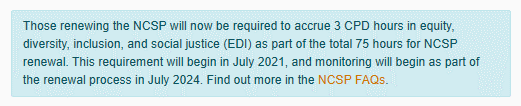
Figure 1. From “CPD Guidelines” on the NASP website.

Earlier this year, NASP notified its members of a learning opportunity to earn those mandatory CPD hours from the Leadership Institute II, “an advanced, four-part series focused on equity, diversity, and inclusion (EDI).” The modules in this series were titled Personal Awareness and Privilege; Systems of Oppression and Antiracism; Operational Strategies for Social Justice Change; and Facilitating EDI in Structural Policies and Practices. The objective of the program was for school psychologists to learn how to “bring about change” in their organizations and remove barriers to implementing DEI-related policies and practices, indicating that NASP is conditioning its membership to be activists and promoters of ideology instead of intervening on behalf of students from the perspective of behavioral health and education.

Figure 2. From the NASP Online Learning Center.

While Leadership Institute II: Equity, Diversity, and Inclusion (EDI) is no longer offered on the website, NASP offers similar training modules on its learning management system. The Online Learning Center contains 34 offerings in the “Equity, Diversity, Inclusion, and Social Justice” category – second only to the “Mental and Behavioral Health” category, with 36 offerings – illuminating the priorities of this organization. Examples:

  • Addressing Microaggressions in PK-12 Settings: Ample evidence suggests that K-12 students are adversely impacted by microaggressions from peers and adults in schools; however, school psychologists may lack the knowledge and skills to appropriately respond to these instances of covert discrimination.
  • Advancing Equity Through Social Justice Practices: Through interactive lecture and discussion prompts, participants will identify social justice practices to challenge inequitable systems and advocate for students and families with less power and privilege.
  • Decolonizing Social-Emotional Learning in Service of Justice and Racial Equity: This presentation will situate social-emotional learning (SEL) within a sociopolitical context and highlight practices that support the development of SEL in ways that are in service to justice and equity.
  • Nine Disrupter Principles: A Strength-Based Approach for Schools Psychology to Disrupt Racial Inequities and Shift From What’s Wrong to What’s Strong: Increasing attention is being given to inequitable education practices. But what role does deficit-thinking play in creating and maintaining racial inequities? 
  • Wounds of Colonial and Racial Trauma: The focus will be on contextualizing the experiences of people who have been marginalized and oppressed within a historical framework, and mapping those experiences onto our work in schools.

NASP charges anywhere from $30.00-$130.00 for the courses in the Online Learning Center.

The DEI and anti-racism rhetoric at NASP is loud and pervasive, and the organization has implemented measures to ensure ongoing compliance on the part of its members with the woke positions it promotes. But NASP takes on an even more troubling topic with equal fervor: Advancing the concepts of radical gender ideology in children and adolescents.

NEXT: The National Association of School Psychologists: Pushing Gender Ideology in the Schools

Is your professional organization promoting woke ideologies and identity politics instead of adhering to its stated mission? Do No Harm wants to hear from you, and you may remain anonymous if you wish.
https://donoharmmedicine.org/wp-content/uploads/2023/05/NASP2-cover.png 239 750 Laura Morgan https://donoharmmedicine.org/wp-content/uploads/dono-logo.png Laura Morgan2023-05-13 11:46:362023-05-13 11:46:36The National Association of School Psychologists, Part 2: Continuing Professional Indoctrination

The National Association of School Psychologists, Part 1: Advancing DEI, CRT, and Anti-Racism

Uncategorized Maryland DEI National Association of School Psychologists Professional organization Commentary Do No Harm Staff

The National Association of School Psychologists (NASP), headquartered in Bethesda, Maryland, disseminates information to advance diversity, equity, and inclusion (DEI), anti-racism, and critical race theory (CRT), as well as gender ideology in minors. NASP is also active in advocacy and public policy initiatives that have an impact on state and federal regulations and laws.

This is the first of three articles describing the initiatives, policies, and publications that NASP promotes to its members and makes available to the public.


DEI and Anti-Racism

The National Association of School Psychologists (NASP) says its membership is made up of “more than 25,000 school psychologists, graduate students, and related professionals” in the U.S. and worldwide. This number exemplifies the degree of impact and influence that school psychologists have on students in a variety of educational settings.

Among its professional position statements is a commitment to providing guidance on topics such as “racial and ethnic disproportionality in education” and “prejudice, discrimination, and racism.” These positions are repeatedly reflected in NASP’s member resources, policy statements, and publications that it posts to its website. NASP members are provided these statements as “the official policy” of the organization, which outline the organization’s DEI and anti-racism agenda.

In a March 3, 2023 statement, NASP declared that certain groups are engaging in “censorship” by voicing opposition to material in curricula that is rooted in critical race theory (CRT) and diversity, equity, and inclusion (DEI), calling this opposition a “smokescreen” that impedes education. This language is typical from the activists who advocate for the adoption of divisive DEI strategies in colleges and universities in place of policies that support meritocracy and academic excellence.

The organization is critical of efforts to eliminate coursework on these topics, stating, “Indoctrinating students to believe a false history that erases the experiences of large segments of our society benefits no one.”

NASP affirmed the DEI and anti-racism issues by saying:

NASP firmly believes that censorship has no place in our education system. NASP strongly supports the inclusion of developmentally appropriate discussion and formal curricula on critical topics including systemic racism, equity, cultural responsiveness, diversity, social-emotional learning, sexual orientation, and gender identity. Critical thinking and respectful dialogue about important and often complex topics are necessary to equip students with the information and ability to understand and thoughtfully examine the facts that shape an increasingly diverse society. As such, we are highly concerned about efforts to restrict discussion of these same concepts, especially within our higher education system.

“NASP is unequivocally committed to ensuring the ability of students and educators,” the statement concluded, “to engage in critical dialogue necessary to dismantle systemic racism, combat prejudice and discrimination, and advance equity.”

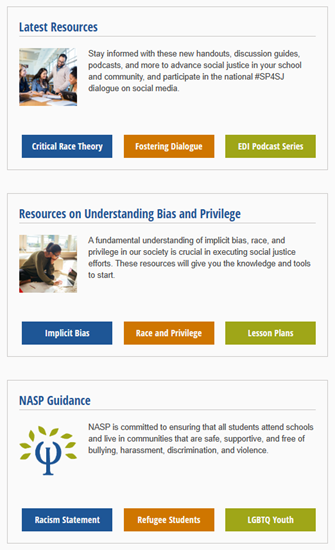
To disseminate the DEI and anti-racism message, NASP provides members with multiple resources on “Critical Race Theory,” implicit bias, and “Race and Privilege.” One of its Resources & Publications pages is rife with articles, books, videos, and podcast episodes in support of “Diversity & Social Justice.” NASP states that the issues of “race, privilege, prejudice, and power” must be addressed “to bring about positive change and unity,” and says these matters are “front and center.”

Figure 1. From the NASP “Diversity & Social Justice” resources page.

In The Importance of Addressing Equity, Diversity, and Inclusion in Schools, NASP defends critical race theory as a “well-established” policy that has been subjected to “demonization and purposeful misrepresentation” in discussions that use “divisive rhetoric” to describe it. Definitions of critical race theory in this statement include:

  • CRT recognizes that race is a social construct and race does not reflect biological differences among people (e.g., differences in intelligence, physical ability)
  • CRT includes an understanding that systemic racism is part of American history and still exists in modern society
  • CRT identifies and examines the ways in which White supremacy and racism permeate systems today
  • CRT is a framework to examine the inequities in existing structures, policies, and laws in order to rebuild them equitably

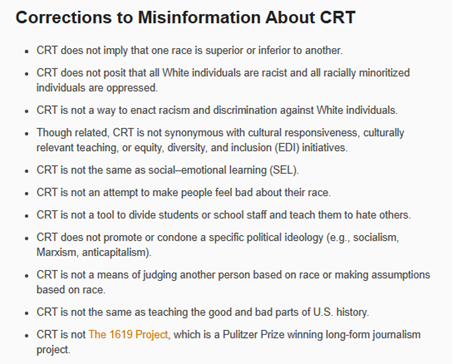
In its list of “corrections to misinformation about CRT,” NASP says that “CRT does not posit that all White individuals are racist and all racially minoritized individuals are oppressed” and “CRT is not a way to enact racism and discrimination against White students.” While NASP may be eager to inform its members of what CRT isn’t, it’s important to understand what CRT is: An ideology that blames all of society’s problems on racism. CRT says equality must be replaced by equity, and inequities are caused by the mysterious force of “implicit bias.”

Figure 2. From “The Importance of Addressing Equity, Diversity, and Inclusion in Schools: Dispelling Myths About Critical Race Theory” (National Association of School Psychologists).

The concept of implicit bias is promoted as “a foundation for school psychologists” in the NASP resources, and is a topic that organizational entities such as the Social Justice Task Force addresses as being “relevant to the equitable practice of school psychology.” This is a long-standing tenet of the organization, and NASP provides multiple additional resources for school psychologists to “affirm diversity and difference while continually examining assumptions of power and privilege.” For example, the Social Justice Task Force created two lesson plans (one for use with students, one for staff) “to guide conversations and activities related to race and privilege.” In case school psychologists require further programming to “influence systems change,” NASP encourages and praises them for engaging in “courageous conversations” that continue to bang the drum of implicit bias and a commitment “to advancing social justice and equity as a profession.”

“NASP Guidance” includes a position statement on Prejudice, Discrimination, and Racism that continues to refer to implicit bias and terms like “modern symbolic racism.” This means that certain individuals are denying that racial inequality continues to exist “while contributing to discrimination and aversive racism through in-group favoritism for the dominant racial group.” Predictably, a requirement for implicit bias training is among the recommendations for school psychologists to take, as well as promoting “systems change and equitable alternatives” to combat racism and discrimination.

This ideological campaign continues into the continuing education process at the organization. NASP imposes woke indoctrination on its members in the form of mandatory continuing professional development training.

NEXT: The National Association of School Psychologists: Continual Professional Indoctrination

Is your professional organization promoting woke ideologies and identity politics instead of adhering to its stated mission? Do No Harm wants to hear from you, and you may remain anonymous if you wish.
https://donoharmmedicine.org/wp-content/uploads/2023/05/NASP1-cover.png 278 523 Laura Morgan https://donoharmmedicine.org/wp-content/uploads/dono-logo.png Laura Morgan2023-05-13 11:23:412023-05-13 11:23:41The National Association of School Psychologists, Part 1: Advancing DEI, CRT, and Anti-Racism

Do No Harm Responds to the Centers for Medicare and Medicaid Services’ Reimbursement Proposal to Force Cancer Hospitals to Commit to ‘Health Equity’

Uncategorized Federal DEI Commentary Do No Harm Staff

The Centers for Medicare and Medicaid Services (CMS) wants to change the way cancer hospitals are paid – and it all centers on their willingness to commit to the woke rhetoric of “health equity.”

Dr. Stanley Goldfarb responded to CMS’s request for comments on The “Proposed Hospital Inpatient Prospective Payment Systems for Acute Care Hospitals,” which will have an effect on the reimbursement hospitals receive, beginning in FY 2026. One component of the proposed rule is the PPS-Exempt Cancer Hospital Quality Reporting Program, which cites identity politics instead of the science to explain potential causes of differences in health outcomes among patient populations.

“As most practicing physicians would attest to,” Dr. Goldfarb said in the statement submitted to CMS, “one of the leading causes of poor health outcomes for patients is a delay in seeking healthcare treatment.” Yet, the proposed rule asserts that higher rates of hospital readmission in minorities are due to disparities in care quality. “Your proposal moves us yet further in the direction of rationing resources more heavily among one group than another,” Dr. Goldfarb stated, “for reasons completely unsupported by science but enthusiastically backed by political ideology.”

Read the full statement below.

DNH-Comment-2023-07389-PCHQR-ProgramDownload
https://donoharmmedicine.org/wp-content/uploads/2023/05/shutterstock_1924512497-scaled.jpg 1440 2560 Laura Morgan https://donoharmmedicine.org/wp-content/uploads/dono-logo.png Laura Morgan2023-05-10 13:07:192023-05-10 13:07:19Do No Harm Responds to the Centers for Medicare and Medicaid Services’ Reimbursement Proposal to Force Cancer Hospitals to Commit to ‘Health Equity’

Do No Harm Submits Comment to the Centers for Medicare and Medicaid Services Regarding ‘Health Equity’ in Skilled Nursing Facilities

Uncategorized Federal DEI Commentary Do No Harm Staff

Do No Harm Chairman Dr. Stanley Goldfarb submitted comments to the Centers for Medicare and Medicaid Services (CMS) to voice concerns regarding a proposed modification to a rule that seeks to inject identity politics into quality and reimbursement issues at skilled nursing facilities (SNFs).

The modification to the rule promotes the concept of “health equity,” which assumes that systemic bias in the healthcare system or on the part of individual clinicians is responsible for differences in health outcomes among minority patients.  

“This strategy pus our healthcare system in a negative and dangerous mindset,” Dr. Goldfarb wrote. “You are asking us to prioritize one race over another. For these reasons,” he concluded, “’health equity’ is a massively regressive approach to healthcare.”

Read the full comment submitted to CMS below.

DNH Comment Health Equity Nursing FacilitiesDownload
https://donoharmmedicine.org/wp-content/uploads/2023/05/shutterstock_1190997985-scaled.jpg 1440 2560 Laura Morgan https://donoharmmedicine.org/wp-content/uploads/dono-logo.png Laura Morgan2023-05-09 21:31:482023-05-09 21:31:48Do No Harm Submits Comment to the Centers for Medicare and Medicaid Services Regarding ‘Health Equity’ in Skilled Nursing Facilities

The UW School of Medicine and Public Health Scrubs a Discriminatory Program From Its Website Following a Federal Civil Rights Complaint and Investigation

Uncategorized Wisconsin DEI University of Wisconsin School of Medicine and Public Health Medical School Commentary Executive Do No Harm Staff

The U.S. Department of Education’s Office for Civil Rights (OCR) has opened an investigation into a discriminatory program at the University of Wisconsin School of Medicine and Public Health.

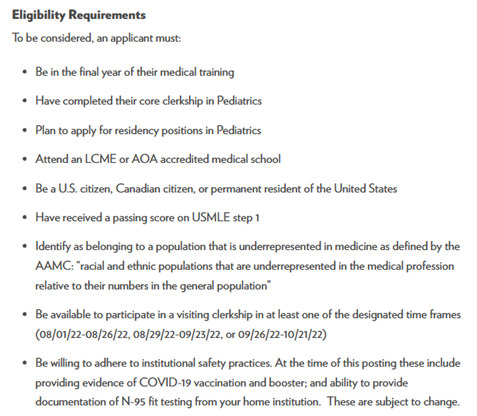
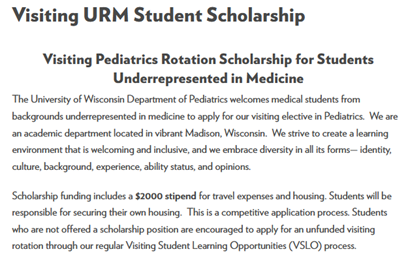
The “Visiting Pediatrics Rotation Scholarship for Students Underrepresented in Medicine” (archived page) was available only to applicants who “identify as belonging to a population that is underrepresented in medicine as defined by the AAMC,” and offered a $2000 stipend for travel and housing. The AAMC has historically defined “underrepresented in medicine” as “Blacks, Mexican-Americans, Native Americans (that is, American Indians, Alaska Natives, and Native Hawaiians), and mainland Puerto Ricans.” Discrimination on the basis of race is prohibited under Title VI of the Civil Rights Act of 1964.

Figure 1. UW Department of Pediatrics Visiting URM Student Scholarship eligibility requirements on June 13, 2022.

Dr. Stanley Goldfarb, chairman of Do No Harm, filed a civil rights complaint against this program on June 13, 2022, and was notified of the OCR’s investigation this week. The URL of the webpage for the “Visiting URM Student Scholarship,” which was active at the time the complaint was filed, now points to the homepage of the University of Wisconsin Department of Pediatrics.

Figure 2. Content from the Visiting URM Student Scholarship page at the University of Wisconsin School of Medicine and Public Health Department of Pediatrics in June 2022.

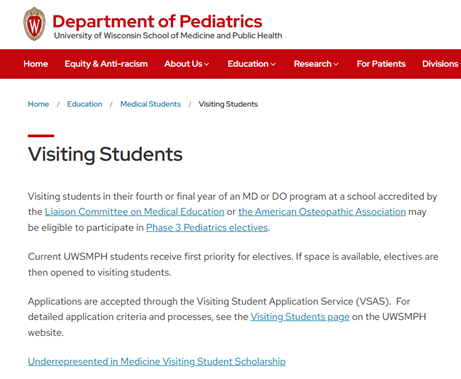
A search for the scholarship program in the Department of Pediatrics yielded only an informational document from 2020.

Figure 3. UWSMPH Department of Pediatrics Visiting Students page (from a keyword search of the website).

Does your school promote discriminatory scholarships, fellowships, or programs? Please let us know via our secure online portal.

https://donoharmmedicine.org/wp-content/uploads/2023/03/shutterstock_2097661876-scaled.jpg 1707 2560 Laura Morgan https://donoharmmedicine.org/wp-content/uploads/dono-logo.png Laura Morgan2023-05-08 18:42:242023-05-08 18:42:24The UW School of Medicine and Public Health Scrubs a Discriminatory Program From Its Website Following a Federal Civil Rights Complaint and Investigation

A Duke Physician addresses “Racism is a Public Health Crisis” – Martin Center for Academic Renewal

Uncategorized North Carolina DEI Health system Commentary Do No Harm Staff

The James G. Martin Center for Academic Renewal published an article by Dr. Kendall Conger, a physician at Duke Health, that challenges the narratives on implicit bias and anti-racism that the organization included in a 2021 pledge to Duke Health employees.

Their fundamental reason for writing the pledge, and its fundamental claim, was that “racism is a public health crisis.” That had not been my experience, nor did it fit my observations, so I asked to see the clinical data the authors had used to form this conclusion. After much back and forth, I received the following reply from a Duke Health senior administrator: “I concede that I cannot find a [clinical] trial that proves implicit bias is the cause of worse health outcomes for African Americans. Believe me. I have looked.”

Dr. Kendall Conger (May 8, 2023)

“We cannot govern for the equal treatment of individuals (which will lead to unequal prosperity) and simultaneously for equal outcomes for groups (which will lead to equal poverty),” Dr. Conger said. “Nevertheless, Duke seems committed to influencing group outcomes rather than individual ones.” 

Read the full article here.

https://donoharmmedicine.org/wp-content/uploads/2023/05/shutterstock_172496525-scaled.jpg 1707 2560 Laura Morgan https://donoharmmedicine.org/wp-content/uploads/dono-logo.png Laura Morgan2023-05-08 18:05:242023-05-08 18:05:24A Duke Physician addresses “Racism is a Public Health Crisis” – Martin Center for Academic Renewal

Arkansas Commission Ends Race Based Scholarship

Uncategorized Arkansas DEI State government Press Release Do No Harm Staff

Do No Harm Settles Federal Lawsuit Against Unconstitutional Scholarship Program

Do No Harm and the Arkansas Minority Health Commission agreed to settle the federal lawsuit that Do No Harm brought against the Commission for maintaining an unconstitutional scholarship program that excluded certain students solely based on their race or color. As a result, the Commission will no longer offer a scholarship program for students in the healthcare field that determines eligibility based on race.

“Do No Harm is pleased that the Arkansas Minority Health Commission decided to stop offering a scholarship that determined the applicants’ eligibility based on race,” said Dr. Stanley Goldfarb, Board Chair of Do No Harm. “The scholarship program was blatantly illegal and yet another example of injecting race-based decision making into education for medical professionals.”

In mid-April 2023, Do No Harm filed a lawsuit on behalf of a member in the U.S. District Court for the Eastern District of Arkansas against Kenya L. Eddings, the Executive Director of the Commission. The suit asserted that the scholarship program discriminated against students based on race. To be eligible for the scholarship, an applicant needed to “confirm that [he/she] is a racial minority,” meaning “African American, Hispanic, Native African/American Indian, Asian American or Marshallese.”

Within weeks of filing the lawsuit, Do No Harm sought a preliminary injunction to immediately stop the Commission from making scholarship decisions by using its race requirement. The federal court presiding over this case set an expedited schedule to hear Do No Harm’s request for a preliminary injunction, and the hearing was set to occur in mid-May.

In agreeing to settle the lawsuit by removing the scholarship program that used race as an eligibility criterion, the Arkansas Attorney General similarly acknowledged that the scholarship offered no valid reason for classifying students based on race and was unconstitutional. The Constitution guarantees equal treatment of all American citizens regardless of race.

The lawsuit was brought on behalf of Do No Harm’s member—“Member A”—an Arkansas pre-nursing student who otherwise met all of the scholarship’s requirements but could not apply for the scholarship because of her race. “Medical scholarships, like medicine itself, should be open to all. I am grateful that Arkansas ended its discrimination,” Member A said. And she added, “Thank you to Do No Harm for helping me stand up for the Constitution and my rights.”  

See the full settlement agreement below.

15_SettlementDownload
https://donoharmmedicine.org/wp-content/uploads/2022/11/DNH_ContentCards_PressRelease.png 675 1200 Laura Morgan https://donoharmmedicine.org/wp-content/uploads/dono-logo.png Laura Morgan2023-05-08 17:18:202023-05-08 17:18:20Arkansas Commission Ends Race Based Scholarship

Georgia Lt. Gov. Jones Acknowledged by Dr. Stanley Goldfarb for Accounting of DEI Spending in the State’s Public Universities

Uncategorized Georgia DEI Medical School, Public university Commentary Do No Harm Staff

Dr. Stanley Goldfarb, chairman of Do No Harm, acknowledged Georgia Lt. Governor Burt Jones for requesting an accounting of the spending made by the University System of Georgia on diversity, equity, and inclusion (DEI) activities.

“My organization has already found that Georgia’s only public medical school, along with other health-related programs across the state, have fallen prey to DEI,” Dr. Goldfarb wrote. “This issue goes well beyond the quality of the education they provide. Ultimately, it affects the health and well-being of everyone who will one day be treated by the physicians these institutions teach.”

See the full letter below.

Letter-to-GA-Lt.-Governor-Jones-Do-No-HarmDownload
https://donoharmmedicine.org/wp-content/uploads/2023/05/shutterstock_2170668719-scaled.jpg 1350 2560 Laura Morgan https://donoharmmedicine.org/wp-content/uploads/dono-logo.png Laura Morgan2023-05-05 21:34:322023-05-05 21:34:32Georgia Lt. Gov. Jones Acknowledged by Dr. Stanley Goldfarb for Accounting of DEI Spending in the State’s Public Universities

Dr. Stanley Goldfarb Thanks Virginia General Assembly House Leadership for Investigation of DEI Costs in Public Colleges and Universities

Uncategorized Virginia DEI Medical School, Public university, State legislature Commentary Do No Harm Staff

Do No Harm chairman Dr. Stanley Goldfarb thanked Virginia General Assembly Speaker of the House Todd Gilbert and House Majority Leader Terry Kilgore for their recent request to the public colleges and universities of the Commonwealth. The lawmakers have directed these institutions to provide an accounting of their spending on diversity, equity, and inclusion initiatives.

“I hope your request unearths more details about DEI’s infiltration of Virginia’s medical schools,” Dr. Goldfarb wrote. “This issue goes well beyond the quality of the education they provide. Ultimately, it affects the health and well-being of everyone who will one day be treated by the physicians these institutions teach.”

See the full letter below.

Letter-to-Virginia-General-Assembly-Do-No-HarmDownload
https://donoharmmedicine.org/wp-content/uploads/2023/05/shutterstock_362637068-scaled.jpg 1707 2560 Laura Morgan https://donoharmmedicine.org/wp-content/uploads/dono-logo.png Laura Morgan2023-05-05 17:06:372023-05-05 17:06:37Dr. Stanley Goldfarb Thanks Virginia General Assembly House Leadership for Investigation of DEI Costs in Public Colleges and Universities

Florida’s Two New Laws Are Big Wins

Uncategorized Florida DEI State legislature Commentary Do No Harm Staff

The Sunshine State just got even brighter. On May 3rd, the state legislature passed two bills that will help restore fairness and sound teaching in higher education, including in medical schools. Gov. DeSantis is expected to sign both bills into law, making Florida the national leader in getting woke ideology out of medical education.

The first soon-to-be law prohibits colleges and universities, including medical schools, from spending state or federal money on so-called “diversity, equity and inclusion” initiatives. It was sponsored by Senator Erin Gall. DEI is code for divisive and discriminatory woke ideology, and Florida institutions are spending millions of dollars pushing it on faculty and students alike.

Do No Harm chairman Dr. Stanley Goldfarb previously wrote in the Orlando Sentinel that medical schools are some of the worst offenders on DEI. That includes a discriminatory scholarship at the University of Florida’s medical school (which we helped end) and entire offices for DEI at pretty much every institution in the state. Now they can’t spend taxpayer money on this blatant woke indoctrination and bias.

The second soon-to-be-law bans loyalty tests and creates new conscience protections in higher education. It was sponsored by Rep. Alex Andrade. As Dr. Goldfarb wrote in the Sentinel, many medical schools ask applicants or faculty to demonstrate their commitment to DEI and fighting things like “system racism” – a de facto loyalty pledge. The new law will help end this injustice, ensuring the diversity that matters most in an academic setting – diversity of thought.

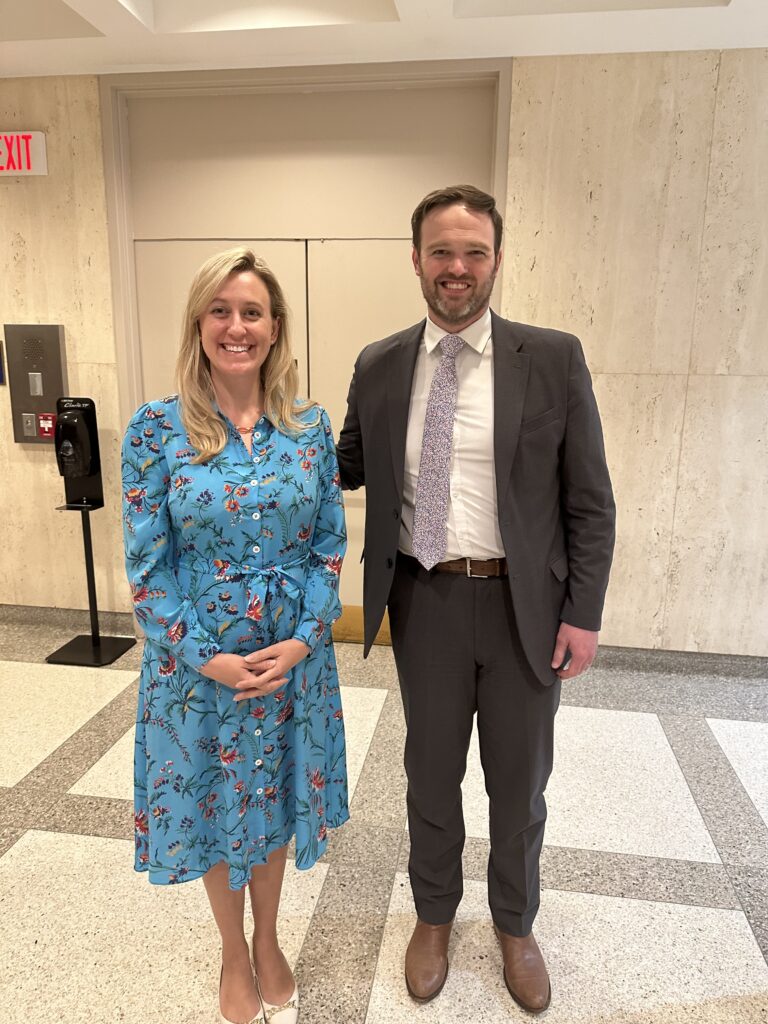
Figure 1. Kristina Rasmussen, Do No Harm Executive Director, and Rep. Alex Andrade.

Florida lawmakers deserve praise for passing these common sense policies. Hopefully they’ll be the first of many, since there are countless other examples of the woke infection in higher education and medical school in particular. Thank you, Florida, for leading the charge!

https://donoharmmedicine.org/wp-content/uploads/2023/05/shutterstock_510558802-scaled.jpg 1700 2560 Laura Morgan https://donoharmmedicine.org/wp-content/uploads/dono-logo.png Laura Morgan2023-05-04 20:24:192023-05-04 20:24:19Florida’s Two New Laws Are Big Wins

Dr. Stanley Goldfarb to Present “Restoring Merit to Medical Education” in Raleigh, North Carolina on June 15

Uncategorized North Carolina DEI Events Do No Harm Staff

Watch the event recap:


The James G. Martin Center for Academic Renewal is hosting Do No Harm board chairman Dr. Stanley Goldfarb for an important event on divisive and discriminatory ideologies in medical schools.

Restoring Merit to Medical Education takes place on Thursday, June 15, 2023 from 11:30 AM to 1:30 PM in Raleigh, North Carolina. Dr. Goldfarb will discuss the infiltration of concepts such as anti-racism and critical race theory into the curricula of top medical schools in the United States, and will share his recommendations for taking action to address the expanding influence of these divisive principles.

Information on individual tickets and sponsorships is available here.

https://donoharmmedicine.org/wp-content/uploads/2023/05/Restoring-Merit-Event2.png 631 1200 Laura Morgan https://donoharmmedicine.org/wp-content/uploads/dono-logo.png Laura Morgan2023-05-03 12:40:542023-05-03 12:40:54Dr. Stanley Goldfarb to Present “Restoring Merit to Medical Education” in Raleigh, North Carolina on June 15

Should Five Year Olds Transition? Yes, Says a Pennsylvania Elementary School

Uncategorized Pennsylvania Gender Ideology Hospital System Commentary Do No Harm Staff

Elementary school starts at five years old. That fact is worth remembering amid a brewing scandal in Pennsylvania, where a transgender clinic trained elementary school teachers to help students change genders. It’s the latest – and scariest – proof that extreme activists are pushing young children toward invasive, irreversible, and even life-destroying treatments.

The Daily Caller News Foundation broke this news, and it’s as upsetting as it is shocking:

“An employee of the Gender and Sexuality Development Program at the Children’s Hospital of Philadelphia (CHOP) met with faculty from Pennsbury School District and Council Rock School District, advising them on how to support students, including one in kindergarten, attempting to change their gender, according to documents obtained through a public records request.”

Did you catch that? The clinic pushed the school to help a kindergartener transition. A kindergartener!

This isn’t the first time this clinic has come under fire. As the Daily Caller notes, “CHOP’s gender clinic has previously come under fire for referring kids as young as 14 years old for cross-sex surgeries, such as mastectomies or breast construction.” What’s more, it “provides children with medical interventions such as puberty blockers, which it prescribes to children as young as eight.”

It turns out the school itself solicited this extremism: “Pennsbury School District’s Director of Equity, Diversity and Inclusion Dr. Cherrissa Gibson reached out to King in November 2021… The district donated $1,200 to CHOP for two training sessions, one for K-5 teachers and another for 6-12 grade educators, that were held in April 2022.”

This is exactly the sort of gender radicalism that deserves to be investigated by lawmakers – and ended for the sake of protecting children. Schools should never solicit this kind of transgender training. And children, especially as young as five, should never be encouraged to change their genders. That’s true in Pennsylvania and everywhere else.

https://donoharmmedicine.org/wp-content/uploads/2023/05/shutterstock_1208860600-scaled.jpg 1852 2560 Laura Morgan https://donoharmmedicine.org/wp-content/uploads/dono-logo.png Laura Morgan2023-05-01 20:34:532023-05-01 20:34:53Should Five Year Olds Transition? Yes, Says a Pennsylvania Elementary School

Is Anti-racism a Panacea? Common Sense and Methodological Rigor Say No, But “Researchers” Say Yes

Uncategorized United States DEI Research institutions Commentary Ian Kingsbury, PhD, PhD

Climate change, substance abuse, mental health, school violence, economic development, and now vaccine hesitancy. The list of problems that researchers claim can be mitigated by “anti-racist” initiatives is nothing short of remarkable.

Of course, it’s all too good to be true. Many researchers are more committed to evangelizing wokeness than setting out to find truth – or as Alexandria Ocasio-Cortez framed it – to be “morally correct” rather than “factually correct.” Peer review and academic publication are increasingly becoming political obedience rituals rather than a screen for methodological rigor, and scholarly journals are now replete with studies that endeavor to affirm ideological stances no matter how tenuous the evidence in support of their claims.

A recent example of woke policy-based evidence-making comes by way of an article in Social Science & Medicine called Twin pandemics, intertwined (intergroup) solutions: Support for mitigating racism benefits vaccine hesitancy. The researchers posit that support for Black Lives Matter is associated with less COVID-19 vaccine hesitancy. They observe that this remains true even after accounting for factors such as individual-level age, sex, race, and state-level 2020 presidential election results. Consequently, they conclude that “BLM support, as well as protests and discourse, can be related to addressing both pandemics” (i.e., racism and COVID-19).

The researchers are careful to never explicitly claim that increasing public support for BLM would cause reduced vaccine hesitancy. However, they not-too-subtly wink at this scenario in their title and repeatedly within the text, for example claiming that “engagement with anti-racism practices can foster greater prosocial attitudes” and that prosocial attitudes (“intergroup concern, perspective-taking, understanding, and leveraging privilege/advantage [allyship”]) also correlate with vaccine uptake.

The evidence to support the idea that increased support for BLM could culminate in increased uptake of vaccines is weak. Correlation is not causation, and just because vaccine uptake correlates with “prosocial attitudes” and BLM support and the latter two with each other does not mean that BLM support causes vaccine uptake. As an analogous exercise in absurdity, imagine if researchers observed the likely scenario that charitable giving correlates with gun ownership and comparatively greater concern about local community and the latter two with each other. Few scholars would dare to suggest that gun ownership might be a mechanism to increase charitable giving, and none would be published in a scholarly journal.

If the evidence for their assertions is bad, the implications are downright alarming. Research on diversity training generally reveals it to be ineffective or even harmful. Indeed, the type of social conditioning required for Americans to embrace BLM views – including reverence for Marxism and repudiation of the nuclear family – demands extensive ideological conditioning and policing of government institutions and civil society.

Interpreting public health objectives as a mandate for social and political transformation is not only antithetical to our system of government, but almost certainly counterproductive to public health goals. Certainly, the assertion from public health experts that recommendations against large convenings could be ignored for George Floyd-inspired protests was a catastrophic political miscalculation that will feed skepticism of public health guidance for years to come.

If public health officials intend to be taken seriously across the political spectrum, they must accept that public health objectives – no matter how noble – do not justify orchestrated social or political transformation. Until then, the twin pandemics of politicized science and bureaucratic mission creep will continue to exert a toll on public health.

Ian Kingsbury is the Director of Research at Do No Harm.

https://donoharmmedicine.org/wp-content/uploads/2023/05/shutterstock_1904068345-scaled.jpg 1707 2560 Laura Morgan https://donoharmmedicine.org/wp-content/uploads/dono-logo.png Laura Morgan2023-05-01 13:40:182023-05-01 13:40:18Is Anti-racism a Panacea? Common Sense and Methodological Rigor Say No, But “Researchers” Say Yes

Dr. Stanley Goldfarb Comments on the Biden Administration’s Suit Against the State of Tennessee for Attempting to Protect Minors from Gender Ideology

Uncategorized Federal, Tennessee Gender Ideology Commentary Executive Stanley Goldfarb, MD

“Yet again, the Biden administration has chosen to put gender ideology and the demands of radical activists ahead of the wellbeing of children and adolescents. This week, the Department of Justice sued the State of Tennessee over the State’s attempt to stop the harmful and experimental practice of using puberty blockers, hormones, and surgeries on minors who believe they have a gender identity problem. These treatments offer no proven long-term benefits and impose lifelong consequences on young people who cannot comprehend their seriousness – including permanent sterilization, lifetime dependence on pharmaceuticals, bone density loss, and more. 

Over the past two years, European governments and medical authorities have carried out reviews of the evidence for “gender-affirming care,” and all of them have concluded that drugs and surgeries are inappropriate for minors in all but the most extraordinary cases. These countries have prohibited or dramatically restricted the cruel “gender affirming” approach – but the Biden administration is doubling down on it. 

By prioritizing the demands of gender activists over the medical and psychological evidence, the administration is putting children and adolescents at risk. Do No Harm will do everything we can to stand up for evidence-based medicine, common sense, and the health of the next generation by fighting against gender ideology.”

Dr. Stanley Goldfarb is the chairman of Do No Harm and is a former Professor and Associate Dean for Curriculum at the University of Pennsylvania School of Medicine.

https://donoharmmedicine.org/wp-content/uploads/2023/04/shutterstock_1159933525-scaled.jpg 1920 2560 Laura Morgan https://donoharmmedicine.org/wp-content/uploads/dono-logo.png Laura Morgan2023-04-28 19:36:562026-01-20 14:48:01Dr. Stanley Goldfarb Comments on the Biden Administration’s Suit Against the State of Tennessee for Attempting to Protect Minors from Gender Ideology
Page 38 of 56«‹3637383940›»
COPYRIGHT © DO NO HARM 2025. ALL RIGHTS RESERVED.
  • Contact
  • Privacy
  • Disclaimer
  • Link to X
  • Link to Facebook
  • Link to Instagram
  • Link to LinkedIn
  • Link to Youtube
Scroll to top Scroll to top Scroll to top