When it comes to transgender treatments for children and adolescents, it’s essential to separate fact from fiction. That’s what Do No Harm Senior Fellow Dr. Miriam Grossman did in testimony at Congress on June 14th. A practicing child psychiatrist, she outlined the truth that transgender activists tend to ignore, with the goal of guiding policy in the direction of protecting children.
Dr. Grossman testified before the House Committee on Energy and Commerce’s Subcommittee on Health. She made clear from the start that this debate desperately needs an infusion of reality, not more radical activism:
“I’m here today to provide you with facts you haven’t heard. You haven’t heard them because when it comes to youth gender dysphoria (also called ‘transgenderism’), the public and most importantly parents, are, I am sad to say, consistently fed misinformation.”
Dr. Grossman then discussed 7 key truths grounded in science and evidence, directly contradicting the misinformation spread by activists:
Suicide of youth with gender dysphoria is extremely rare.
Gender dysphoria is a psychiatric condition. There is no established evidence of a biological cause. Most cases resolve on their own, by young adulthood.
There is no evidence that puberty blockers, cross-sex hormones, and gender surgeries are lifesaving or medically necessary.
The U.S. is increasingly an outlier in the treatment of youth with gender dysphoria.
Health authorities in the UK, Finland, Sweden and Norway now recommend exploratory psychotherapy as the first line of treatment and have severely restricted hormonal interventions, reserving them for exceptional cases.
Those countries have done systemic reviews and concluded that long term benefit from medical interventions has not been established, while the risk of harm is significant.
In US hospitals, young teens’ natural puberties are prevented. Girls as young as twelve are having mastectomies. Minors are also having genital surgeries. We have no long-term evidence of benefit of these drastic interventions in the current population.
Dr. Grossman’s full testimony is available here. Her insights will hopefully guide Congress as it considers ways to protect young Americans. One thing is certain: The status quo, dominated by transgender activists, is actively endangering more children and adolescents by the day.
https://youtu.be/Azx8e5nmc9g
https://youtu.be/Aeol2x6BA78
In Dr. Grossman’s testimony, she references her new book Lost In Trans Nation: A Child Psychiatrist’s Guide Out of the Madness. To learn more or pre-order on Amazon, click here.
https://donoharmmedicine.org/wp-content/uploads/shutterstock_634024823-1-scaled.jpg17072560dnhprodhttps://donoharmmedicine.org/wp-content/uploads/DNH_Logo_Stethescope-1.pngdnhprod2023-06-14 16:43:582026-05-07 15:43:21Do No Harm Expert Testifies at Congress
Colorado patients, beware. The state is moving toward matching patients and physicians by race and other characteristics – a woke demand that comes down to segregation. At least two major Colorado health insurance companies are now asking providers to detail the demographic make-up of doctors and staff, setting the stage for the return of one of the worst evils in American history.
This coming fiasco has its roots in 2021, when Colorado passed a public-option law. The law led to a state regulation that requires public-option plans to “offer a culturally responsive network of providers.” The regulation also has an “action plan” if “the network does not meet these standards.” Yet “culturally responsive” is woke-speak for pushing patients to see physicians that are the same race or share other characteristics.
This is blatant segregation, which activists seem to know. They disguise the reality of their demands by calling it “racial concordance.” Medical journals now routinely publish articles and opinion pieces calling for racial concordance, arguing that it leads to better health outcomes. Yet the largest study on the issue, covering 56,000 patients, failed to show a benefit, and Do No Harm has conclusively proven that activists are wrong. No matter what you call it, segregation is not medically justified, to say nothing of morally justified.
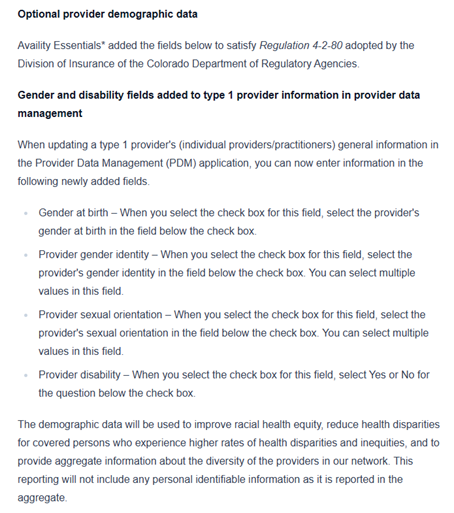
Figure 1. From Regulation 4-2-80, Section 5 (Colorado Department of Regulatory Agencies, Division of Insurance).
Anthem Blue Cross/Blue Shield is on board with this push. In a recent email to its provider network, the health insurance company has asked providers to detail their “demographic data.” It justifies this request by saying, “The demographic data will be used to improve racial health equity [and] reduce health disparities for covered persons who experience higher rates of health disparities and inequities.” Left unsaid is the means by which these supposed benefits will happen. It’s segregation.
Figure 2. From “Anthem Provider News Colorado” (April 28, 2023).
Anthem specifically wants to know about gender, gender identity, sexual orientation, and disability. Colorado also requires that Anthem and other companies ask about race and ethnicity. This seems to indicate that the segregation will extend beyond far beyond race. United Health Care, another Colorado health insurance company, has requested similar information from providers in its network.
Figure 3, From the United Healthcare provider survey (May-June 2023).
What Colorado is doing is medically and morally wrong. Colorado shouldn’t move toward so-called “racial concordance” in health care, and health insurance companies shouldn’t go along with this travesty. Segregation has no place in health care – or anywhere else.
https://donoharmmedicine.org/wp-content/uploads/shutterstock_2206595475-scaled.jpg11382560Laura Morganhttps://donoharmmedicine.org/wp-content/uploads/DNH_Logo_Stethescope-1.pngLaura Morgan2023-06-13 19:48:072026-05-07 15:44:48Racial Segregation Is Coming To Colorado Health Care
Please join us for a conversation featuring Dr. Stanley Goldfarb, Do No Harm chairman, to discuss Restoring Merit to Medical Education.
Dr. Goldfarb will join the Chabad Jewish Community Center – Aspen Valley to address the growing influence of anti-racist activism in medical schools and share his recommendations on restoring merit to medical education:
Date: Tuesday, June 20, 2023
Time: 5:00 PM
Location: 435 W. Main Street, Aspen, Colorado
For more information and to register for the event, click here.
https://donoharmmedicine.org/wp-content/uploads/2023/06/Aspen-cover2-1.png527871Laura Morganhttps://donoharmmedicine.org/wp-content/uploads/DNH_Logo_Stethescope-1.pngLaura Morgan2023-06-12 14:23:282026-02-11 15:33:32Restoring Merit to Medical Education in Aspen, Colorado
The University of Wisconsin-Madison School of Medicine and Public Health (UWMSMPH) scores in the green on the Diversity, Inclusion, Culture, and Equity (DICE) Inventory, as it just confirmed to Do No Harm.
Here’s the background. In November 2022, the Association of American Medical Colleges released a report showing that the vast majority of medical schools have embraced identity politics, despite their divisive and even discriminatory nature. The report was based on surveys of specific medical schools, which the AAMC didn’t name.
For the sake of transparency and accountability, Do No Harm submitted freedom of information requests to public medical schools nationwide, including UWMSMPH. We asked for a copy of its survey response, so that Wisconsin taxpayers and policymakers could learn the truth about this institution.
Here’s what the UWMSMPH has self-reported:
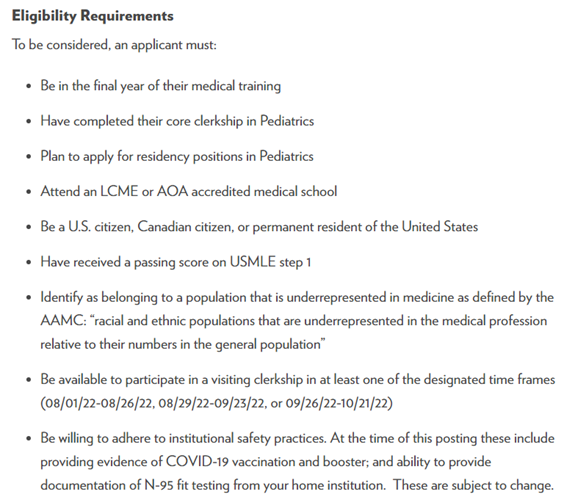
It has adopted racially discriminatory admissions practices under the guise of “affirmative action.” This means it’s potentially lowering standards in the name of diversity, thereby threatening patient health. The school’s Admissions Process page states that applications are reviewed with its mission of advancing health equity in mind. And, UWMSMPH scrubbed its website of discriminatory eligibility language after an investigation was opened into the Visiting Pediatrics Rotation Scholarship for Students Underrepresented in Medicine by the Office for Civil Rights.
Figure 1. UW Department of Pediatrics Visiting URM Student Scholarship eligibility requirements on June 13, 2022.
It has a “dedicated office, staff, or resources”dedicated to DEI. This means there’s a permanent woke bureaucracy pushing ideology on faculty and students. The Office of Diversity & Equity Transformation has six dedicated staff members to uphold its goal “to be a national leader among academic medical centers in anti-racism” and DEI. “The Associate Dean for Diversity & Equity Transformation is also the VP of Diversity and Chief Diversity Officer for UW Health,” the school reported to the AAMC, “creating an integrated office within the academic medical center.” The school also says it is “extremely mindful of dismantling racism and bigotry that has been embedded in images, branding, and communication,” reviewing these elements “through an equity lens.”
Figure 2. Office of Diversity and Equity Transformation at UWMSMPH.
It lobbies for woke policies at the federal, state, and/or local levels.This means it’s wading into toxic public debates instead of fully focusing on educating future physicians. UWMSMPH was eager to inform the AAMC of its leadership’s involvement in multiple state legislative advocacy initiatives, including opposing legislation related to access to sports for “gender transitioning athletes in K-12” and a bill “prohibiting providers from offering gender transitioning procedures” to minors.
At the time it submitted the DICE Inventory to the AAMC, UWMSMPH’s tenure and promotion policies did not specifically address DEI topics. However, the school commented that it was finalizing revisions to the guidelines for the Clinical Health Sciences track faculty “to specifically incorporate DEI work as part of the promotion considerations.” This is a litmus test that will require faculty to toe the party line instead of teaching medicine at the highest level.
Its administrators are active within local, regional, and national forums to promote equity, diversity, and inclusion. This means it’s wasting resources that would be better spent on real medical education. “Our faculty and staff are seen as experts in this area,” the SMPH told the AAMC, “and [are] regularly called upon to lend their expertise and voice to advancing health equity.”
Figure 3. University of Wisconsin-Madison School of Medicine and Public Health DICE Inventory scoring report.
All told,UWMSMPH has instituted 88.6% of the divisive and discriminatory woke policies listed by the AAMC. And you can bet it is feeling pressure from activists and outside groups to go even further down the radical rabbit hole – doing even more damage to faculty, medical students, and ultimately, the millions of patients they’ll see.
Wisconsin taxpayers help fund the University of Wisconsin-Madison School of Medicine and Public Health. They, and the policymakers who represent them, should ask why they’re giving so much money to an institution that’s putting divisive and discriminatory ideology at the heart of medical education.
https://donoharmmedicine.org/wp-content/uploads/shutterstock_2021271902-scaled.jpg16152560Laura Morganhttps://donoharmmedicine.org/wp-content/uploads/DNH_Logo_Stethescope-1.pngLaura Morgan2023-06-10 23:58:072026-05-07 15:46:18We Found Out How Woke the University of Wisconsin-Madison School of Medicine and Public Health Really Is
The University of California, Davis medical school gets top marks from the Association of American Medical Colleges (AAMC) for its commitment to diversity, equity, and inclusion. And, a 2022 webinar reveals the disturbing playbook for achieving and maintaining their status as the wokest med school in America.
The video features remarks from school administrators on how the school succeeded in implementing “socially accountable admissions” to promote “transformation” of the physician workforce, which is a polite way of admitting that their admissions policies privilege race over indicators of applicant quality.
The admins are clear-eyed regarding how to go about subverting meritocratic admission: essentialize race and trivialize everything else. They assert that med schools historically look at the “wrong metrics” for admission decisions. MCAT scores, they tell us, are of limited value, and problematic because their use leads to “overrepresentation” of Asian physicians. Instead, they encourage med schools to publicly prioritize recruitment on gaps between the demographics of the general population and the physician workforce.
The admins warn that these radical ideas will inevitably encounter some skeptics and institutional inertia. They have a plan for that.
First, invent and impose performative rituals that enforce ideological conformity. For example, require annual implicit bias mitigation training for everyone involved in the review of applications, and compel reviewers to read the school’s mission statement before every committee meeting to ensure “it’s at the front of people’s minds before they review an application.”
Second, recruit DEI commissars and deputize them to purge skeptics so that everyone is “talking the same talk and walking the same walk.” Having someone who “understands implicit bias” and “can apply it to situations at your institution is critical.” So is “looking at microaggressions (i.e., innocuous comments that individuals interpret as coded bigotry, like asking someone with an accent what country they hail from) “and addressing them across the medical school.”
Third, ensure that DEI commissars are zealots determined to outlast skeptics. In one particularly revealing moment, the Associate Dean of Admissions reveals annoyance that other administrators care whether students pass their Step One exams, which are required for medical licensure. You need to compile the right team and “stay with this work,” he assures viewers. “It’s a long game.”
The admins eschew incrementalism and caution and instead favor strategy befitting the radical tactics they endorse. The woke transformation of medical schools should be treated as a “burning (oil) platform” where individuals must either “jump into the water or perish in the fire…If it’s not burning there is no reason to jump. It’s not tweaking around the edges that is needed. It’s revolution.”
UC Davis has taken the plunge into revolution and appears to have crystallized its transformation. The playbook for achieving this mission elsewhere is clear. Vigilance, advocacy, courage, and common sense will need to be marshalled in force to curtail its contagion.
https://donoharmmedicine.org/wp-content/uploads/2023/06/SAA-cover.png10211876Laura Morganhttps://donoharmmedicine.org/wp-content/uploads/DNH_Logo_Stethescope-1.pngLaura Morgan2023-06-08 21:31:042026-02-11 15:33:32AAMC and UC Davis Give Us a Look Into the DEI Playbook with “Socially Accountable Admissions”
Looking for a woke pharmacist? Your search won’t take very long, if the largest professional pharmacy association in the United States has its way.
The American Society of Health-System Pharmacists (ASHP) is the accrediting body for pharmacy residency and technician training programs and has the attention of 60,000 practitioners is a variety of care settings. That’s a substantial reach for initiatives like the ones outlined in its strategic plan, which show that the organization has more goal objectives for advancing DEI than it has for member satisfaction and meeting customer needs.
Figure 1. Six DEI goal objectives from the ASHP strategic plan.Figure 2. Five member satisfaction goal objectives from the ASHP strategic planFigure 3. Three customer needs goal objectives from the ASHP strategic plan.
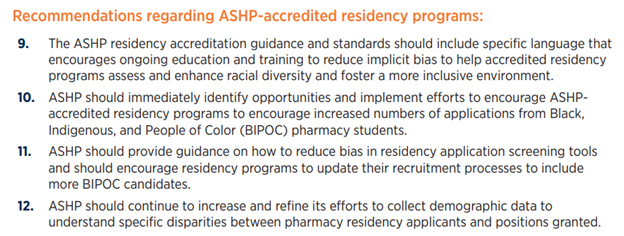
ASHP also has a Task Force on Racial Diversity, Equity, and Inclusion, formed in June 2020. The recommendations from this task force were released in January 2021 and are currently being implemented across the organization. The first order of business in the report was “to reflect more inclusive language” by providing information on the term “Black, Indigenous, and People of Color (BIPOC)”:
According to the BIPOC Project, the term is used “to highlight the unique relationship to whiteness that Indigenous and Black (African Americans) people have.”
Examples of task force recommendations are:
Appoint more racially diverse committees
“Increase the presence of BIPOC” in award and recognition programs
Training to reduce implicit bias in residency programs and application screening
Consider establishing a scholarship for BIPOC students
Collect member demographic information on race/ethnicity
Figure 4. From “Report of the ASHP Task Force on Racial Diversity, Equity, and Inclusion (January 2021).
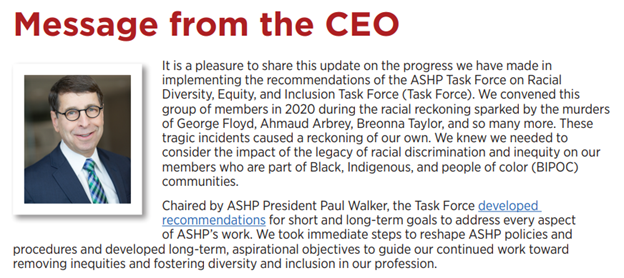
ASHP subsequently released the task force’s 2022 Implementation Report to provide an update on progress made in initiating these recommendations. The CEO’s introduction set the tone for the expected outcomes of the DEI initiatives by stating that events from the summer of 2020 “caused a reckoning of our own,” noting that ASHP “took immediate steps to reshape ASHP policies and procedures.”
Figure 5. From “ASHP Task Force on Racial Diversity, Equity, and Inclusion: 2022 Implementation Report” (December 2022).
Beyond these reports, the CEO has been continuing to communicate this reshaping of the organization and pharmacy profession to the ASHP membership. In a March 3, 2023 blog post, he stated that increasing diversity in hospital and health system pharmacists is achieved “through systemic efforts by connecting with schools that have high BIPOC engagement.” However, the most concerning information from this post came from the announcement of an upcoming scholarship and a current grant program that endorses discrimination and ideology over scientific inquiry.
He announced the launch of the inaugural ASHP Foundation Pharmacy Student Scholarship, a $25,000 award that is limited to applicants enrolled in Historically Black Colleges and Universities (HBCU) pharmacy programs. Plus, applicants must demonstrate “a commitment to health equity.”
The Pharmacy Leadership Scholars program, supported by Chiesi (a European pharmaceutical company that researches specialty medications), grants $10,000 to early-stage scientists “to fund meaningful research on diversity, equity, and inclusion.” Two projects funded by this program are Diversity and inclusion in Pharmacy Education within Integrated Healthcare Delivery System and Role of Implicit Bias on Prescription Duration of Chronic Medications.
The CEO’s message concluded by establishing the organization’s future direction. “In addition to ASHP’s focus on race and ethnicity,” he stated, “we are bolstering our work in areas including gender, LGBTQIA+, and persons with disabilities.” Members can access resources on these initiatives in the ASHP Inclusion Center and its repository of articles, continuing education webinars, and podcasts.
Figure 6. Featured resources in the ASHP Inclusion Center.
The ASHP’s mission and vision says it wants to help people and support professional pharmacy practice and advocacy for safe medication use. This is the message the ASHP needs to convey in its influence over pharmacy school guidelines and residency program requirements – not a diversion into the divisive concepts of DEI that have disrupted the academic standards of so many U.S. medical schools – as it serves its members and future practitioners.
Have you seen divisive and discriminatory practices or scholarships in pharmacy schools? Do No Harm wants to hear from you – anonymously and securely.
https://donoharmmedicine.org/wp-content/uploads/shutterstock_143111449-scaled.jpg17142560Laura Morganhttps://donoharmmedicine.org/wp-content/uploads/DNH_Logo_Stethescope-1.pngLaura Morgan2023-06-08 21:04:452026-05-07 15:47:57The American Society of Health-System Pharmacists Fills the DEI Prescription
Black Representation in the Primary Care Physician Workforce and Its Association with Population Life Expectancy and Mortality Rates in the US was recently published in JAMA Network Open. The researchers examine whether “greater Black PCP (primary care provider) workforce representation is associated with better population health measures for Black individuals.” They claim to observe that greater representation is associated with longer African American life expectancies, lower all-cause mortality, and lower disparities with White mortality rates.
The paper received fawning media coverage and generated buzz across the health policy world. But closer inspection reveals that results don’t justify the hype.
The researchers use county-level data from 2009-2019 to examine how various county-level characteristics correlate with black mortality patterns. They are principally interested in correlation with the “community representativeness ratio,” defined as the proportion of black PCPs in a county divided by the proportion of Black individuals in a county.
The researchers observe that a higher community representativeness ratio is correlated with modest improvements in black life expectancy and lower disparities with White mortality after holding constant other county-level variables such as obesity rates, home value, and air pollution. They conclude that “Black representation levels likely have relevance for population health, supporting the need to expand the structural diversity of the health workforce.”
The empirical strategy used to arrive at this conclusion ought to raise eyebrows. The “community representativeness ratio” provides no information about the proportion of African American patients treated by African American PCPs. Plus, PCPs are a single touchpoint within the healthcare system. The PCP representativeness ratio amounts to a very noisy measure of patient-provider racial concordance.
The bigger problem, as the adage goes, is that correlation is not causation. This remains true even with fancy models that observe correlations between multiple variables at one time. In fact, if one accepts at face value that these correlations represent causal estimates, then their analysis would indicate that relocation to rural counties with high proportions of male residents represents among the best solutions for improving African American life expectancy. Moreover, African Americans who live in counties with a high representativeness ratio and high levels of poverty can expect to live longer than African Americans in counties with a high representativeness ratio but low poverty. These observations aren’t just glossed over in the paper because they are politically unfashionable, but because they are plainly absurd and expose the practical limitations of correlational studies.
Of course, not everything can be evaluated through a randomized control trial, and some research questions are functionally limited to descriptive evaluation. Still, researchers can increase confidence that they have uncovered plausibly causal relationships by demonstrating that a significant association between two variables is not sensitive to judgements about how to model their relationship. For example, the researchers could have demonstrated that their results held if they omitted measures of obesity and air pollution but included measures of violent crime or traffic accidents. The failure to demonstrate any sensitivity whatsoever to judgements about model specification raises the specter that the researchers tested a limitless number of potential model permutations and then conveniently settled on one that produced desired results, a phenomenon known as p-hacking.
Suspicion of self-serving decisions about model specification looms especially large surrounding their decision to transform representativeness ratios with logarithmic functions, a statistical technique- and a judgement call- that forces them to exclude from their analysis the approximately 50% of counties that their data indicates did not have any black PCPs. How results might change without the logarithmic transformation and with a complete dataset is never addressed.
It’s possible that that their observations prove robust to changes in model specification. The decision not to provide any clues as to the sensitivity of results to model specification will leave readers guessing and ought to leave them skeptical.
Ian Kingsbury is the Director of Research for Do No Harm.
https://donoharmmedicine.org/wp-content/uploads/shutterstock_1575812476-scaled.jpg17072560Laura Morganhttps://donoharmmedicine.org/wp-content/uploads/DNH_Logo_Stethescope-1.pngLaura Morgan2023-06-08 14:14:022026-05-07 15:49:22New Race Concordance Study Should Leave Readers Skepticald
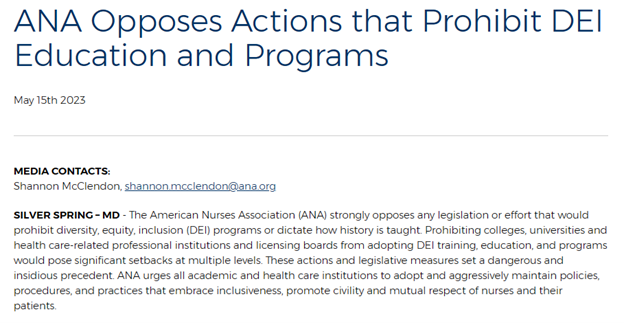
The American Nurses Association just made it official: It’s a partisan organization for radicals, not a professional organization for nurses. Policymakers and the public should keep this in mind before listening to the ANA, which now puts extreme ideology ahead of expert medical care.
Figure 1. American Nurses Association position statement opposing legislation against DEI in education (May 15, 2023).
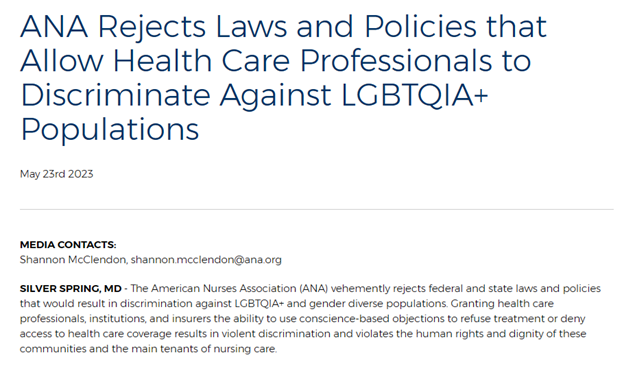
In May, the ANA released two statements proving its descent into woke identity politics. The first stated that “ANA opposes actions that prohibit DEI education and programs.” The second showed the ANA’s full support for the most extreme transgender treatments and policies.
Figure 2. American Nurses Association position statement against policies allowing conscious objections to gender ideology.
What, exactly, is the ANA standing for? In the context of DEI, it’s backing the indoctrination of nurses in divisive and discriminatory ideas, including the racist concept that it’s acceptable to treat people differently based on skin color. This is the core of DEI, and the ANA should be fighting to get discrimination out of nursing school. Instead, it’s calling on these institutions to “adopt and aggressively maintain policies, procedures, and practices” grounded in this disturbing worldview.
The ANA’s foray into transgenderism is just as concerning. It supports forcing nurses and other medical professionals to provide invasive and irreversible transgender treatments even when it violates the provider’s conscience. This presumably includes forcing nurses to provide these procedures to children, despite very real concerns about long-term physical and mental health. This is an area that demands further study and constant caution. Instead, the ANA is embracing the most radical position imaginable.
The American Nurses Association claims to speak for all nurses, and you can bet it’s using its heft to fight reforms at both the state and federal level. Yet as its recent actions show, the ANA doesn’t really speak for nurses at all. It speaks for the radical activists who now run health-care’s elite institutions. The last thing lawmakers should do is listen to a corrupted organization like the ANA.
https://donoharmmedicine.org/wp-content/uploads/shutterstock_570120298-scaled.jpg17072560Laura Morganhttps://donoharmmedicine.org/wp-content/uploads/DNH_Logo_Stethescope-1.pngLaura Morgan2023-05-31 20:42:522026-05-07 13:45:11The ANA Just Went AWOL
You’d think Virginia Commonwealth University’s Department of Surgery would have a good answer, considering it offers a scholarship specifically for these individuals. Yet a freedom-of-information request has turned up the startling revelation that VCU doesn’t define what an under-represented minority is.
This news is due to the good work of the American Accountability Foundation, which filed its request with VCU on May 1. It requested:
On the Department of Surgery website there is an announcement for the University Diversity Scholars Program. The scholarship is available to individuals who “who identify as underrepresented minorities” and the application requirements require them to “confirm your background/identification as an underrepresented minority.”
Please provide a copy of documents that detail what criteria or characteristics would be used to evaluate whether an applicant’s representation as an “underrepresented minority” was consistent with the criteria of the scholarship.
VCU responded within a month, yet the answer raised more questions. The school said:
You have asked for a copy of “documents that detail what criteria or characteristics would be used to evaluate whether an applicant’s representation as an ‘underrepresented minority’ was consistent with the criteria for the University Diversity Scholars Program announced on the Department of Surgery’s website. Department of Surgery staff checked and the requested records do not exist.
How can VCU offer a scholarship if it doesn’t know who’s eligible? Is VCU making arbitrary decisions based solely on applicants’ skin color? If yes, there’s a name for that: Racial discrimination. If no, then VCU should clarify.
Three cheers for the Lone Star State! On May 28, the Texas Legislature passed the strongest anti-DEI bill in the nation. Gov. Abbott is expected to sign it into law, making Texas the leader in the fight to get rid of divisive and discriminatory ideology in higher education and medical schools.
When signed, the Texas law will enact several critical reforms that protect and restore merit and educational standards. The law applies to all public universities and colleges in the state, and it will:
Eliminate DEI offices.
End mandatory training for students and staff related to DEI.
Prohibit the use of discriminatory Diversity Statements in faculty hiring.
Empower students or employees to sue if they’re required to undergo DEI training.
Impose penalties on universities that violate this law, to the point of denying future funding increases.
The law also makes Texas the only state in the nation to do several important things. The list includes:
Defining the function of a DEI office so that universities cannot create one under another name.
Holding universities accountable by creating a civil right of action if anyone is subjected to mandatory DEI training.
Requiring the state auditor to regularly evaluate universities to ensure that they are not spending dollars on DEI offices.
Requiring universities to regularly provide testimony to the Texas legislature about their compliance with the law.
Providing direction to university trustees to create penalties – up to and including termination – for anyone caught exercising the functions of a DEI officer or running a DEI office.
This law is a major win for everyone who wants to uphold the highest standards of medical education. That’s especially true for patients, who don’t need to be as worried that their physicians were trained to be activists instead of medical professionals. Texas medical schools have a history of forcing DEI on students and faculty. Now this decline is being reversed, and not a moment too soon.
https://donoharmmedicine.org/wp-content/uploads/shutterstock_2241273961-scaled.jpg17072560Laura Morganhttps://donoharmmedicine.org/wp-content/uploads/DNH_Logo_Stethescope-1.pngLaura Morgan2023-05-30 15:23:152026-05-07 13:50:29Texas Leads The Way On DEI Reforms
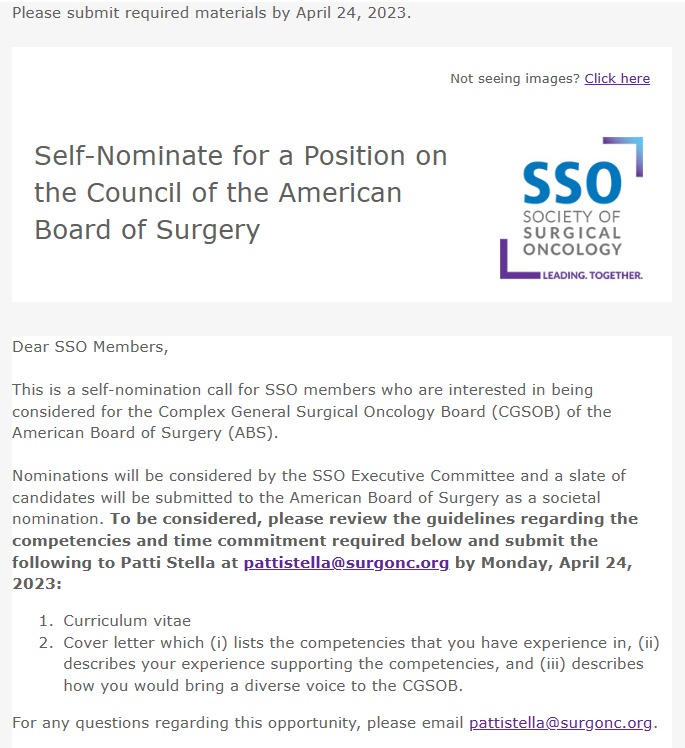
Members of the Society of Surgical Oncology (SSO) are encouraged to self-nominate for membership on a prestigious surgery board – but there’s a catch embedded in the qualifications.
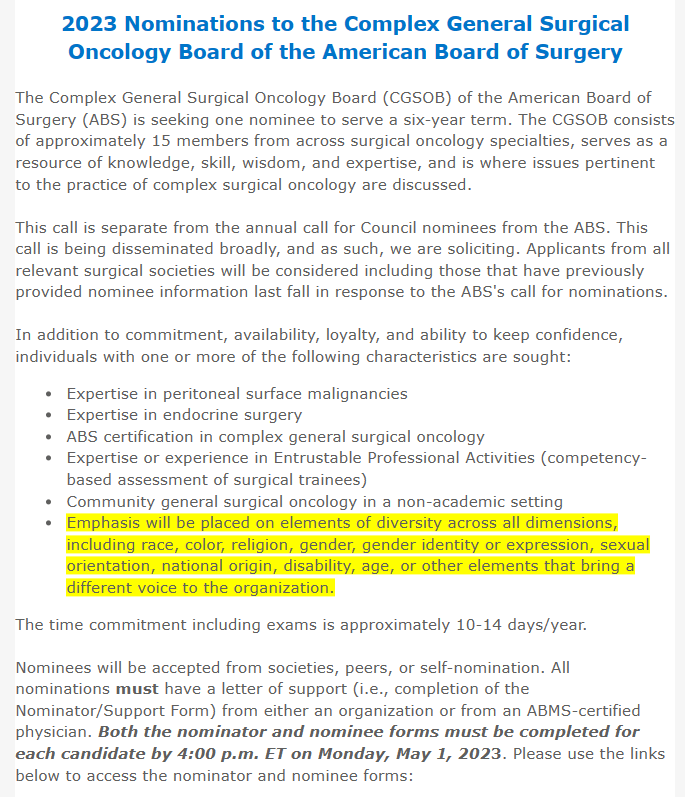
Figure 1. SSO April 2023 email (part 1 of 2).
Do No Harm obtained a copy of a message sent to SSO members in mid-April, informing them of the opportunity to nominate themselves for the American Board of Surgery’s (ABS) Complex General Surgical Oncology Board (CGSOB). One of the board’s primary actions is to write an examination for aspiring oncologists to certify their proficiency in the field. The CGSOB “is seeking one nominee to serve a six-year term,” according to the email.
“This call is separate from the annual call for Council nominees from the ABS,” the email continued. The SSO lists several areas of surgical expertise this special appeal was seeking, as well as the need to demonstrate “commitment, availability, loyalty, and ability to keep confidence.” These are undoubtedly essential qualifications to have as a medical board member. However, the SSO has one more batch of characteristics to list:
Emphasis will be placed on elements of diversity across all dimensions, including race, color, religion, gender, gender identity or expression, sexual orientation, national origin, disability, age, or other elements that bring a different voice to the organization.
Figure 2. SSO April 2023 email (part 2 of 2).
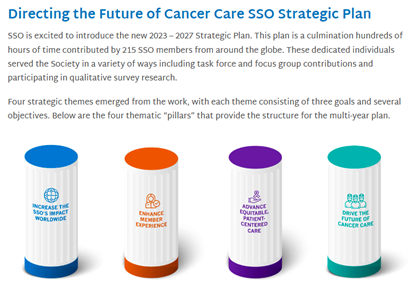
What is the Society of Surgical Oncology up to? The SSO, headquartered in Illinois, recently rolled out its 2023-2027 Strategic Plan, titled “Directing the Future of Cancer Care.” Unfortunately, this plan has less to do with the surgical care of cancer patients and more to do with divisive DEI policies. Every pillar of the plan lists the DEI-related initiatives first, and underscores the organization’s latest efforts to fast-track a self-identified nominee to the board who will uphold woke goals and objectives.
The pillars include:
Increase the SSO’s Impact Worldwide: The goal is to “champion DEI throughout the field of cancer surgery” by ensuring DEI infiltrates initiatives throughout the organization.
Enhance Member Experience: To ensure the SSO’s leadership is more diverse, it aims to participate in “meaningful engagement for underrepresented groups.”
Advance Equitable Patient-Centered Care: SSO wants to push the concept of health equity by creating educational content and increasing DEI in the recruitment process for cancer research.
Drive the Future of Cancer Care: The goal is to promote diversity in the workforce through pipeline programs and development of personnel who belong to “underrepresented groups.”
Figure 3. Pillars of the SSO strategic plan.
The Society of Surgical Oncology is one on a long list of medical professional organizations that continue to barrel toward elevating the perceived virtues of DEI in healthcare without considering the downstream effects. Cancer patients deserve to be treated by physicians who are among the most skilled and qualified, and choosing board members based on DEI-related issues undermines the legitimacy of the board exam itself. The SSO must ensure it is recruiting board members who have expertise in surgical oncology, not identity politics.
https://donoharmmedicine.org/wp-content/uploads/shutterstock_526407691-scaled.jpg15902560Laura Morganhttps://donoharmmedicine.org/wp-content/uploads/DNH_Logo_Stethescope-1.pngLaura Morgan2023-05-29 12:06:382026-05-07 13:52:55The Society of Surgical Oncology Board Exposes Its True Agenda In Board Member Recruitment
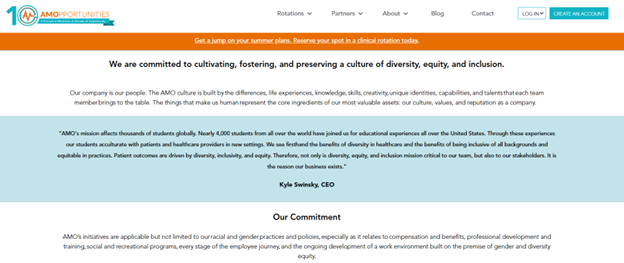
In January 2023, we reported on the Accreditation Council for Graduate Medical Education’s (ACGME) obsession with accumulating information about what emergency medicine residencies were doing to “increase racial/ethnic and gender diversity” in their recruitment activities. Now ACGME-registered program directors are being pestered with messages from a Chicago-based firm dedicated to the “culture of diversity, equity, and inclusion.”
Do No Harm obtained a copy of an email sent to a residency program director from a representative with “AMOpportunities,” who offered information on “how we can help you meet the new ACGME common program requirements” related to diversity in resident recruitment and retention. “We can help you bring in learners to your program,” the email read, “who could help you meet your diversity focus.”
We have illustrated how attempts to prove the effectiveness of imposing DEI bureaucracies into medical academics and practice have failed. Yet, without citing any evidence, the CEO of AMO says, “Patient outcomes are driven by diversity, inclusivity, and equity,” and even admits the DEI “is the reason our business exists.”
Figure 1. AMOpportunities: “Our Commitment to Diversity, Equity, and Inclusivity.”
It’s not surprising that a consulting firm is following funding opportunities that magically materialize when there is a large audience to pitch their big-ticket services to. It’s just a shame that busy residency program directors – who are already burdened with the ACGME’s common program requirements – are having their inboxes cluttered by pushy salespeople seeking another bite at the DEI apple.
https://donoharmmedicine.org/wp-content/uploads/shutterstock_775058404-scaled.jpg17092560Laura Morganhttps://donoharmmedicine.org/wp-content/uploads/DNH_Logo_Stethescope-1.pngLaura Morgan2023-05-25 12:48:552026-05-07 13:54:22More DEI Marketing Pushed Onto Residency Program Directors
On the heels of resolving one program that was discriminating on the basis of sex, the Duke University School of Medicine is again being investigated for a discrimination on the basis of race/ethnicity and sex.
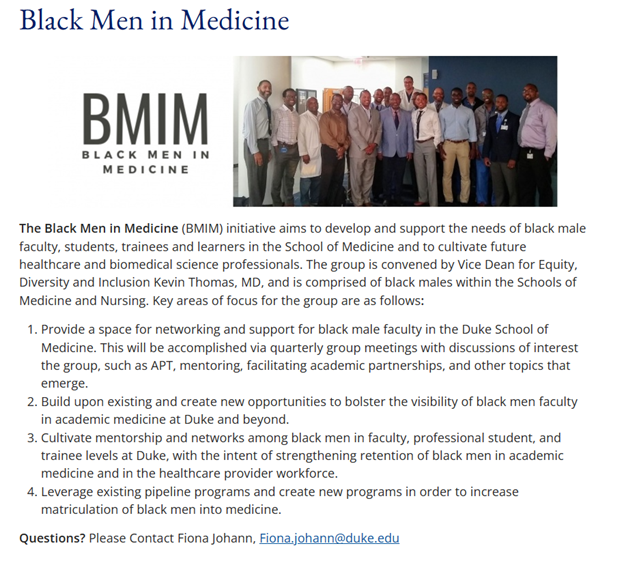
Do No Harm senior fellow Mark Perry has been notified that the U.S. Department of Education’s Office for Civil Rights (OCR) has opened an investigation into the school’s racially discriminatory Black Men in Medicine (BMiM) initiative (archived site here). The complaint, filed by Perry on April 9, 2023, reports that BMiM “aims to develop and support the needs of black male faculty, students, trainees, and learners in the School of Medicine and to cultivate future healthcare and biomedical science professionals.”
Figure 1. Black Men in Medicine initiative at Duke University School of Medicine.
The Black Men in Medicine Group hosts “Moving Forward Together” sessions to “provide a space for Black men in the Schools of Medicine and Nursing to come together and lend support to one another during the ongoing challenging times.” Faculty members participate in the sessions “to speak openly” with participants about their experiences at Duke.
BMiM violates Title VI of the Civil Rights Act of 1964, which prohibits discrimination on the basis of race, color, or national origin. The program simultaneously violates Title IX of the Education Amendments of 1972, which prohibits discrimination on the basis of sex.
Is your school offering programs that discriminate on the basis of race/ethnicity, sex, or both? Do No Harm wants to hear from you – anonymously and securely.
https://donoharmmedicine.org/wp-content/uploads/shutterstock_1215985498-scaled.jpg17092560Laura Morganhttps://donoharmmedicine.org/wp-content/uploads/DNH_Logo_Stethescope-1.pngLaura Morgan2023-05-25 12:04:042026-05-07 13:55:49Another Federal Civil Rights Investigation Is Underway at Duke University School of Medicine
https://donoharmmedicine.org/wp-content/uploads/DNH_Logo_Stethescope-1.png00dnhprodhttps://donoharmmedicine.org/wp-content/uploads/DNH_Logo_Stethescope-1.pngdnhprod2023-05-23 09:48:092026-02-19 04:17:27Single – Case
As the result of a federal civil rights investigation, Duke University has modified the eligibility criteria for a program that was discriminating on the basis of sex/gender.
Earlier this year we reported that Duke was among 12 schools participating in a program for young women in high school who are interested in careers in orthopedic surgery or engineering (The Perry Outreach Program), and a second program for female medical students (The Medical Student Outreach Program). The inclusion criteria for these programs state that applicants “must gender-identify as female or non-binary,” in violation of Title IX of the Education Amendments of 1972.
In response to the Title IX complaints Do No Harm filed with the Office for Civil Rights against U.S. medical schools that partner and collaborate with the Perry Initiative and host its illegal discriminatory female-only programs, federal civil rights investigations were opened at Wake Forest and Duke University. The OCR just informed us that the investigation of Duke’s illegal sex discrimination has been resolved.
According to OCR’s resolution letter, “Although an initial flyer about the [MSOP] event [at Duke] invited only women or nonbinary students to participate, at Duke University’s prompting the advertising was revised to state that “medical students (MD or DO) of any gender…are invited to participate.” The University provided documentation to OCR that its own advertising invited all “current medical students” in the area to attend.”
The resolution of our complaint against Duke University’s participation in The Perry Initiative is notable. The April MSOP workshop event at Duke was the first of 450 outreach Perry Initiative events in more than a decade that was open to students of all gender identities and not restricted to only female medical or high school students.
Without Do No Harm’s civil rights advocacy and legal challenge, the Perry Initiative at Duke University would continue to illegally exclude non-female students from its outreach programs. We look forward to OCR investigating all Perry Initiative workshops to bring them into compliance with Title IX and open them to all students, regardless of their sex and gender identity.
https://donoharmmedicine.org/wp-content/uploads/shutterstock_1191331912-scaled.jpg17072560Laura Morganhttps://donoharmmedicine.org/wp-content/uploads/DNH_Logo_Stethescope-1.pngLaura Morgan2023-05-22 15:15:002026-05-07 13:57:25Duke University Makes a Course Correction on a Discriminatory Program Following Federal Civil Rights Investigation
You can’t corrupt health care without first controlling medical language. That’s the main takeaway from the AMA and AAMC’s new 54-page brainwashing booklet, “Advancing Health Equity: A Guide to Language, Narrative, and Concepts.” Elites want medical students and professionals to use divisive and discriminatory language, knowing full well that politicizing medical words will ultimately lead to a thoroughly political health care system – one in which patient health suffers.
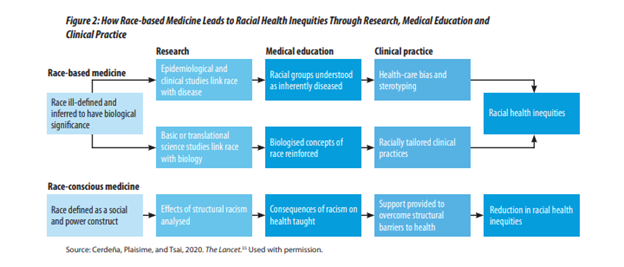
The AMA and AAMC mince no words about why they wrote this document. Health care, they say, is full of “narratives grounded in white supremacy and sustaining structural racism.” That includes “patriarchal narratives” and “narratives that uncritically center meritocracy and individualism.” Instead, they argue, health care needs new language, grounded in “critical race theory… gender studies, disability studies, as well as scholarship from social medicine.”
What does this woke mumbo-jumbo mean, practically speaking? It means using politicized language across the board, with the goal of turning medical students and physicians into far-left activists.
The guide is filled with examples. Apparently, medical professionals should talk more about racism, attribute patients’ medical challenges to various oppressors, make the case for political policies and radical worldviews, and more. On the whole, the guide urges the medical profession to focus more on social problems and political debates than medical treatment and care.
Figure 1. From “Advancing Health Equity: A Guide to Language, Narrative, and Concepts” (p. 21).
Scholar Robert Graboyes highlights a particularly ridiculous example. Currently, a physician might say: “Low-income people have the highest level of coronary artery disease in the United States.” But the woke guide to medical language says the proper phrasing is this: “People underpaid and forced into poverty as a result of banking policies, real estate developers gentrifying neighborhoods, and corporations weakening the power of labor movements, among others, have the highest level of coronary artery disease in the United States.” This may seem laughable, but the consequences are deadly serious. The corruption of medical language is key to the woke takeover of medicine itself. When your doctor is more focused on supposed racism than treating your individual medical needs, your health will suffer. It’s the latest proof that medicine’s gatekeepers in the AMA and AAMC have given up on protecting health care and patient health. Just the opposite: They’re actively destroying the medical profession and jeopardizing Americans’ well-being.
https://donoharmmedicine.org/wp-content/uploads/2023/05/AMA-cover.png369782Laura Morganhttps://donoharmmedicine.org/wp-content/uploads/DNH_Logo_Stethescope-1.pngLaura Morgan2023-05-22 13:45:252026-02-11 15:33:32The Woke Language Police Have Come For Health Care
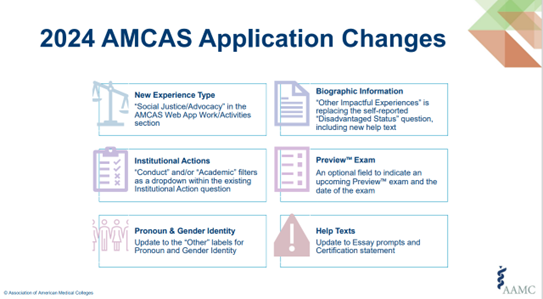
Last year we revealed that the American Medical College Application Service (AMCAS) had started collecting information on applicants’ race and background, and planned to add “Social Justice/Advocacy” in the work experience section. Sure enough, the 2024 version of the AMCAS had done this, and shows it is going even further down the identity politics wormhole.
The AMCAS, administered by the Association of American Medical Colleges (AAMC), is the centralized system prospective medical students use to submit their applications to multiple schools. Scores of prospective doctors participate in the AAMC’s informational webinars each application cycle, such as the one held on April 23, 2023. Titled Navigating the 2024 AMCAS Application Cycle, the presentation offered a review of the application with an emphasis on the new elements for 2024.
Figure 1. From the AMCAS update webinar April 26, 2023.
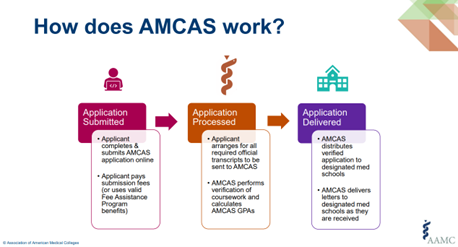
One area the webinar addressed was the “AMCAS GPA.” Once all courses are entered into the application, AAMC verifies the coursework and the student’s completion status. Then, AMCAS converts those grades into “AMCAS grades,” which creates the AMCAS GPA. “The AMCAS GPA provides the medical schools with a standardized way to compare each applicant’s background,” the narrator stated.
Figure 2. From the AMCAS update webinar April 26, 2023.
But is the AMCAS actually providing standardization in evaluating the background of future medical students? The new additions to the application indicate that the AAMC plans to collect and report more than just objective data on academic achievement.
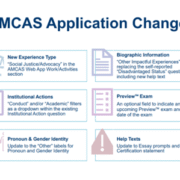
Figure 3. Changes to the 2024 AMCAS application (April 26, 2023).
The new “experience type” of Social Justice/Advocacy was added to the application based on recommendations collected over a couple of years. The FAQs page (archived link) on the AAMC website explains that the “Social Justice in Medical School Admissions Working Group” was formed in 2021 “to further explore the value medical schools place on advocacy and social justice,” and defined how this information can be considered during the admissions process.
Figure 4. “Social Justice/Advocacy” experience type in the 2024 AMCAS.
“A social justice or advocacy experience is one in which you work to advance the rights, privileges, or opportunities of a person, group of people, or cause,” the webinar narrator stated. “It is not tied to any particular ideology,” the instruction continued, “and is inclusive of all personal understandings of social justice and advocacy.” Examples of acceptable activities given in the presentation include:
Registering people to vote
Climate activism
Advocating for civil rights
Decreasing health inequities
Addressing food deserts
Building awareness for a particular cause or health condition
Advocating for vulnerable populations such as children or homeless people
Assisting with policy change or development
These topics include causes and activities that are addressed by other disciplines within healthcare. Social workers – not physicians – are better suited to evaluate and assist patients with socioeconomic issues. Gathering this new category of information suggests an effort to discover applicants who will accept further indoctrination to becoming activists first, and physicians second. The AAMC says as much when it describes “holistic review in medical school admissions:”
Medical schools are continuing to assess their admissions policies and processes in recruiting a future physician workforce who will help to further address these complex and complicated issues and solutions within their communities.
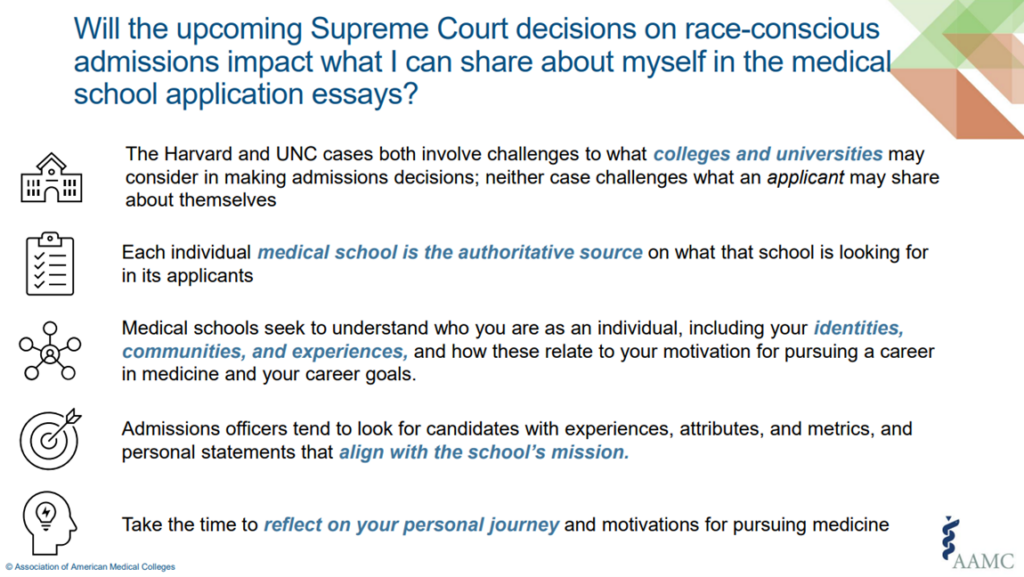
The webinar also addressed the pending Supreme Court decision on affirmative action in college admissions, but made it clear that for now, applicants can share any information they want on their applications. “While we cannot predict the outcomes of these cases,” according to the presentation, “any prescription from the court will be directed at the school’s behavior, not applicants.” But, regardless of the Supreme Court’s decisions, “schools will likely continue to prioritize mission alignment when evaluating applicants,” the narrator concluded.
Figure 5. From the AMCAS update webinar April 26, 2023.
The AAMC is continuing to load the AMCAS with ammunition for admissions officers to use in support of the “holistic review” process. Naturally, personal background and life experiences have a dramatic effect on one’s character and are important factors in what makes each person unique. But issues of identity cannot replace the role that merit and achievement plays in determining who will be a good doctor, and attempting to create physician advocates for various social causes does not train them to be optimal diagnosticians and healers.
As one med school applicant told us last year, “As a future physician, I commit to striving for the highest quality of treatment within my scope to all my patients, regardless of skin color. I hope we can pay that same commitment to the physicians of the future.”
We couldn’t agree more.
Have you seen questions on a healthcare education program application that values identity politics over student achievement? Do No Harm wants to hear from you, and you may remain anonymous if you wish.
https://donoharmmedicine.org/wp-content/uploads/2023/05/AMCAS3-and-cover.png299543Laura Morganhttps://donoharmmedicine.org/wp-content/uploads/DNH_Logo_Stethescope-1.pngLaura Morgan2023-05-19 15:13:192026-02-11 15:33:31The American Medical College Application Service Puts An Even Bigger Emphasis On Identity Politics for This Year’s Prospective Physicians