
• Link to X
  • Link to Facebook
  • Link to Instagram
  • Link to LinkedIn
  • Link to Youtube
  • HAVE YOU SEEN OR EXPERIENCED THE IMPACT OF DEI OR RADICAL GENDER IDEOLOGY AT YOUR INSTITUTION? CLICK HERE TO SHARE YOUR STORY.
Do No Harm
  • About Us
    • ABOUT
    • TEAM
    • FAQS
    • WHAT OTHERS SAY
    • VOICES OF DO NO HARM
  • OUR WORK
    • NEWSROOM
    • ISSUE AWARENESS
      • IDENTITY POLITICS (DEI)
      • GENDER IDEOLOGY
    • FEDERAL POLICY
    • STATE POLICY
    • LEGAL ACTION
    • RESEARCH
    • RESOURCES
    • CENTERS
  • GET INVOLVED
    • SUBMIT A TIP
    • BECOME A MEMBER
    • CAREERS
  • MEDIA INQUIRIES
  • Search
  • DONATE
  • Menu Menu

Case Management Society of America Embeds DEI Into Standards of Practices

Uncategorized United States DEI Medical association Commentary Do No Harm Staff

The Case Management Society of America (CMSA) is a membership association representing case managers – healthcare professionals who help coordinate care for patients – in the United States.

Yet the organization clearly believes that an essential part of this function is promoting DEI and promoting identity politics.

In 2024, CMSA added an addendum to its standards of practice called “Standard Q” that incorporates DEI into the organization’s professional standards.

“At CMSA, we believe that Diversity, Equity, Inclusion, and Belonging (DEIB) are essential components of professional case management. Standard Q serves as a vital resource for case managers, empowering them to make an impact by dismantling barriers to healthcare access and advancing health equity across all communities,” said CMSA President Janet Coulter in a press release announcing the addition.

What does this mean in practice? 

Well, first, case managers must demonstrate a commitment to DEI.

“The professional case manager shall demonstrate a commitment to the principles of Diversity, Equity, Inclusion, and Belonging, and Health Equity in practice,” the standards state.

Next, case managers must gear their jobs toward advancing “health equity.”

“The professional case manager shall provide case management services and interventions that eliminate health disparities and inequalities,” the standards state.

“Health equity must be pursued as an intentional strategy since it will not necessarily happen as a by-product of other initiatives,” the standards continue. “Professional case managers in all healthcare settings (such as health plans, workers’ compensation, health systems, clinics, and individual practitioners) shall make every effort to improve health equity for all clients regardless of the demographics of the individuals, communities, or populations served.”

In short, the standards expect case managers to be evangelists for “health equity” in the workplace. Health equity, by its definition, calls for the equalizing of outcomes between particular identity (including racial) groups, invariably encouraging providers to engage in discriminatory behavior.

But that’s not all.

“The professional case manager shall participate in public policy activities and legislative efforts related to equity,” the standards state.

You read that right. Case managers are literally expected to become political activists in support of DEI and radical identity politics.

Moreover, the standards appear to suggest that case managers should promote discriminatory hiring and recruitment practices in the name of advancing diversity.

“The professional case manager shall engage in initiatives that support diverse teams throughout the entire employee lifecycle, including recruiting, hiring practices, promotions and career advancements, mentoring and sponsoring, and departures,” the standards read. “Diversity” here refers to the diversity of “social identity groups,” which are demarcated by “race, ethnicity, culture, gender, gender identity and expression, sexual orientation, socioeconomic status, religion, spirituality, disability, age, national origin, immigration status, and language.”

It’s hard to imagine how this could be achieved except through overt racial discrimination.

In summary, the CMSA standards seek to radically alter the profession of case management into a vehicle for ideological activism. Case managers are expected to become foot soldiers for the DEI ideology.

This is utterly antithetical to proper healthcare practices and a dereliction of healthcare professionals’ fundamental duties to patients and society at large.

https://donoharmmedicine.org/wp-content/uploads/2024/07/shutterstock_2280390393-scaled.jpg 1703 2560 Ailan Evans https://donoharmmedicine.org/wp-content/uploads/dono-logo.png Ailan Evans2025-10-24 13:25:452025-10-24 13:25:45Case Management Society of America Embeds DEI Into Standards of Practices

The Council on Social Work Education’s DEI-Infused Standards

Uncategorized United States DEI accrediting organization Commentary Do No Harm Staff

If you thought the goal of social work education programs was to train the best possible social workers, think again. 

The field’s accrediting body, the Council on Social Work Education (CSWE), is infusing divisive identity politics into social work education programs and transforming them into vehicles for political and ideological activism.

The CSWE accredits baccalaureate, master’s, and doctoral programs in social work across the United States. Many of these programs specifically focus on social work in the healthcare context; social workers are important figures in the healthcare landscape, connecting patients with valuable medical resources and helping them better manage their medical conditions.

In theory, accreditation bodies should ensure that programs meet professional and ethical standards. But the CSWE is more interested in enforcing an ideology centered around “anti-racism,” “equity,” and “social justice.”

The CSWE’s 2022 Educational Policy and Accreditation Standards, the most recent iteration of the organization’s standards, include two competencies specifically geared toward DEI. Competency 2 requires programs to ensure students “Advance Human Rights and Social, Racial, Economic, and Environmental Justice,” while Competency 3 mandates that they “Engage Anti-Racism, Diversity, Equity, and Inclusion (ADEI) in Practice.”

Social workers should “demonstrate anti-racist and anti-oppressive social work practice at the individual, family, group, organizational, community, research, and policy levels,” the description for Competency 3 states.

The CSWE ensures social work programs achieve these goals by requiring them to meet certain DEI-centered standards.

For instance, Accreditation Policy 2.0 mandates programs to engage “in specific and continuous efforts within the explicit curriculum related to anti-racism, diversity, equity, and inclusion.”

“Social work education is grounded in the liberal arts and a commitment to anti-racism, diversity, equity, and inclusion, which together provide the intellectual basis for the professional curriculum and inform its design,” Educational Policy 3.0 reads. “The integration of anti-racism, diversity, equity, and inclusion principles across the explicit curriculum includes anti-oppression and global positionality, interdisciplinary perspectives, and comparative analysis regarding policy, practice, and research.”

Educational Policy 2.0, meanwhile, instructs programs to “provide the context through which students learn about their positionality, power, privilege, and difference and develop a commitment to dismantling systems of oppression, such as racism, that affect diverse populations.”

Additionally, programs must “recognize the pervasive impact of White supremacy and privilege and prepare students to have the knowledge, awareness, and skills necessary to engage in anti-racist practice.”

The influence of this ideology isn’t just limited to the curriculum; Educational Policy 4.3: Administrative and Governance Structure requires that programs develop “an administrative and leadership structure that reflects and affirms respect for anti-racism, diversity, equity, and inclusion.”

This embrace of DEI mirrors the larger trend in social work; earlier this year, the National Association of Social Workers published an article titled “Targeting Diversity, Equity and Inclusion: What It Means for Social Work Education,” that bemoaned the Trump administration’s efforts to remove DEI from higher education.

And sadly, the CSWE is far from the only accreditor that has pushed DEI on education programs. Do No Harm reported on healthcare education accreditors who were encouraging medical schools and universities to implement discriminatory admissions, hiring, and/or recruiting practices. And in April, President Trump issued an executive order targeting accreditors for injecting DEI into higher education. Thankfully, many of these accreditors have since walked back their programs following our investigation and the executive order.

Due to their unique position, accreditors have enormous power over the content of curricula and the policies and practices of higher education programs. This power simply cannot be abused to push radical identity politics and degrade the quality of education. This harms students, future social workers, and patients alike.

https://donoharmmedicine.org/wp-content/uploads/2024/07/shutterstock_2036344139-scaled.jpg 1707 2560 Ailan Evans https://donoharmmedicine.org/wp-content/uploads/dono-logo.png Ailan Evans2025-10-24 13:07:282025-10-24 13:07:28The Council on Social Work Education’s DEI-Infused Standards

Lawsuit Seeks Data Behind Taxpayer-Funded Study That Undercuts Support For Puberty Blockers

Uncategorized United States Gender Ideology Federal government Commentary Do No Harm Staff

Today, the American Accountability Foundation (AAF) filed a lawsuit seeking data from a taxpayer-funded study on the efficacy of puberty blockers to treat children with gender dysphoria.

The study was funded by a National Institutes of Health (NIH) grant and helmed by Dr. Johanna OIson-Kennedy, who formerly led the pediatric gender clinic at Children’s Hospital Los Angeles (which until recently was a prolific provider of child sex change interventions).

However, according to a New York Times report, Dr. Olson-Kennedy had initially refused to publish the results of the study as it found that “puberty blockers did not lead to mental health improvements” in children.

The Times reported that Dr. Olson-Kennedy’s decision was due to fears that the results could undermine the argument for “gender-affirming care.” 

That same month, AAF submitted a Freedom of Information Act (FOIA) request to the NIH for the study’s underlying data, but received a response that was incomplete and rife with redactions. 

“Though the NIH sent a response and produced some records in November 2024, NIH’s production appeared incomplete, as it didn’t include Dr. Olson-Kennedy’s data and contained redactions throughout,” the suit states. “NIH’s response also appeared incomplete and insufficient because it didn’t justify any of the redactions, nor did it explain how the search was conducted to find responsive records pertaining to the data set.”

Subsequent efforts to obtain the data through the FOIA process were similarly stymied. 

As a result, AAF filed its lawsuit against the NIH and Department of Health and Human Services (HHS), alleging that the bureaucrats are improperly withholding the data.

“For over a year, HHS has been hiding a bombshell study that confirms what we’ve known all along: transgender therapy is a failure,” American Accountability Foundation President Tom Jones told The Daily Wire. “The lead researcher herself admitted that the findings challenge the effectiveness of these drugs. HHS bureaucrats are playing woke political games, ignoring science and common sense.”

The lawsuit seeks injunctive relief in the form of a court order requiring the defendants to produce the data in question.

A preprint of the study was finally released earlier this year, finding that children’s depression symptoms and emotional health “did not change significantly over 24 months” of being on puberty blockers.

Do No Harm applauds AAF for fighting to expose this important data and pull back the curtain on the harms of sex-rejecting interventions. Sunlight is the best disinfectant, and Do No Harm supports this effort for transparency.

https://donoharmmedicine.org/wp-content/uploads/2024/07/shutterstock_773282173-scaled.jpg 1841 2560 Ailan Evans https://donoharmmedicine.org/wp-content/uploads/dono-logo.png Ailan Evans2025-10-22 21:52:432025-10-22 21:52:43Lawsuit Seeks Data Behind Taxpayer-Funded Study That Undercuts Support For Puberty Blockers

Commitment to DEI Required If You Want to Work at UNLV

Uncategorized Nevada DEI University of Nevada Las Vegas Medical School Commentary Do No Harm Staff

The University of Nevada, Las Vegas (UNLV), by Do No Harm’s count, has more than two dozen healthcare-related instructional positions that require a commitment to DEI in some form or fashion. 

These positions span several different schools at UNLV, including the School of Medicine, the School of Nursing, the School of Public Health, the School of Integrated Health Sciences, and the School of Dental Medicine.

For example, the position of “Surgery- Surgical Oncology, Assistant/Associate Professor” at the Kirk Kerkorian School of Medicine requires applicants to “demonstrate support for diversity, equity and inclusiveness.” 

Similarly, the role of Assistant Professor-in-Residence, Department of Epidemiology & Biostatistics at the School of Public Health demands support for “diversity, equity, and inclusiveness.”

Additionally, many postings require applicants to adhere to “Campus Values” that include concepts like “equity,” “compassion & inclusion,” and more.

So, not interested in DEI? Then you need not apply.

Do No Harm has previously documented UNLV’s activities related to DEI; in 2023, the school initially refused to hand over key information regarding their commitments to DEI in response to a public records request by Do No Harm.

What is surprising is that, just earlier this month, UNLV went to painstaking lengths to “erase” references to DEI on its website. Those webpages now produce a “page not found” error message:

Critically, in a statement, UNLV noted they have “not ended” DEI programs but merely “modified” the “organizational structures supporting them” in order to “build a climate of engagement and collaboration among all members of the university community.” 

So UNLV made it appear as if they were doing the right thing, but in reality it is nothing more than a reframing of verbiage.

All of this comes on the heels of UNLV being investigated earlier this year for using “racial preferences and stereotypes in education programs and activities.” 

Put simply, UNLV has a long track record of embracing DEI wholeheartedly. 

Instead of simply scrubbing its website, UNLV should actually distance itself from DEI. There is no better place to start than getting rid of ideological litmus tests for DEI in its hiring practices.

https://donoharmmedicine.org/wp-content/uploads/2023/09/shutterstock_1720780129-scaled.jpg 1707 2560 Ailan Evans https://donoharmmedicine.org/wp-content/uploads/dono-logo.png Ailan Evans2025-10-22 21:11:042025-10-22 21:11:04Commitment to DEI Required If You Want to Work at UNLV

Stop Forcing Taxpayers to Pay for DEI Politics

Uncategorized United States DEI Medical Journal Commentary Kurt Miceli, MD

Editor’s note: This comment is in response to “Structural and Scientific Racism, Science, and Health — Evidence versus Ideology,” published by The New England Journal of Medicine in September 2025.

Krieger and Bassett’s Perspective, Structural and Scientific Racism, Science, and Health — Evidence versus Ideology, unintentionally makes a compelling case for why DEI research shouldn’t be funded by taxpayers. The article rehashes political claims that solely see the world through the lens of race.

For starters, the article is divisive; opposition to Medicaid expansion is deemed to be “rooted in racially discriminatory beliefs.” How did a legitimate debate over government-run healthcare – centered on cost, market impact, and efficiency – get miscast as racism?

Likewise, the authors go back over 400 years to criticize colonial America. While slavery was a grave evil, dwelling only on past wrongs and ignoring decades of progress hinders healing and keeps us stuck in history. It also does nothing to improve healthcare.

Yet, the authors insist that denying government funding for DEI projects amounts to “racial discrimination,” reflecting a sense of entitlement echoing Ibram Kendi’s controversial antiracism perspective. But private efforts aren’t banned, and public funding isn’t owed. Framing the opposition, however, as racist is simply unproductive, inappropriate, and un-American.

https://donoharmmedicine.org/wp-content/uploads/2023/09/shutterstock_165320348-scaled.jpg 1696 2560 Ailan Evans https://donoharmmedicine.org/wp-content/uploads/dono-logo.png Ailan Evans2025-10-22 12:53:342026-01-20 14:41:14Stop Forcing Taxpayers to Pay for DEI Politics

A Call to Reclaim Scientific Debate

Uncategorized United States DEI Medical Journal Letter Howard Fenn, Kurt Miceli, MD

Editor’s note: This comment originally appeared as a response to the editorial, “The Importance of Health Equity Scholarship in Uncertain Times,” published in JAMA Health Forum.

Healthy scientific discourse thrives on skepticism and debate. The scientific process advances when it avoids premature closure or pseudo-certainty. JAMA’s editorial policy, however, as stated in “The Importance of Health Equity Scholarship in Uncertain Times,” promises to publish only articles based upon an unproven assumption—that health equity research will “allow all people to live longer, healthier lives.” The policy presumes a wide consensus and declares that there is, and, ominously, should be, “alignment across journals, institutions, and disciplines around the goals that animate health equity work.”

Read the full comment at JAMA Health Forum.

https://donoharmmedicine.org/wp-content/uploads/2022/05/shutterstock_1686925927-scaled.jpg 1707 2560 Ailan Evans https://donoharmmedicine.org/wp-content/uploads/dono-logo.png Ailan Evans2025-10-21 21:48:122026-01-20 14:41:14A Call to Reclaim Scientific Debate

State-Backed Pregnancy Course is Chock-Full of DEI 

Uncategorized Minnesota DEI Health system Commentary Do No Harm Staff

Back in 2023, Do No Harm research revealed that the University of Minnesota had paid an organization called Diversity Science (now the Humanitas Institute) $219,633 to create a continuing medical education course whose purpose was to “empower perinatal care providers with the foundational knowledge, insights and skills they need to ensure that Black and Indigenous women and birthing people receive fully equitable patient-centered, respectful, high-quality care free of bias and discrimination.”

The course, called “Dignity in Pregnancy & Childbirth,” is intended for employees at Minnesota hospitals and birthing centers who work with pregnant or postpartum patients.

Now, the latest update of the course is out – and as one might expect, it’s rife with DEI, ideology, and dubious medical concepts. 

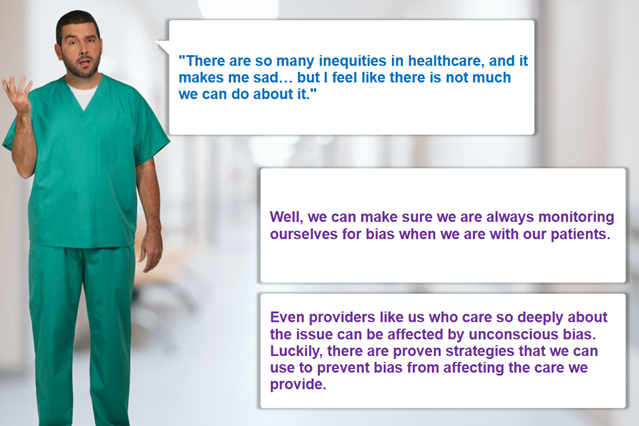
Central to the course’s themes is the notion that ameliorating “implicit/unconscious bias” in healthcare providers, specifically white healthcare providers, can improve health outcomes for minority patients. This argument in turn relies on the premise that providers’ unconscious biases negatively impact the health outcomes of minority patients.

For instance, the course opens with the graphic below suggesting that unconscious bias is a key driver for racial disparities in health outcomes.

Figure 1. A slide on health inequities and unconscious bias from the Dignity in Pregnancy & Childbirth course.

There is simply no evidence to support this claim. 

The primary tool to assess an individual’s ostensible implicit bias, the Implicit Association Test or IAT, has been shown to have little predictive value.

“Twenty years of research produced very little evidence that the IAT test predicts any real-world behaviour,” University of Toronto Mississauga psychology professor Ulrich Schimmack, who spent years studying implicit bias, said in 2019. “On top of that, some of the articles that claim it does, on close inspection, fail to show that.”

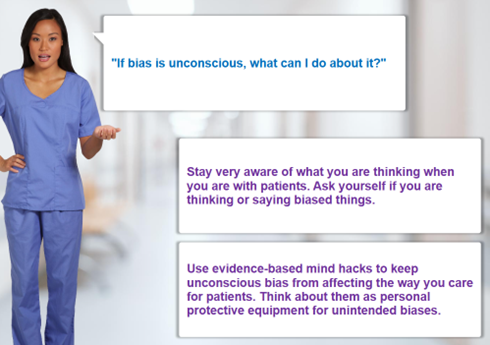
Nevertheless, the course suggests “evidence-based mind hacks” for healthcare professionals to employ to prevent this “unconscious bias” from affecting the care they provide.

Figure 2. A slide on unconscious bias from the Dignity in Pregnancy & Childbirth course.

This is so troubling as it’s a tacit accusation, utterly lacking in evidentiary basis, that healthcare professionals harbor secret prejudices.

Clearly, this sows distrust and division within the healthcare system.

But that’s not all; not satisfied with advancing the unsupported notion that implicit bias negatively affects health outcomes, the course dips its toes into racial concordance.

In a video that plays at the end, the course narrator makes the following claims:

“Furthermore, studies show that white doctors, nurses, and other healthcare professionals often display warmer and friendlier verbal and non-verbal behavior toward white patients than toward patients of other races and ethnicities. This means that your black and other minority or marginalized patients and their families may have had deeply disappointing experiences with healthcare. They may be afraid that provider bias will get in the way of their care.”

While it’s unclear exactly which studies the course is referring to, it doesn’t really matter: the implication that minority patients face worse health outcomes when treated by white healthcare professionals is completely false.

The course is gesturing at the notion that racial concordance – in which patients are treated by providers of the same race – improves health outcomes, a notion that runs against the weight of the current evidence.

Do No Harm’s December 2023 report on this issue examined the literature on racial concordance and highlighted the fact that four out of five systematic reviews found no evidence to support the claim that racial concordance produces positive health outcomes.

Another recent review published in the Substance Use & Addiction Journal found inadequate evidence to support the notion that racial concordance improves health outcomes for black patients in addiction treatment.

Nevertheless, the course continues to suggest that biases held by white healthcare professionals negatively impact minority patients’ health outcomes.

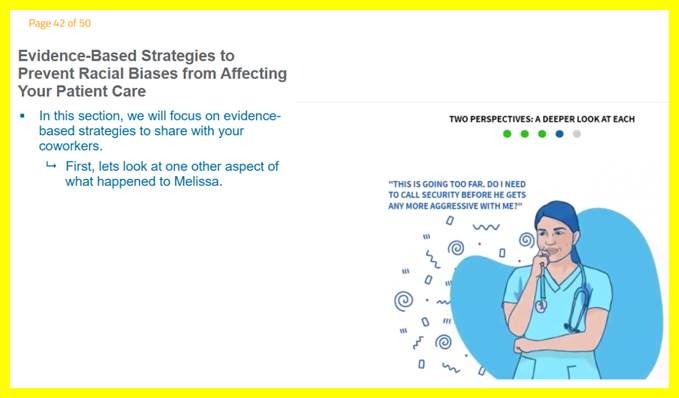
Figure 3. A slide detailing “evidence-based” strategies to prevent racial biases in the Dignity in Pregnancy & Childbirth course.

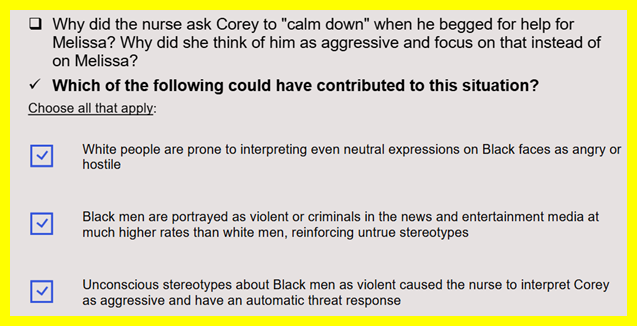
For instance, the course proposes a hypothetical in which a white nurse tells a black male individual to “calm down” when begging for her to help a patient, and asks why the nurse acted that way.

Figure 4. A slide suggesting potential stereotypes in the Dignity in Pregnancy & Childbirth course.

One of the options is the following statement: “White people are prone to interpreting even neutral expressions on Black faces as angry or hostile.”

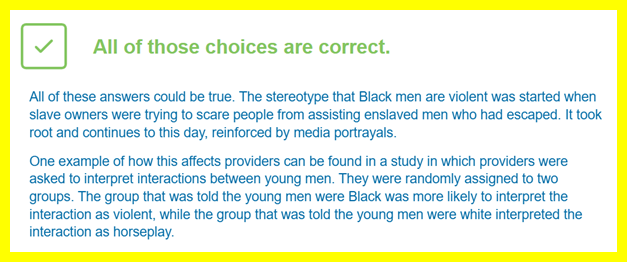
Course participants must select all of the options above if they wish to be completely correct.

Figure 5. A slide suggesting potential stereotypes in the Dignity in Pregnancy & Childbirth course.

In short, this course is advancing debunked academic concepts that reinforce a vision of the healthcare system completely divorced from reality.

This is in itself harmful, and has no place in medical education. 

https://donoharmmedicine.org/wp-content/uploads/2023/03/image-3.png 341 1475 Ailan Evans https://donoharmmedicine.org/wp-content/uploads/dono-logo.png Ailan Evans2025-10-21 16:16:592025-10-21 16:16:59State-Backed Pregnancy Course is Chock-Full of DEI 

Do No Harm Files Civil Rights Complaint Against JPS Health Network for Discriminatory Vendor Selection

Uncategorized Texas DEI Health system Press Release Do No Harm Staff

RICHMOND, VA; October 21, 2025 – Today, Do No Harm filed a federal civil rights complaint with the U.S. Department of Health and Human Services (HHS) Office for Civil Rights against Texas’ JPS Health Network for using racially discriminatory criteria in its vendor selection.

JPS solicits proposals from vendors offering consulting services; however, to satisfy JPS’s criteria, vendors must be a minority, woman, or veteran-owned business enterprise (MWVBE) or demonstrate “efforts” to subcontract with such businesses. Once selected, JPS continues to assess the vendor’s minority participation and may exclude the vendor from future contract opportunities if it fails to meet the criteria at any point.

“JPS Health System’s conduct is unjust and unacceptable,” said Stanley Goldfarb, MD, Chairman at Do No Harm. “By racially and sexually discriminating against potential vendors, the health system is rejecting excellence and merit and embracing divisive identity politics. JPS should prioritize consultants who enhance the network’s ability to provide high-quality care for patients, rather than vendors that merely fit an ideological checklist. We are confident HHS will take immediate action to hold JPS accountable.”

Details

  • JPS Health Network, also known as Tarrant County Hospital District, oversees 582 acute care hospitals and 25 community health centers.
  • JPS’s MWVBE requirement is part of its Request for Proposals for Healthcare Strategy Consulting Services. The contract is lucrative and involves an initial term of six months, which JPS can extend.
  • Because JPS Health System is federally funded, its vendor criteria violate Title VI of the Civil Rights Act of 1964 and Section 1557 of the Affordable Care Act, which prohibit racial discrimination by healthcare providers receiving federal funds. The criteria also violate 42 U.S.C § 1981, which prohibits racial discrimination in making contracts.

Click here to view the complaint.


Do No Harm, established in April 2022, has rapidly gained recognition and made significant strides in its mission to safeguard healthcare from ideological threats. With over 40,000 members, including doctors, nurses, physicians, and concerned citizens across all 50 states and 14 countries, DNH has achieved over 10,000 media hits in top-tier publications and garnered widespread attention through numerous broadcast news appearances.


https://donoharmmedicine.org/wp-content/uploads/2022/11/DNH_ContentCards_PressRelease.png 675 1200 Ailan Evans https://donoharmmedicine.org/wp-content/uploads/dono-logo.png Ailan Evans2025-10-21 15:34:062025-10-21 15:34:06Do No Harm Files Civil Rights Complaint Against JPS Health Network for Discriminatory Vendor Selection

Medical Journal Operates Discriminatory ‘Mentorship’ Program for ‘Underrepresented’ Minorities

Uncategorized United States DEI Medical Journal Commentary Do No Harm Staff

The Journal of Allergy and Clinical Immunology (JACI): In Practice is operating a mentorship program that is only open to members of certain racial groups.

The program, titled “JACI: In Practice Underrepresented in Medicine (UIM) Reviewer Mentorship Program,” is expressly intended to increase the number of ethnic minorities in editorial positions at the journal.

“The purpose of the program is to increase the diversity and expertise of the JACI: In Practice reviewer pool and Editorial Boards,” the program description states.

The program offers selected scholars considerable opportunities to develop their careers.

These include “high level didactic training regarding how to provide optimal journal article reviews” as well as the chance to “work with four Editorial Board members on four Original Article reviews during the year.”

Moreover, “special efforts will be made to allow mentees to have the opportunity for continued reviews so as to potentially quality (sic) for Editorial Board Membership.”

However, these opportunities are restricted on the basis of race.

The program’s eligibility criteria reads as follows:

“For the purposes of this program, members of the following UIM demographic groups (as defined by the National Science Foundation and the Association of American Medical Colleges) are eligible: American Indian/native Alaskan, Black or African American, Hispanic/Latino, Native Hawaiian/Pacific islander, Underrepresented Southeast Asian populations.”

In other words, white applicants are excluded.

This is blatant racial discrimination that is not only unethical but antithetical to the purpose of medical journals to advance medical science.

It’s difficult to see how the racial composition of a journal’s editorial board will improve the quality of its product; instead, selecting these positions on the basis of race rather than merit risks degrading its quality.

JACI should select the most qualified applicants, not dole out opportunities on the basis of race.

https://donoharmmedicine.org/wp-content/uploads/shutterstock_2032673585-scaled-1.jpg 1707 2560 Ailan Evans https://donoharmmedicine.org/wp-content/uploads/dono-logo.png Ailan Evans2025-10-20 20:32:452025-10-20 20:32:45Medical Journal Operates Discriminatory ‘Mentorship’ Program for ‘Underrepresented’ Minorities

Do No Harm Urges Benevity to Ditch SPLC’s Discredited ‘Hate List’

Uncategorized United States DEI, Gender Ideology Nonprofit Commentary Do No Harm Staff

Benevity is a software company that provides a platform to facilitate companies’ charitable giving efforts to nonprofit organizations.

However, Benevity uses a so-called “Hate List” and “Hate Map” developed by the Southern Poverty Law Center (SPLC) to vet the nonprofits deemed eligible for corporate charitable giving and employee matching programs. The SPLC fully supports radical identity politics, branding efforts to fight back against discriminatory DEI practices and gender ideology as somehow hateful.

And at some point, the SPLC designated Do No Harm as a “hate group.”

Do No Harm, along with 11 other similarly-branded organizations, is signing onto a letter urging Benevity to immediately cease relying on this discredited and harmful list. 

“By relying on these partisan designations, Benevity legitimizes a severely biased blacklist that inspires violence, urges discrimination against mainstream organizations, and undermines the spirit of charitable giving,” the letter reads.

The letter then cites examples of groups that have been falsely deemed hateful by the SPLC and subsequently subjected to violence.

“Just one day before the assassination of its founder, Charlie Kirk, the SPLC featured Turning Point USA in its Hatewatch newsletter,” the letter reads.

Do No Harm believes that children should not be subjected to dangerous, life-altering medical procedures in the name of “gender affirmation.” Labeling such ideas as “hateful” is clearly intended to silence the voices of those who stand for evidence-based medicine and the safety of children.

“As organizations that have been unjustly placed on the SPLC’s “Hate List,” we call on Benevity to immediately, publicly end its use of the SPLC’s Hate List and Hate Map, adopt a viewpoint-neutral process for nonprofit eligibility, and restore access to organizations unfairly excluded,” the letter reads.

It’s essential that radical ideologues intent on silencing those of us simply fighting to protect children cannot exert this kind of influence.

As Do No Harm’s Director of Research Ian Kingsbury said: “What’s more malicious: Trying to protect people from bad medicine, or trying to destroy the reputation of groups that don’t toe your ideological line?”

https://donoharmmedicine.org/wp-content/uploads/2023/11/shutterstock_252966943-scaled.jpg 1739 2560 Ailan Evans https://donoharmmedicine.org/wp-content/uploads/dono-logo.png Ailan Evans2025-10-17 16:30:402025-10-17 16:30:40Do No Harm Urges Benevity to Ditch SPLC’s Discredited ‘Hate List’

False Parallels: How Misleading Comparisons Downplay the Severity of Widespread Child Sex Change Interventions

Uncategorized United States Gender Ideology Medical Journal Commentary Do No Harm Staff

A 2024 paper published in JAMA Network Open tries to dismiss concerns over children being subjected to dangerous medical procedures for the purposes of “affirming” their self-professed gender.

But the authors’ arguments don’t add up.

The paper, titled “Prevalence of Gender-Affirming Surgical Procedures Among Minors and Adults in the US” by Dai, et. al, seeks to examine the extent to which children and adults received “gender-affirming” surgical procedures in 2019.

In doing so, it classifies procedures to treat gynecomastia (an abnormal increase in the amount of breast gland tissue) in “cisgender” males as “gender-affirming care,” and then uses this sleight-of-hand to downplay the severity of widespread child sex change interventions.

The authors sum up their argument here:

“[W]hen considering breast reductions among cisgender males and TGD [“transgender and gender diverse”] people—a surgery that can be considered gender-affirming among both populations—most were performed on cisgender males. Thus, these findings suggest that concerns around high rates of gender-affirming surgery use, specifically among TGD minors, may be unwarranted.”

There are a few problems with this reasoning.

First, and most saliently, it is simply inaccurate to conflate breast reductions performed on “cisgender” males for the purposes of addressing gynecomastia with breast reductions performed on healthy females for the purposes of aligning their bodies with the sex traits of men.

This is a category error at best, and outright misleading at worst. The JAMA article’s authors are inappropriately expanding the definition of “gender-affirming care” to encompass the former category. A boy suffering from gynecomastia isn’t receiving treatment to modify his body in accordance with the opposite sex. Conversely, a female who removes her healthy breast tissue to appear more like a male does not have any abnormal physical conditions.

This is comparing apples to oranges.

Second, the argument is a non sequitur. It does not follow that a high number of “cisgender” males undergoing such procedures means that concerns over females undergoing such procedures are somehow unwarranted; the authors concede that the procedures are still taking place!

And there’s a further wrinkle that undercuts the authors’ argument.

The prevalence of gynecomastia among adolescent males during puberty can range as high as 69%. The JAMA paper notes that 653 “cisgender” (507 adults and 146 minors) males received breast reductions in 2019. That’s a relatively small number amidst a massive denominator.

Conversely, the clinical prevalence of gender dysphoria ranges from anywhere between 4.6 and 7.5 per 100,000 individuals, based on reports authored within the last decade by many of those who were instrumental in WPATH’s Standards of Care-8. This is a drastically smaller pool of patients than those males with gynecomastia. 

Yet within this pool of patients with gender dysphoria, the surgical numbers are extraordinarily significant, especially when viewed as a percentage of the clinically-relevant population. The JAMA authors estimate that “the rate of undergoing a gender-affirming surgery with a [gender dysphoria]-related diagnosis was 5.3 per 100,000 total adults compared with 2.1 per 100,000 minors aged 15 to 17 years” – with the overwhelming majority (96.4%) of surgeries in minors being for “chest-related procedures.” 

In other words, gynecomastia is fairly common with a relatively small number of individuals receiving surgical treatment, and gender dysphoria is comparatively less common with a much higher percentage of individuals undergoing surgery. Given the very different sizes of the two groups, comparing the raw number of “cisgender” males receiving breast reductions to gender dysphoric females having similar surgeries is again a comparison of apples to oranges.

And finally, the JAMA authors make a very bizarre choice when deciding what data to use in their comparisons. The authors go on to compare only “breast reductions” for minors suffering from gender dysphoria to “breast reductions” for “cisgender” males.

But a breast reduction is not the only chest-related procedure for the purpose of “gender affirmation.” Indeed, many cosmetic breast alterations for the purposes of “gender affirmation” are not coded as breast reductions but as mastectomies, for example. That’s what we primarily saw in the Stop the Harm database when diving into the numbers; for 2019 approximately 5% of “chest-related procedures” were coded as breast reductions.

This will undoubtedly skew the results.

If anything, the authors should have at least compared the universe of pertinent “chest-related procedures” in individuals suffering from gender dysphoria to the universe of “chest-related procedures” in “cisgender” males, not cherry pick “breast reductions” alone. This would still be wrong as, again, a chest-related procedure for the purpose of treating gynecomastia is categorically different from one to “affirm” an individual’s gender, but it would at least be the accurate application of the authors’ own logic.

On multiple levels, the JAMA authors aren’t making like-to-like comparisons.

They’ve erroneously expanded “gender-affirming care” as a term beyond its use in gender dysphoria. They’ve then inflated a comparison of numbers between a relatively common physiological condition (gynecomastia) in males with the smaller – though still significant – population of those suffering from gender dysphoria. 

And, lastly, even using their own logic, they’ve very narrowly presented data on “breast reduction” instead of looking at the universe of “chest-related procedures.”  
The JAMA study seems to be an obfuscation to say the least.

https://donoharmmedicine.org/wp-content/uploads/shutterstock_2602707605-scaled-1.jpg 1707 2560 Ailan Evans https://donoharmmedicine.org/wp-content/uploads/dono-logo.png Ailan Evans2025-10-17 14:03:272025-10-17 14:03:27False Parallels: How Misleading Comparisons Downplay the Severity of Widespread Child Sex Change Interventions

Do No Harm Honors Annual Award Recipients

Uncategorized United States DEI, Gender Ideology State legislature Press Release Do No Harm Staff

RICHMOND, VA; October 15, 2025 – Today, Do No Harm announced the recipients of its annual awards. Tennessee Majority Leader Jack Johnson received the Legislator of the Year award. Indiana State Senator Tyler Johnson, M.D., received the award for Outstanding Leadership for Merit in Medicine and Kansas State Senator Beverly Gossage received the award for Outstanding Leadership for Stopping the Harm.

“Majority Leader Johnson, and Senators Gossage and Johnson have shown great courage and clarity in taking on harmful ideologies in healthcare,” said Kristina Rasmussen, Executive Director, Do No Harm. “Majority Leader Johnson worked tirelessly to combat DEI in both state and local government and higher education. He was also instrumental in Tennessee’s law banning the transgender medicalization of children. Senators Gossage and Johnson have both been outstanding advocates and leaders in their legislatures for improving healthcare. We are proud to honor Majority Leader Johnson, and Senators Gossage and Johnson for their important work.”

The Awards:

  • Tennessee Majority Leader Jack Johnson received Legislator of the Year for his work sponsoring state laws that ban DEI in state and local government and higher education, and his work on Tennessee SB1, which banned the transgender medicalization of minors. That law was upheld by the Supreme Court in U.S. v. Skrmetti, a major victory in the fight to protect children.
  • Indiana State Senator Tyler Johnson received Outstanding Leadership for Merit in Medicine for his work on Indiana’s ban on DEI in state agencies, contracts, grants, education, and licensing boards.
  • Kansas State Senator Beverly Gossage received Outstanding Leadership for Stopping the Harm for her work on Kansas’ ban on transgender procedures for minors.

Do No Harm’s video honoring Legislator of the Year Johnson can be found here.


Do No Harm, established in April 2022, has rapidly gained recognition and made significant strides in its mission to safeguard healthcare from ideological threats. It has over 40,000 members, including doctors, nurses, physicians, and concerned citizens across all 50 states and 14 countries.


https://donoharmmedicine.org/wp-content/uploads/2022/11/DNH_ContentCards_PressRelease.png 675 1200 Ailan Evans https://donoharmmedicine.org/wp-content/uploads/dono-logo.png Ailan Evans2025-10-15 13:54:092025-10-15 13:54:09Do No Harm Honors Annual Award Recipients

Here are the Hospitals Pausing Child Sex Change Procedures in the Wake of Trump’s Executive Order

Uncategorized United States Gender Ideology Hospital System Commentary Executive Do No Harm Staff

In January 2025, President Trump signed an executive order halting taxpayer funding of child sex change procedures through federal grants and health benefit programs. By making taxpayer funding contingent on ending so-called “gender-affirming care,” the order incentivizes medical facilities that rely on federal funds to halt their child sex change programs.

Already, hospitals and medical facilities across the country are curtailing minors’ access to these harmful procedures.

Here are the hospitals that have taken action:

  • Denver Health: Announced it will no longer provide so-called “gender-affirming care” to minors.
  • Children’s National Hospital in Washington, D.C: Announced it will not provide puberty blockers and cross-sex hormones to minors, citing “escalating legal and regulatory risks.”
  • University of Pittsburgh Medical Center: Announced on April 4 that they were no longer offering “gender-affirming care” to individuals under the age of 19.
  • Virginia Commonwealth University (VCU) Health: Will no longer provide so-called “gender affirming care” to patients under the age of 19.
  • Children’s Hospital of Richmond at VCU: Will no longer provide so-called “gender affirming care” to patients under the age of 19.
  • University of Virginia (UVA) Health: No longer providing therapy referrals, puberty blockers, cross-sex hormones, and referrals for sex change surgery to minors. [UPDATE: UVA reinstated its “gender-affirming care” program in late February for existing patients.]
  • Children’s Hospital of The King’s Daughters in Virginia: Announced it would not provide puberty blockers and cross-sex hormones for the purpose of child sex changes, according to WAVY. [UPDATE: The hospital announced plans to resume providing sex change services on March 3.]
  • Children’s Hospital Colorado: Announced it will no longer provide cross-sex hormones and puberty blockers to minors.
  • Lurie Children’s Hospital in Chicago: Announced it will no longer provide sex change surgeries to children.
  • Phoenix Children’s Hospital: Announced it was pausing cross-sex hormone services.
  • Penn State Health: Announced in an internal email that “all gender affirming care including hormone prescriptions and surgeries will be halted for children under 19 and no new patients will be accepted.”
  • Children’s Healthcare of Atlanta: Will no longer provide “gender-affirming care” to minors, according to the Atlanta Journal-Constitution.
  • Penn Medicine: Will no longer provide child sex change surgical procedures to individuals 18 and under.
  • Community Medical Center in Missoula, Montana: Is suspending “gender-affirming care services” for people under the age of 18.
  • Children’s Hospital Los Angeles: Will no longer provide so-called “gender-affirming care” to patients under the age of 18.
  • Stanford Medicine: Will no longer perform so-called “gender-affirming surgeries” on patients younger than 19, according to the Los Angeles Times.
  • Rush University Medical Center in Chicago: Announced it will no longer provide so-called “gender-affirming care” to minors.
  • University of Chicago Medicine: Announced it is ending all so-called “gender-affirming care” for minors, according to the Chicago Tribune.
  • Connecticut Children’s: Is “winding down” its gender program for patients younger than 19.
  • Kaiser Permanente: Announced it will pause so-called “gender affirming surgeries” on patients under the age of 19. It will continue to provide all other so-called “gender affirming care,” according to the San Francisco Chronicle.
  • Yale Medicine: Yale Medicine and Yale New Haven Hospital’s pediatric gender program will no longer offer so-called “gender-affirming” medications to patients under the age of 19, according to CT Insider.
  • Northwestern Memorial Hospital: Northwestern in Chicago has stopped performing so-called “gender-affirming surgeries” on minors.
  • UI Health: The University of Illinois health system suspended so-called “gender-affirming surgeries” on individuals under the age of 19.
  • El Rio Community Health Center: Will no longer fill cross-sex hormone prescriptions for minors, according to the Tucson Sentinel.
  • University of Utah Gender Management & Support Clinic: Announced it would be shutting down following a drop in patients.
  • University of Michigan Health: Announced it will no longer provide puberty blockers and cross-sex hormones to minors.
  • Nemours Children’s Hospital: Will no longer provide “gender-affirming care” to new patients, according to the Philadelphia Inquirer.
  • Advocate Health Care in Illinois: Announced it will no longer prescribe “gender-affirming care medications” to individuals under the age of 19.
  • Mary Bridge Children’s Hospital in Tacoma, Washington: Announced it will no longer fill new prescriptions for cross-sex hormones or puberty blockers.
  • Nationwide Children’s in Columbus, Ohio: Confirmed it will no longer provide any form of so-called “gender-affirming care.”
  • Corewell Health in Michigan: Announced it will no longer provide cross-sex hormones and puberty blockers to minors.
  • Fenway Health: Will no longer provide so-called “gender-affirming care” to patients under the age of 19.

Editor’s note: This list will be updated as more information becomes available.

https://donoharmmedicine.org/wp-content/uploads/2024/06/shutterstock_146467091-scaled.jpg 1721 2560 Ailan Evans https://donoharmmedicine.org/wp-content/uploads/dono-logo.png Ailan Evans2025-10-15 05:12:002025-10-15 05:12:00Here are the Hospitals Pausing Child Sex Change Procedures in the Wake of Trump’s Executive Order

Half of U.S. medical schools flouting Trump DEI ban; rating report finds revolt of 67

Uncategorized United States DEI Medical School Media Mention Do No Harm Staff

Nearly half of U.S. medical schools continue to operate diversity, equity and inclusion offices in defiance of Trump administration policies, a new report says.

The conservative physician advocacy group Do No Harm flagged 43.5% of the nation’s 154 accredited medical programs, or 67, for maintaining their DEI offices as of last month.

That was down slightly from 79 in February. That month, the Department of Education gave universities receiving federal funds 14 days to end race-based policies, programs and practices.

Read the full story at The Washington Times.

https://donoharmmedicine.org/wp-content/uploads/2025/01/DNH_MediaHit_WashingtonTimes.png 631 1101 Ailan Evans https://donoharmmedicine.org/wp-content/uploads/dono-logo.png Ailan Evans2025-10-08 16:55:042025-10-08 16:55:04Half of U.S. medical schools flouting Trump DEI ban; rating report finds revolt of 67

Christian Counselor Fighting Restrictive Gender Counseling Law Wants SCOTUS To Vindicate Her Free Speech Rights

Uncategorized Colorado Gender Ideology Media Mention Do No Harm Staff

In its brief, Colorado claims that “every major professional healthcare association in the country further agrees that conversion therapy is not just ineffective and unnecessary, but can be harmful, particularly to minors.” It cites medical organizations like the American Psychological Association (APA) and the World Professional Association for Transgender Health (WPATH), which have previously allowed political concerns about child-sex change bans to influence their decisions.

“There is no reliable evidence supporting Colorado’s counseling ban; and all the best evidence on treating gender dysphoria in minors recommends the very psychosocial treatment Colorado forbids,” Do No Harm Medical Director Dr. Kurt Miceli said in a statement.

Scientific advances were not made by respecting “authority,” Judge Harris Hartz, wrote in his dissent from the 10th Circuit’s decision.

Read the full story at The Daily Caller.

https://donoharmmedicine.org/wp-content/uploads/2022/05/DNH_MediaHit_DailyCaller.png 631 1101 Ailan Evans https://donoharmmedicine.org/wp-content/uploads/dono-logo.png Ailan Evans2025-10-08 16:52:472025-10-08 16:52:47Christian Counselor Fighting Restrictive Gender Counseling Law Wants SCOTUS To Vindicate Her Free Speech Rights

The List of the ‘Best’ Children’s Hospitals is Out. Here’s Who’s Still Providing Child Sex Changes

Uncategorized United States Gender Ideology Hospital System Commentary Do No Harm Staff

In the wake of President Trump’s executive order on gender ideology, as well as mounting legal pressure from both federal and state governments, many children’s hospitals have shuttered their pediatric gender clinics this year. 

However, recalcitrant children’s hospitals remain – many of which are among the most prestigious hospitals in the United States.

Today, U.S. News published its “Best Children’s Hospitals 2025-2026 Honor Roll,” a list of the top 10 hospitals in the country according to their rankings across multiple specialties.

Figure 1. A screenshot from U.S. News’s “Best Children’s Hospitals 2025-2026 Honor Roll.”

Several of these hospitals are still clearly providing so-called “gender-affirming care” – such as puberty blockers, cross-sex hormones, and/or surgical procedures – to patients under the age of 18.

Children’s Hospital Colorado and Children’s Hospital of Philadelphia (CHOP) advertise their pediatric gender clinics on their website. 

For others, meanwhile, the truth is somewhat murky. According to the Voice of San Diego, Rady Children’s Hospital is still providing sex change interventions to children, but has removed much of its content regarding these services from its website.

Boston Children’s Hospital confirmed its belief in “a gender-affirmative model of care, which supports transgender and gender diverse youth” in July, though a lawsuit alleged that the hospital had canceled appointments for “gender-affirming care” earlier this year.

Seattle Children’s Hospital maintains a webpage advertising “gender-affirming care” to minors, but reporting from April indicates that the hospital is not actively providing these procedures to patients.

Conversely, three of the 10 “best” hospitals (Cincinnati Children’s, Nationwide Children’s Hospital, and Texas Children’s Hospital) are in states that have banned child sex change interventions.

Children’s Hospital Los Angeles shuttered its pediatric gender clinic in July; moreover, Dr. Johanna Olson-Kennedy, who previously helmed the center, is no longer employed by the hospital. Last year, The New York Times reported that Olson-Kennedy had initially refused to publish the results of a multi-million dollar, federally-funded study that found that “puberty blockers did not lead to mental health improvements” in children; Olson-Kennedy’s decision was due to fears that the results could undermine the argument for “gender-affirming care.” 

The results of the study were finally released as a preprint in May, finding that children’s depression symptoms and emotional health “did not change significantly over 24 months” of being on puberty blockers. 

And Children’s National Hospital in Washington, D.C. is no longer providing so-called “gender-affirming care” to minors.

This list demonstrates that, while many children’s hospitals have done the right thing and ceased providing dangerous, unsupported medical interventions to children, there is still much work to be done.

https://donoharmmedicine.org/wp-content/uploads/2023/05/shutterstock_570120298-scaled.jpg 1707 2560 Ailan Evans https://donoharmmedicine.org/wp-content/uploads/dono-logo.png Ailan Evans2025-10-07 19:43:472025-10-07 19:43:47The List of the ‘Best’ Children’s Hospitals is Out. Here’s Who’s Still Providing Child Sex Changes

EXCLUSIVE: Docs Knew Gender Science Was ‘Shoddy,’ But Pushed Chemical Sex Changes On Kids Anyway

Uncategorized United States Gender Ideology Medical association Media Mention Do No Harm Staff

WPATH’s use of the Delphi method was “deeply flawed,” Dr. Kurt Miceli, medical director of Do No Harm, told the DCNF.

“WPATH’s use of the Delphi process to justify its guidelines on gender-affirming care is deeply flawed — not because of the method itself, but because of who was allowed to define ‘expertise,’” Miceli told the DCNF.

“When a consensus is built among ideologically aligned individuals who ignore conflicting evidence, the result isn’t science—it’s dogma dressed up as clinical guidance,” Miceli added.

Read the full article at The Daily Caller.

https://donoharmmedicine.org/wp-content/uploads/2022/05/DNH_MediaHit_DailyCaller.png 631 1101 Ailan Evans https://donoharmmedicine.org/wp-content/uploads/dono-logo.png Ailan Evans2025-10-03 20:05:522025-10-03 20:05:52EXCLUSIVE: Docs Knew Gender Science Was ‘Shoddy,’ But Pushed Chemical Sex Changes On Kids Anyway

New Med School Retreats (Slightly) After Going All-In On DEI

Uncategorized Pennsylvania DEI Duquesne University College of Osteopathic Medicine Medical School Commentary Do No Harm Staff

Last year, Do No Harm reported that Duquesne University’s (DU) recently-opened College of Osteopathic Medicine had immediately broadcast its commitment to DEI with a pledge to pursue “increasing diversity within medicine.”

This commitment to DEI included the following items:

“Attracting medical school candidates who have a basic understanding of the importance of Diversity, Equity and Inclusion and a demonstrated desire to learn more.”

In other words, the school would deliberately recruit students based on their adherence to DEI ideology.

“Ensuring that Medical School faculty and staff positions include individuals who represent the various populations we will train and serve.”

Do No Harm has seen this language before: it’s often invoked by proponents of the notion that racial concordance – in which patients are treated by healthcare professionals of the same race – improves health outcomes. This argument, in turn, is used to justify discriminatory hiring and recruiting policies that pursue racial diversity. However, it has been thoroughly debunked; five out of six systematic reviews of racial concordance in medicine found no improvement in health outcomes, while the sixth is fraught with methodological problems.

“Training that incorporates curriculum with an extensive community engagement project that addresses health care disparities.”

“Launching a racial health disparities speaker series with the University’s Center for Integrative Health, offered to faculty, staff, students and the public.“

But now, it appears DU is retreating from its DEI endeavors – at least superficially. 

Its updated webpage replaces its commitment to “Increasing Diversity in Medicine” with a commitment to “Building a Better Community within Medicine,” yet many of its action items remain exactly the same. 

Other action items under the “Building a Better Community within Medicine” subheading are nearly word-for-word the same as under the previous DEI-branded iteration, but with DEI-oriented words substituted out.

For instance, “Attracting medical school candidates who have a basic understanding of the importance of Diversity, Equity and Inclusion and a demonstrated desire to learn more” is now “Attracting medical school candidates who have a basic understanding of the importance of building a better community by reducing health disparities and a demonstrated desire to learn more.”

It’s clear that DU has simply slapped a coat of less-offensive paint over its previous DEI branding.

Other diversity-centered webpages have also been taken down: DU’s webpage titled “Teaching for Diversity, Equity & Inclusion,” which previously touted the merits of “inclusive and equitable” teaching strategies, is no longer live.

The “Employment Diversity and Inclusion” webpage on DU’s website, which previously stated that DU was “dedicated to attracting, retaining and engaging a talented and diverse workforce,” is now titled “Community Building and Workforce.” That page still declares that DU is “dedicated to attracting, retaining and engaging a talented and diverse workforce.”

To be clear, DU’s website still broadcasts its commitment to train physicians that “exhibit less implicit bias.” Implicit bias refers to the notion that individuals hold unconscious prejudices against members of other racial groups, sexes, and various other classes; proponents of this theory often argue for training to remediate these supposed biases. However, there is little evidence that such “bias” actually predicts real-world behavior, much less leads to worse health outcomes for minority groups.

DU shouldn’t just rebrand its DEI programs with more benign terminology like “building a better community,” it should make unequivocally clear that it rejects this divisive, dangerous ideology. 

This is the way to restore trust and communicate to prospective medical students and other members of the public that it will no longer engage in DEI practices.

https://donoharmmedicine.org/wp-content/uploads/2023/08/shutterstock_1182184342-scaled.jpg 1467 2560 Ailan Evans https://donoharmmedicine.org/wp-content/uploads/dono-logo.png Ailan Evans2025-10-02 19:13:222025-10-02 19:13:22New Med School Retreats (Slightly) After Going All-In On DEI
Page 5 of 56«‹34567›»
COPYRIGHT © DO NO HARM 2025. ALL RIGHTS RESERVED.
  • Contact
  • Privacy
  • Disclaimer
  • Link to X
  • Link to Facebook
  • Link to Instagram
  • Link to LinkedIn
  • Link to Youtube
Scroll to top Scroll to top Scroll to top