• HAVE YOU SEEN OR EXPERIENCED THE IMPACT OF DEI OR RADICAL GENDER IDEOLOGY AT YOUR INSTITUTION? CLICK HERE TO SHARE YOUR STORY.
Do No Harm
  • About Us
    • ABOUT
    • TEAM
    • FAQS
    • WHAT OTHERS SAY
    • VOICES OF DO NO HARM
  • OUR WORK
    • NEWSROOM
    • ISSUE AWARENESS
      • IDENTITY POLITICS (DEI)
      • GENDER IDEOLOGY
    • POLICY WORK
    • LEGAL ACTION
    • RESEARCH
    • RESOURCES
    • CENTERS
  • GET INVOLVED
    • SUBMIT A TIP
    • BECOME A MEMBER
    • CAREERS
  • MEDIA INQUIRIES
  • Search
  • DONATE
  • Menu Menu
Girl,6-7,Runs,In,The,Autumn,Park

The Pediatric Endocrine Society Fears The Truth

Uncategorized United States Gender Ideology Medical association Commentary Do No Harm Staff

What is the Pediatric Endocrine Society afraid of? Apparently, the truth about transgender interventions on minors.

That’s the unmistakable conclusion after the PES denied Do No Harm senior fellow Dr. Daniel Weiss’s request to host a session at the group’s upcoming Annual Meeting. He asked to cover the most important topic in pediatric medicine: Children de-transitioning after experiencing the physical and mental health problems of gender transitions.

But that’s the last thing PES wants to talk about it. Remarkably, the society said in its denial letter that it “aimed to put together a program that covered all topic areas in pediatric endocrinology.” So why isn’t it discussing a pressing topic that directly affects children’s health?

Excerpt from Dr. Daniel Weiss’s proposal to the Pediatric Endocrine Society’s annual meeting.

It seems PES doesn’t want an honest and open discussion about the effects of transgender interventions on minors. These interventions — which include puberty blockers, opposite sex hormones, and surgeries — are often invasive and irreversible. As Do No Harm’s Chloe Cole has personally experienced, once a child endures these interventions, they often regret their decision. A growing number of people who as minors “identified” with a gender in spite of their biologic reality are now seeking to change back.

PES appears to be fearful of these facts. When Do No Harm set up a booth at the Endocrine Society’s annual meeting earlier this year, many endocrinologists expressed agreement with our opposition to transgender interventions on minors. The same thing would almost certainly happen at PES’s annual meeting.

The Pediatric Endocrine Society should be fighting for children’s health. Instead, it’s stifling discussion about a critical threat to children’s health. The organization should be ashamed. Its members and the children they treat deserve better.

https://donoharmmedicine.org/wp-content/uploads/2023/10/shutterstock_462263881-scaled.jpg 1707 2560 Laura Morgan https://donoharmmedicine.org/wp-content/uploads/DNH_Logo_Stethescope-1.png Laura Morgan2023-10-16 11:45:102026-02-11 15:33:37The Pediatric Endocrine Society Fears The Truth
Flag,Of,Tennessee,Painted,On,Grungy,Wooden,Background

University of Tennessee Officials Seek to End-Run Affirmative Action Ruling

Uncategorized Tennessee DEI University of Tennessee Health Science Center College of Medicine Medical School Commentary Do No Harm Staff

Medical education officials at the University of Tennessee (UT) have expressed frustration with the U.S. Supreme Court’s ruling that race-based admissions policies are unconstitutional, and they’re looking for pathways to realize their diversity, equity, and inclusion (DEI) goals despite the U.S. Supreme Court’s decision, documents show.

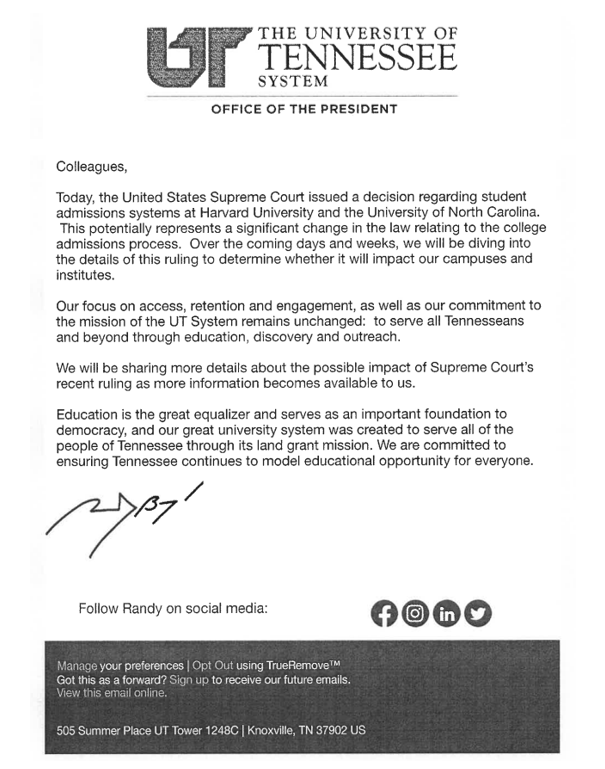
Emails obtained by Do No Harm via a Freedom of Information Act (FOIA) request revealed that, on June 29, UT System President Randy Boyd emailed his statement regarding the ruling to Dr. Claudette Jones Shephard, associate dean of diversity and inclusion at the College of Medicine.

“Over the coming days and weeks, we will be diving into the details of this ruling to determine whether it will impact our campuses and institutes,” Boyd said in his statement to his UT colleagues, but added that, despite this review of the decision, “Our focus on access, retention and engagement, as well as our commitment to the mission of the UT System remains unchanged: to serve all Tennesseans and beyond through education, discovery and outreach.”

Boyd continued: “Education is the great equalizer and serves as an important foundation to democracy, and our great university system was created to serve all of the people of Tennessee through its land grant mission. We are committed to ensuring Tennessee continues to model educational opportunity for everyone.”

“I look forward to hearing from your office on next steps,” Shephard responded to Boyd’s statement.

Letter from University of Tennessee president Randy Boyd to faculty on June 29, 2023.

In a subsequent email to UT Chancellor Dr. Peter Buckley, Shephard expressed again she was “happy to see this response from President Boyd.”

“I forwarded it to our Council on Inclusion and Diversity members to make sure they knew the institution would be addressing it and there was more information to come,” she added. “Sometimes our silence on topics speaks louder than words (and I am aware that many do not open emails from the larger system…).”

Other officials also weighed in with their take on the Court’s decision. On June 30, the day after the Court released its ruling, Dr. Melody Cunningham, of the UT Health Science Center College of Medicine, emailed her colleagues with the greeting, “Good morning, all, I hope you have rejuvenating plans for the holiday weekend … and can leave the angst about the Supreme Court decision on Affirmative Action to the side for the weekend. Arggh!”

The FOIA documents also revealed UT College of Medicine officials sharing a notice of a webinar provided by the Association of American Medical Colleges (AAMC) titled “The Recent SCOTUS Decisions on Race-conscious Admissions and Implications for Academic Medicine.”

“In this webinar on July 10, Frank Trinity, JD and Heather Alarcon, JD, the AAMC’s legal counsel, will discuss these decisions and potential implications for improving the diversity in medical and other health professions schools and the health care and medical research workforce,” the announcement read.

The emails obtained by Do No Harm also showed UT medical college officials sharing “resources” from other left-leaning organizations, such as the American Psychiatric Association and the American Psychological Association, both of which denounced the Court’s ruling on affirmative action policies.

Shephard also thanked Paul Schwartzberg of Erlanger Health System for sharing with her the statement from Dr. Thomas Nasca, president and CEO of the Accreditation Council for Graduate Medical Education (ACGME), who wrote in his “Follow-Up” to a June 13 letter about other “strategies and tools available that can be utilized in institutions’ achievement of their mission-oriented workforce plans.”

“Some of these alternative strategies can be found in the ACGME Equity MattersTM Equity Practice Toolkit,” Nasca noted.

In his statement, Nasca touted the DEI radical narrative that “research confirms that being treated by a racially diverse care team, or by physicians with exposure to diverse professional or educational environments, greatly increases the likelihood of positive medical outcomes, particularly for patients from minoritized backgrounds,” a statement that suggests the view that patients from minority groups recover more quickly or completely when treated by doctors of a particular racial or political identity, rather than those who have achieved a high level of medical competence.

Do No Harm Chairman Dr. Stanley Goldfarb, however, rejects claims of “any solid evidence that a more diverse workforce leads to better clinical outcomes.”

“We have looked at this carefully and found no real evidence for racial concordance between patients and physicians providing better outcomes,” Goldfarb recently told National Review. “The data claiming otherwise is scanty and contradictory.”

In April 2023, Tennessee Gov. Bill Lee (R) signed a bill that begins to roll back DEI requirements at publicly funded colleges and universities – including medical schools.

As Do No Harm has noted, the Tennessee Higher Education Freedom of Expression and Transparency Act includes one provision that prohibits the requirement of DEI statements from employment and admission applicants, and another that bans medical schools from using state funds for fees, dues, subscriptions, or travel relating to an organization that requires an individual to endorse or promote a divisive concept.

Tennessee’s approach “should be a model for every other state that wants to ensure its medical schools uphold the highest standards of education and excellence in health care,” Do No Harm has stated.

https://donoharmmedicine.org/wp-content/uploads/2023/10/shutterstock_127284008-scaled.jpg 1417 2560 Laura Morgan https://donoharmmedicine.org/wp-content/uploads/DNH_Logo_Stethescope-1.png Laura Morgan2023-10-12 18:34:392026-02-11 15:33:37University of Tennessee Officials Seek to End-Run Affirmative Action Ruling
Doctor,Or,Physician,Read,Text,Book,And,Writing,Information,,Work

JAMA Once Again Favors Orthodoxy Over Rigor, Curiosity

Uncategorized Illinois, United States DEI Medical Journal Commentary Ian Kingsbury, PhD, PhD

A new study published in the Journal of the American Medical Association (JAMA) observes that black patients on dialysis are less likely than others to be placed on the kidney transplant waitlist. In what appears to be a matter of orthodoxy for JAMA, the researchers assume that differences in outcomes represent evidence of discrimination.

In Disparities in Kidney Transplant Waitlist Among Young Patients Without Medical Comorbidities, “researchers” observe that 22 percent of young black patients without comorbidities are placed on the kidney waitlist within a year of initiating dialysis. Among young whites and Asians without comorbidities, 34 and 42 percent are referred within a year, respectively. The researchers don’t scrutinize the various potential reasons for this phenomenon, instead concluding that it is “likely reflective of structural racism in access to transplants.”

Logic and evidence for the conclusion is wanting. If group differences alone provide proof of racism, one ought to wonder how Asians supplanted whites as the primary benefactor of structural racism. The higher likelihood of referral for Asian patients is never explained in the text.

Less interesting but more sensible explanations for group differences in referral to the kidney transplant waitlist point to factors other than racism. When doctors weigh which patients should be prioritized for kidney transplantation they consider factors such as social support, medical literacy, likelihood of adherence to a strict medical protocol, history of substance abuse, and willingness of candidates to undergo a rigorous medical evaluation that sometimes entails cardiac catheterization. Potential average group differences in any of these factors plausibly explain the observed disparities in referral for the kidney transplant waitlist.

Researchers interested in understanding the root cause of differences in organ transplantation would have considered multiple explanations. Unfortunately, JAMA and activist “researchers” favor dogma over rigor or intellectual curiosity, and American healthcare is forced to bear the consequences.

https://donoharmmedicine.org/wp-content/uploads/2023/09/shutterstock_1860424903-scaled.jpg 1707 2560 support https://donoharmmedicine.org/wp-content/uploads/DNH_Logo_Stethescope-1.png support2023-10-05 21:36:552026-02-11 15:33:37JAMA Once Again Favors Orthodoxy Over Rigor, Curiosity
Arkansas,Capitol,Building,In,Little,Rock,,Ar

Do No Harm Pens Letter Asking Lawmaker to Remember Taxpayer-Funded Medical Schools in DEI Investigation

Uncategorized Arkansas DEI State legislature Commentary Do No Harm Staff

On September 19, 2023, Do No Harm Chairman Dr. Stanley Goldfarb sent the following letter to Sen. Dan Sullivan of Arkansas ahead of an investigation into the prevalence of DEI within Arkansas’s state-funded colleges and universities.


Dear Senator Sullivan,

Thank you for your upcoming investigation of DEI in Arkansas’s higher-education system. As the chair of an organization focused on getting DEI out of health care, I urge you to include medical schools in your probe. This divisive and discriminatory ideology is especially dangerous in medical education, literally jeopardizing the health and well-being of every Arkansan.

Do No Harm – which represents physicians, patients, and medical students in Arkansas and nationwide – has already discovered that DEI has seeped into medical education in Arkansas. Earlier this year, we sued the state for offering racially discriminatory scholarships under the guise of DEI. The Attorney General settled the case and terminated the program’s race requirements. Yet this is just the tip of the DEI iceberg.

In Arkansas and nationwide, medical schools are engaging in many dangerous and destructive practices grounded in DEI:

  • Lower standards: In the name of diversity, medical schools are ditching standardized tests and academic requirements. This ultimately leads to worse quality physicians who provide worse care to patients.
  • Ideology and Lies: Virtually every medical school now teaches DEI, Critical Race Theory, “systemic racism,” and/or the so-called “social determinants of health.” An entire generation of medical students is being indoctrinated as political activists, not medical professionals.
  • Discriminatory treatment: In the name of “equity,” medical schools are teaching that patients should be prioritized – and de-prioritized – based on race. Such blatant discrimination inevitably leads to worse health outcomes when people are pushed back in line for treatment.
  • Political litmus tests: Medical schools are increasingly demanding “DEI Statements” for faculty and student applicants. By forcing individuals to hold specific politicized beliefs, medical schools are violating free speech and undermining the academic freedom that leads to medical progress.

This is only a partial list of DEI’s infection within medical education. We hope you will investigate DEI’s true extent at the University of Arkansas for Medical Sciences and the Arkansas College of Osteopathic Medicine. Arkansas’ future physicians and patients deserve medical education that improves lives, not ruins them in the name of divisive and discriminatory ideology.

We appreciate your leadership on this life-or-death issue. Please reach out if we can be of any assistance.

Respectfully,

Stanley Goldfarb, MD

Chairman, Do No Harm

https://donoharmmedicine.org/wp-content/uploads/2023/10/shutterstock_1031114452-scaled.jpg 1708 2560 support https://donoharmmedicine.org/wp-content/uploads/DNH_Logo_Stethescope-1.png support2023-10-04 20:30:522026-02-11 15:33:37Do No Harm Pens Letter Asking Lawmaker to Remember Taxpayer-Funded Medical Schools in DEI Investigation
Accreditation,Word,On,Index,Card

Osteopathic Medicine Association Doubles Down on DEI Mission in Revised Standards for Accreditation

Uncategorized United States DEI Accreditiing organization Commentary Do No Harm Staff

The American Association of Colleges of Osteopathic Medicine’s (AACOM) accrediting body is doubling down on diversity, equity, and inclusion policies even though the U.S. Supreme Court ruled race-based admissions policies and practices are unconstitutional. This is just more evidence that medical schools plan to prioritize radical ideology in academic curricula and culture.

Osteopathic schools, which confer the D.O. (Doctor of Osteopathic Medicine) degree, have a similar accreditation process that traditional allopathic schools (which confer the M.D. degree) have. The AACOM has the same level of influence over osteopathic schools that the Association of American Medical Colleges (AAMC) has over allopathic schools, and develops similar accreditation standards.

The recently revised standards approved by the Commission on Osteopathic College Accreditation (COCA) became effective August 1. All Colleges of Osteopathic Medicine (COMs) must comply with the standards by July 1, 2024, and they make numerous references to meeting goals for diversity, equity, and inclusion. Examples include:

  • A COM must include a commitment to advancing diversity, equity, and inclusion (DEI) in its mission, values, vision, goals, or objectives.
  • A COM must produce and publish a current strategic plan addressing all core aspects of the COM mission, including the advancement of diversity, equity, and inclusion (DEI).

A COM and any associated branch “must designate an individual with responsibility for oversight of DEI initiatives of the COM.”

So important is DEI to AACOM, that COMs are also required to submit a copy of the DEI leader’s job description and curriculum vitae to COCA.

The COCA standards mandate that, to achieve accreditation, COMs “must have space available for use by students in a manner intended to support diversity, equity, and inclusion, and must consult with students in the process of establishing such a space.”

The schools must also provide a description of “how the COM assesses the adequacy and efficacy of facilities intended to support diversity, equity, and inclusion, including how students are involved in the assessment.”

COCA further requires that, for accreditation, COMs “must have an Office of Diversity, Equity, and Inclusion (DEI) (or similar) that supports students, faculty, and staff, and the COM’s efforts to promote recruitment, retention, and success of its students, faculty, and staff throughout the osteopathic medical education program.”

Osteopathic schools of medicine “must incorporate diversity, equity, and inclusion into its curriculum,” COCA states, adding as well that COMs “must offer DEI training to employed faculty and staff at least annually.”

COCA asserts that its standard for student evaluation of instruction requires the COM to demonstrate that student assessments are “incorporated into the COM’s self-assessment to improve curriculum, including that which promotes diversity, equity, and inclusion; and address deficiencies in student experiences.”

These standards show how far afield major medical gatekeepers have gone from their core focus, which should be helping train the best and brightest doctors of tomorrow.

On the same day the Supreme Court released its ruling on affirmative action policies and practices, AACOM published a press release titled “Osteopathic Medical School Graduates Increase in Racial and Gender Diversity,” boasting about its increases in Hispanic, American Indian, and black osteopathic medical school graduates, and vowing to continue DEI political activism as a primary goal of the organization.

Figure 1. AACOM press release on June 29, 2023.

“[W]e know there is more work to do to ensure that our future physician workforce represents all our communities,” Robert A. Cain, DO, president and CEO of AACOM, said, stressing the importance of the political identities of the future doctors rather than competency to provide excellent medical care.

“We are proud of the rich osteopathic tradition of inclusion,” Cain added, touting further his DEI ideology. “It is one of our foundational pillars and we will continue to work with our colleges to recruit and educate as diverse a class of graduates as possible.”

Dr. Stanley Goldfarb, Do No Harm Chairman and former associate dean of curriculum at the University of Pennsylvania’s Perelman School of Medicine, warned in November 2022 of what is at stake for the future of American medical care if medical schools remain more intent on producing doctors who “represent all our communities” rather than ones who are skillful at identifying and treating illness and disease.

Dr. Goldfarb noted in an op-ed at the New York Post how medical schools are sacrificing sound medical education of future physicians in order to achieve such a high level of wokeness.

Medical schools, for example, are using their “precious resources” to push their divisive ideology, he asserted, when such funds and clout could be spent on medical training.

“More than 40% of medical schools offer tenure and promotions to faculty who conduct DEI scholarship,” Dr. Goldfarb added. “The message to current and potential faculty is clear: If you want to advance in your career, you better toe the party line. Yet politicizing faculty research will worsen, not improve, medical education and care.”

Taxpayers, he wrote, are actually “paying administrators who fixate on applicants’ skin color,” and observed such continued focus on DEI ideology – instead of education and training – will ultimately lead to substandard quality of care.

https://donoharmmedicine.org/wp-content/uploads/2023/09/shutterstock_439429960-scaled.jpg 1707 2560 Laura Morgan https://donoharmmedicine.org/wp-content/uploads/DNH_Logo_Stethescope-1.png Laura Morgan2023-09-22 20:29:222026-02-11 15:33:36Osteopathic Medicine Association Doubles Down on DEI Mission in Revised Standards for Accreditation
KUMC-2

KU Medical Center and the KU School of Medicine Continue to Facilitate Radical Programs and Initiatives

Uncategorized Kansas DEI University of Kansas School of Medicine Medical School Commentary Do No Harm Staff

In April 2023 we reported that the KU Medical Center (KUMC) and the University of Kansas School of Medicine (KUSOM) were partnering with the University of California San Francisco (UCSF) to sponsor the REPAIR Project, a far-left anti-racism program. But a subsequent public records request has revealed KUMC’s plans for how to inject divisive anti-racism ideology into the KUSOM curriculum.

In response to a Freedom of Information Act (FOIA) request, Do No Harm obtained the Scope of Work document for the KU Medical Center REPAIR Project collaboration with The Black Archives of Mid-America in Kansas City. Among the text describing the purpose of the project (i.e., “to address Anti-Black Racism and augment Black, Indigenous, and People of Color (BIPOC) voices and present in Science and Medicine”) was a revealing statement about KUSOM’s intentions for the material:

This project addresses racism in health care as an educational problem by providing a theoretical framework for coordinating and implementing social justice and anti-racism curriculum throughout the university.

Figure 1. Purpose statement in the scope of work document for the DUMC REPAIR Project.

KUMC’s funding contribution to the project totaled $10,000.

The financial contribution from KUMC to this program is a relatively minor amount for a large academic medical center. However, the implications for the KUSOM curriculum are substantial. The integration of rhetoric that stems from the far-left agenda of UCSF – a university system that has very little in common with an institution in America’s heartland – is fraught with consequences. The ideas about racism in healthcare that the REPAIR project is perpetuating are purely theoretical constructs with no empirical data to support them. The dyad of “oppressed” vs. “oppressors” as the only means for individuals of different racial backgrounds to interact with each other is one that has been created out of thin air by ideologues whose motivations have nothing to do with the human-to-human interaction that physicians have with their patients. Simply making these assertions does not transform such a philosophy into reality, nor does it require compliance with the ensuing demands.

Slavery did exist a century ago, and indeed, there has been a history of mistreatment of people simply because of their race. However, every disparate outcome is not the result of a particular patient being mistreated, and pointing out past wrongdoing does not justify the current anti-racism crusade. Concepts such as “medical reparations” and “decolonizing the health sciences” are not topics that are worthy of the limited instructional time that medical students have to learn their craft. KUMC and the KU School of Medicine have an obligation to teach future doctors how to recognize illness and treat medical conditions based on their patients’ individual needs, not a group identity intended to promote a social justice narrative.

Is your school promoting radical ideology in its curriculum instead of sound healthcare principles? Please let us know – and you may remain anonymous if you prefer.

https://donoharmmedicine.org/wp-content/uploads/2023/04/KUMC-2.png 245 624 Laura Morgan https://donoharmmedicine.org/wp-content/uploads/DNH_Logo_Stethescope-1.png Laura Morgan2023-09-21 17:58:012026-02-11 15:33:36KU Medical Center and the KU School of Medicine Continue to Facilitate Radical Programs and Initiatives
World,Health,Day,,stethoscope,Wrapped,Around,Globe,On,Pastel,Blue

New JAMA Commentary Illustrates Perils of Medical Mission Creep

Uncategorized United States Medical Journal Commentary Do No Harm Staff

Doctors are experts in their craft. But that expertise doesn’t always translate to other disciplines. Newly published commentary in the Journal of the American Medical Association highlights the perils of medical mission creep and the belief that doctors can and should solve all of the world’s problems.

“Diversifying the medical pathway in a post-affirmative action world” begins with lamentation about the Supreme Court’s decision on race-based college admissions. In what has become a familiar pattern, they cherry pick a small number of studies which suggest that patients receive better care from doctors of their own race or ethnicity. In so doing, they ignore a much larger body of evidence which indicates that no such phenomenon exists.

The authors propose various “solutions” to the imagined problem of the Court’s decision. Their very first solution observes that “the foundational steps to a medical career often start in grade school.” Consequently, “we first propose the earnest effort to achieve equity in funding for public K-12 schools…[as] to invest equally in each K-12 student.” The writers envision seeing benefits downstream since “school district expenditures on education have a significant impact on student education outcomes.”

The claim that K-12 schools inequitably underfund black students is empirically false. Districts tend to spend modestly higher amounts of money on black students compared to white students in the same district. Moreover, the average black student attends a district that spends slightly more per student compared to the average white student.

Claims that “expenditures have a significant impact on student education outcomes” are no less dubious. As Do No Harm Senior Fellow Jay Greene has documented, “evidence” that causally links spending to achievement outcomes is rife with statistical manipulation that fails to hold up to even the slightest amount of scrutiny.

JAMA editors clearly envision no limit to the problems that doctors can solve. Just last month, an editorial called on doctors to take on a leading role in advocating for the reduction of nuclear weapon stockpiles.

If the most recent example provides any indication, doctors operating outside of their expertise makes for bad medicine.

https://donoharmmedicine.org/wp-content/uploads/2023/09/shutterstock_1061773499-scaled.jpg 1707 2560 Laura Morgan https://donoharmmedicine.org/wp-content/uploads/DNH_Logo_Stethescope-1.png Laura Morgan2023-09-21 11:38:482026-02-11 15:33:36New JAMA Commentary Illustrates Perils of Medical Mission Creep
Us,Supreme,Court,Building,In,Washington,Dc

Association Forwards Biden Administration Guidance on SCOTUS Affirmative Action Decision to Medical Schools Seeking Accreditation

Uncategorized Rhode Island, West Virginia DEI Marshall University School of Medicine, Warren Alpert Medical School of Brown University Federal government, Medical School Commentary Executive, Judicial Do No Harm Staff

Documents obtained by Do No Harm via Freedom of Information Act (FOIA) requests show the Association of American Medical Colleges (AAMC), which has a say in whether medical schools get accredited, forwarded to medical schools guidance published by the Biden Departments of Justice (DOJ) and Education (DOE) concerning the U.S. Supreme Court’s decision holding that race-based admissions programs in higher education violate the Constitution.

A “Dear Colleague” letter, dated August 14 and signed by Kristen Clarke, assistant attorney general, Civil Rights Division, U.S. Department of Justice, and Catherine E. Lhamon, assistant secretary for civil rights, Office for Civil Rights, U.S. Department of Education, condemned the Court’s ruling, stating it “restricts approaches that institutions of higher education have been using for decades to provide students the educational benefits that derive from diverse and vibrant campus communities.”

After the White House assailed the Court’s decision as threatening “to move the country backwards,” the DOJ and DOE observed in its letter the Biden administration was now calling “on colleges, universities, and other stakeholders to seize the opportunity to expand access to educational opportunity for all students and to build diverse student bodies, including by recognizing and valuing students who have overcome adversity.”

The “Dear Colleague” letter then linked to a “Questions and Answers” guide in order to “help colleges and universities understand the Supreme Court’s decision as they continue to pursue campuses that are racially diverse and that include students with a range of viewpoints, talents, backgrounds, and experiences.”

“The Departments also reaffirm our commitment to ensuring that educational institutions remain open to all, regardless of race,” the letter stated, with a claim that suggests programs that promote diversity, equity, and inclusion ensure schools do not discriminate against individuals of certain races:

Research has shown that such diversity leads to, among other things, livelier and more informative classroom discussions, breakdown of prejudices and increased cross-racial understanding, and heightened cognitive development and problem-solving skills.

“We stand ready to support institutions that recognize that such diversity is core to their commitment to excellence, and that pursue lawful steps to promote diversity and full inclusion,” the federal departments stated.

In their letter, DOJ and DOE further referred to their target population as “underserved students, including students of color”:

For institutions of higher education, this may mean redoubling efforts to recruit and retain talented students from underserved communities, including those with large numbers of students of color. It may likewise mean a greater focus on fostering a sense of belonging for students currently enrolled.

In the FOIA documents obtained by Do No Harm, one email contained information about Brown University’s Warren Alpert Medical School’s announcement in July of its “4th Annual Diversity in Medicine-Virtual Residency Fair,” to be held August 12.

“This event is a Brown-wide Virtual Residency Fair where Underrepresented in Medicine (UiM) residency candidates can meet the program leadership, learn about life as a resident, DEI initiatives, opportunities at Brown and more,” the invitation stated, reflecting language similar to that in the “Dear Colleague” letter.

According to one email reviewed by Do No Harm, Shelvy L. Campbell-Monroe, Ph.D., associate dean for diversity and inclusion at Marshall University Joan C. Edwards School of Medicine (MUSOM), forwarded the Brown invitation while pointing out to her recipients, “Notice wording since – Supreme Court ruling.”

In its “Questions and Answers,” DOJ and DOE emphasized that while the Supreme Court’s ruling “limited the ability of institutions of higher education to consider an applicant’s race in and of itself as a factor in deciding whether to admit the applicant,” the Court still “made clear that ‘nothing in [its] opinion should be construed as prohibiting universities from considering an applicant’s discussion of how race affected his or her life, be it through discrimination, inspiration, or otherwise.’”

“This means that universities may continue to embrace appropriate considerations through holistic application-review processes and (for example) provide opportunities to assess how applicants’ individual backgrounds and attributes—including those related to their race, experiences of racial discrimination, or the racial composition of their neighborhoods and schools—position them to contribute to campus in unique ways,” the departments stated.

The signal, however, from the federal departments that institutions of higher learning – including medical schools – might adjust the wording of their DEI language, from blatant mention of “race” to equity-conscious terms such as “underserved” or “underrepresented” is still likely to draw lawsuits when qualified students are blocked from admission in favor of those who claim to have non-academic obstacles to entry.

In July, for example, Liberty Justice Center called on more than 150 medical schools to end their race-based admissions policies in response to the Supreme Court’s ruling, stating the decision “concludes that diversity is no longer a compelling interest under the Equal Protection Clause.”

“In an industry where merit and skill must be the most important factors when selecting the top applicants for admission, medical schools have a moral obligation to swiftly comply with the law and remove these discriminatory practices,” said Jacob Huebert, president of Liberty Justice Center.

The public-interest litigation firm asserted it is “prepared to challenge any higher educational institution that continues to discriminate against students, faculty, or board leaders.” 

https://donoharmmedicine.org/wp-content/uploads/2023/09/shutterstock_78346810-scaled.jpg 1695 2560 Laura Morgan https://donoharmmedicine.org/wp-content/uploads/DNH_Logo_Stethescope-1.png Laura Morgan2023-09-20 17:05:562026-02-11 15:33:36Association Forwards Biden Administration Guidance on SCOTUS Affirmative Action Decision to Medical Schools Seeking Accreditation
Aerial,View,Of,Lincoln,,Nebraska,In,Autumn

The University of Nebraska College of Medicine Purges Its Website of Two Discriminatory Programs Following Initiation of Federal Civil Rights Investigation

Uncategorized Nebraska DEI University of Nebraska College of Medicine Medical School Commentary Executive Do No Harm Staff

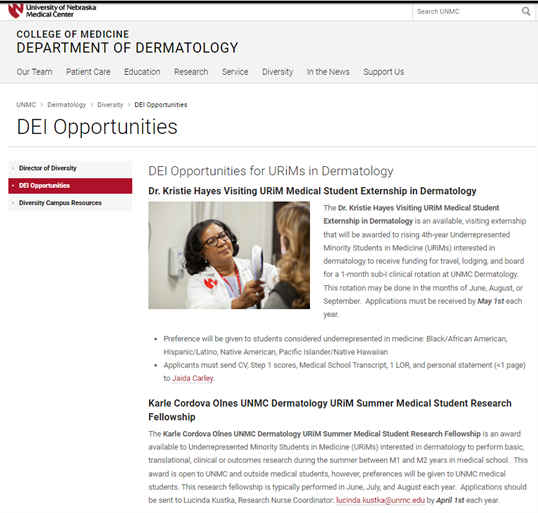
Two “Underrepresented Minority Students in Medicine (URiM)” programs at the University of Nebraska College of Medicine (UNCOM) have been removed from the school’s website following the filing of a federal civil rights complaint and subsequent federal investigation.

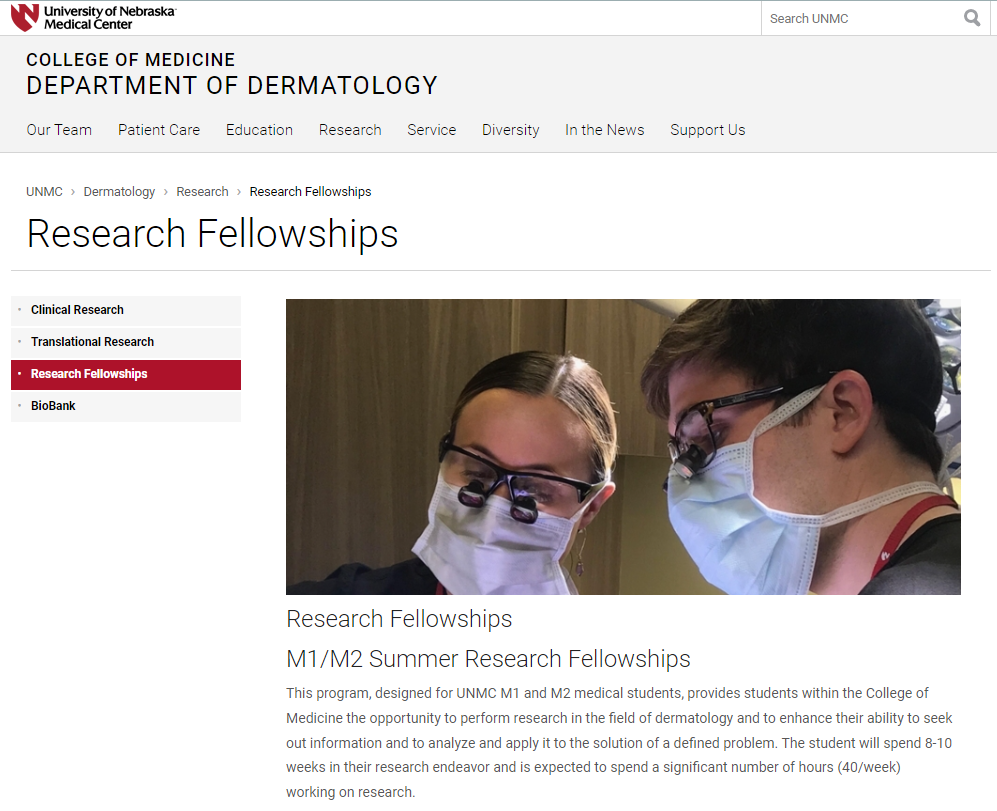
Until the federal investigation was opened this week, the UNCOM Department of Dermatology was offering the Dr. Kristie Hayes Visiting URiM Medical Student Externship in Dermatology and the Karle Cordova Olnes UNMC Dermatology URiM Summer Medical Student Research Fellowship on its DEI Opportunities page (archived version). Both programs noted: “Preference will be given to students considered underrepresented in medicine: Black/African American, Hispanic/Latino, Native American, Pacific Islander/Native Hawaiian.”


Discrimination on the basis of race violates Title VI of the Civil Rights Act of 1964, and prompted the Department of Education’s Office for Civil Rights (OCR) to open a federal investigation into these programs on September 13.

A search of the UNCOM website using the names of the programs lists the programs in the results; however, the related webpages have either been taken down or significantly modified:

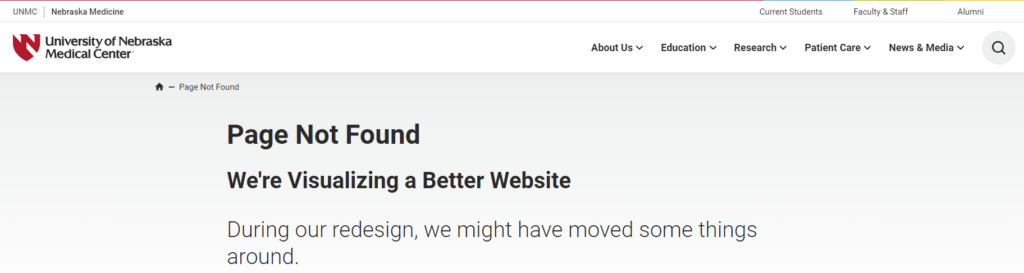
Figure 2. Search results for the Hayes and Olnes programs on September 15, 2023.

Figure 3. Result of clicking on the link for the Hayes program on September 15, 2023.

Figure 4. Result of clicking on the link for the Olnes program on September 15, 2023.

Do No Harm files federal civil rights complaints on discriminatory medical education programs with the hope that outcomes like the one obtained at UNCOM will be realized. Scrubbing the website of the program indicates that the school likely knew it was engaging in illegal racial discrimination. We call on the University of Nebraska College of Medicine to open its Department of Dermatology programs to all eligible applicants based on their qualifications, without regard to race or ethnicity.

https://donoharmmedicine.org/wp-content/uploads/2023/09/shutterstock_2071420118-scaled.jpg 1705 2560 Laura Morgan https://donoharmmedicine.org/wp-content/uploads/DNH_Logo_Stethescope-1.png Laura Morgan2023-09-19 13:49:002026-02-11 15:33:36The University of Nebraska College of Medicine Purges Its Website of Two Discriminatory Programs Following Initiation of Federal Civil Rights Investigation
Happy,Diverse,Multiethnic,Kids,Junior,School,Students,Group,Giving,High

Dr. Ivan Abdouch worked with transgender adults for 30 years. Now he’s speaking out to protect children.

Uncategorized United States Gender Ideology Commentary Do No Harm Staff

Growing up, Dr. Ivan Abdouch had no intention of being a doctor. He wanted to be a mechanic, then explored college majors, but plans changed when his grandfather had a heart attack and was not expected to survive.

Ivan rushed to the hospital and prepared to say goodbye. He remembers the moment a doctor entered the room and saved his grandfather, who went on to live another 30 years. Ivan found his way to medical school after that, where he met another doctor who changed his life.

“I didn’t consider being a family doctor until I got sick in med school,” he says. “The guy doing student health was a family doctor, and when he walked into the room, I just felt better. And I thought, I’d like to be like that guy.”

“He had an air about him that you just knew you’re gonna be okay.”

Ivan never forgot that feeling, and he wants every family to feel cared for the way that he felt in the student health center. That’s one reason why after 42 years in medicine, Ivan is working with Do No Harm to preserve trust in medicine and speak out on gender ideology and minors.

Ivan worked with transgender patients for three decades in Omaha, Nebraska, long before it became popular to do so. He served as the medical director of the Omaha Gender Identity Team, which provided multidisciplinary services including psychiatry, psychology, social services and other allied professionals. The team was extremely thorough and selective in choosing which patients to treat.

“Maybe one or two out of every 10 adults passed through our evaluation as being transgender,” Ivan says. “The rest had other psychological or emotional issues that needed to be managed.”

Patient claims of transgenderism were not simply taken at face value. But as years passed, Ivan witnessed a radical shift toward a patient-led diagnostic approach along with tremendous physician bias and misinformation.

“I can’t think of any other condition in medicine where we treat someone just because they say they have it. When a patient walks in and says, ‘I think I have cancer’ we don’t just start them on chemotherapy. When they say ‘I think I have diabetes’ we don’t hand out insulin. Why are we doing this with transgenderism? I believe the condition is real, but just because people claim they have it, doesn’t mean they have it.”

Ivan began to feel that requests for treatment were becoming trendy. “It’s the reason I got out of the practice,” he says. “Although I was allowed to provide care for these individuals in my faculty position at the University of Nebraska Medical Center, the diagnosis and management of gender identity disorder was highly unpopular and even questioned by my colleagues. I gave a couple of lectures about it to the residents and faculty back in the late 1990s-early 2000s, but then I was told to stop because it was too controversial and unfounded. Fast forward to the present. The University of Nebraska Medical Center decided to offer transgender medicine—not only to adults, but to children. It felt to me like a commercial enterprise; highly publicized, highly marketed. Meanwhile, my patients are saying, ‘We don’t want all of this attention, we just want to blend in, to be with our families and living our lives.’ They told me that all the marketing, advertising, and publicity were making it increasingly difficult for them to blend in, and it was that circus act that made me say, you know, this isn’t what it’s supposed to be. I’m not going to be a part of it.”

Never once did his practice consider treating children. “We would offer counseling and support to help them through whatever issues were going on, but we wouldn’t even consider any sort of transgender management on a child. That would just be unheard of,” he says.

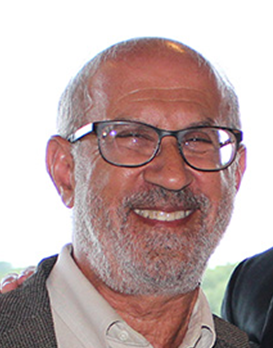
Dr. Ivan Abodouch, senior fellow at Do No Harm.

The rise in gender procedures on children is what motivated Ivan to step out of retirement and speak out. He made his concerns known in an op-ed for the Nebraska Examiner, and consulted with state legislators as they passed a bill banning gender-switching procedures for kids under age 19, and limiting hormone therapy and puberty blockers for kids in the same age range.

In his opinion piece, Ivan notes that even one of the most cited authorities for transgender care, the World Professional Association for Transgender Health, admits in its own Standards of Care that there’s no way to predict a child’s gender evolution and some may regret switching.

It also warns the long-term developmental effects of these early interventions are still unknown. “Gender-affirming interventions pose particular risks to children and adolescents,” he writes. He continues on to describe the specific health risks in detail. You can read them here.

“What scares me most is the irreversibility of it all, and people are taking it so lightly. Yes, there may be some children who will go on into adulthood and transition. But in my experience, very few of these kids are going to end up being transgender adults. Yet, in starting this process, the damage is already done. It’s mistreatment in my book,” Ivan says.

He urges other doctors to educate themselves on the risks of gender-switching procedures on children before it’s too late. Like the family doctor Ivan met in college, these doctors also have young patients who are trusting them to keep them safe.

“If people don’t know anything and they trust the person that’s talking, they’re gonna go along with it. That’s what happens with parents and children. They assume the doctor is trustworthy and knowledgeable and knows what they’re doing,” Ivan warns.

“Don’t just go along to get along. When doctors are fanning the flames of transgenderism, my question to them is, what’s your experience in this? Do you have any idea what you are really supporting? If you don’t have experience with it, talk to somebody who does, to get your feet on the ground in terms of true knowledge of what you’re talking about.”

“Remember, these are children who are going to be affected for the rest of their lives. You’re going to have a difficult, if at all possible, time of correcting what you’ve created there.”

https://donoharmmedicine.org/wp-content/uploads/2023/08/shutterstock_2036186225-scaled.jpg 1707 2560 Laura Morgan https://donoharmmedicine.org/wp-content/uploads/DNH_Logo_Stethescope-1.png Laura Morgan2023-09-16 14:12:452026-02-11 15:33:36Dr. Ivan Abdouch worked with transgender adults for 30 years. Now he’s speaking out to protect children.
Serious,Professional,Senior,Elderly,Doctor,Doing,Paperwork,Checking,Medical,Documents

AAMC Peddles Misinformation Through its Own Peer-Reviewed Journal

Uncategorized United States Medical association Commentary Do No Harm Staff

Peer reviewed journals are entrusted to be truthful and reliable sources of medical information. Unfortunately, they are forsaking the principles of rigor and honesty in favor of political correctness. A recent and egregious example comes by way of Academic Medicine, the flagship journal of the Association of American Medical Colleges (AAMC).

In “SHARPening Residency Selection: Implementing a Systematic Holistic Application Review Process,” the authors begin with the premise that “Traditional metrics used in residency application review processes are systematically biased against applicants from minoritized communities that are underrepresented in medicine (URiM).” They use this premise to launch a screed against traditional medical school admission metrics (e.g., GPA and MCAT scores) and in favor of a “holistic” admissions process.

The charge that traditional metrics are “systematically biased” doesn’t have a citation. That’s because it’s not true. In psychometrics, “bias” refers to the idea that a test could have different validity for one group compared to another. The MCAT would be biased, for example, if it was worse at predicting persistence through medical school among Asians compared to whites. A review of the literature shows “no evidence” of bias in the MCAT exam.

The authors are making a value statement—the belief that unequal outcomes are proof of unequal treatment—and conflating it with a factual claim. That a journal published by the AAMC would place narrative ahead of fact is disheartening, but it isn’t surprising. The organization embarrassed themselves in committing sloppy factual errors in service to opposition to the Supreme Court’s ruling on race-based college admissions.

The AAMC claims that they are committed to combating medical misinformation. Unfortunately, the fireman is also the arsonist.  

https://donoharmmedicine.org/wp-content/uploads/2023/09/shutterstock_1720780129-scaled.jpg 1707 2560 Laura Morgan https://donoharmmedicine.org/wp-content/uploads/DNH_Logo_Stethescope-1.png Laura Morgan2023-09-16 14:00:282026-02-11 15:33:36AAMC Peddles Misinformation Through its Own Peer-Reviewed Journal
California,Concrete,Flag

California Medical Association Advocates for $700 Million Project for “Equity and Practice Transformation”

Uncategorized California DEI State government Commentary Do No Harm Staff

Does California ever get its fill of massive spending on woke health equity projects? Apparently not, according to the hundreds of millions of dollars the state is pouring into efforts to alter the way healthcare is delivered in medical practices.

The California Department of Health Care Services (DHCS), the self-proclaimed “backbone of California’s health care safety net,” is dedicating $700 million to a “practice transformation program” for primary care providers (PCP). Called the Equity and Practice Transformation (EPT) Payments Program, the goal is to promote health equity, align with the DHCS Comprehensive Quality Strategy and Equity Roadmap, and provide funding for PCPs whose practices serve Medi-Cal patients.

The state’s leading medical organization was at the forefront of agitating for this funding. As announced by the California Medical Association (CMA), the organization “heavily advocated for this funding during the budget process.”
So what do they hope to achieve?

“Sixty-eight percent of the Medi-Cal population is Black, Latino, or people of color,” the EPT guidebook states. Funding will focus on the “50 by 2025 Bold Goals,” which include reductions in racial/ethnic disparities in well-child visits and immunizations by 50%, as well as disparities in maternity care “for Black and Native American persons” by 50% at the state level.

Oddly, we saw no goal for closing maternity care disparities for Hispanic patients in the EPT guidebook.

Figure 1. DHCS “50 by 2025 Bold Goals” of the Equity and Practice Transformation Program.

That’s not the only glaring inconsistency in the EPT program. The guidebook refers to the “Scaling of Evidence-Based Models Pathway,” which is also fixated on the Bold Goals and lists “implementing group prenatal care (e.g., centering pregnancy or Black Centering)” as the first initiative. According to UCSF, “Black Centering” is part of a group-focused prenatal care model “in a racially and culturally safe space.”

Of even greater concern is that healthcare providers who participate in the program are reimbursed for services via a “pay for performance” incentive system. “Phase 2 requirements,” the guidelines state, “would include pay for performance incentives based off certain targeted quality measures.” Those metrics must be aligned with the 50 by 2025 Bold Goals.

The application process serves to identify PCPs who will buy into the conditions of the EPT program. Potential participants must complete the 50-question Population Health Management Capabilities Assessment Tool (PhmCAT), which assesses “eight common domains” influenced by the Population Health Management Initiative (PHMI). The PHMI is DHCS’s partnership with Kaiser Permanente and community health centers across California, and is designed for “emphasizing populations of focus where disparities exist.” Participating health centers will “collect and analyze REAL (race, ethnicity, and language) data and social needs data.” This is reflected in the PhmCAT survey.

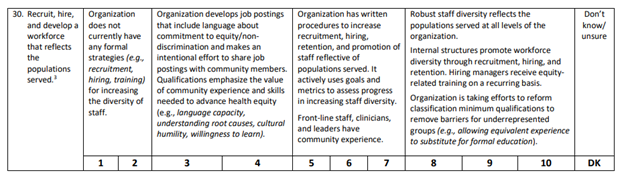
Among the questions related to operational workflows and resources, the survey asks about the practice’s dedication to providing “staffing, funding, and structures” to support DEI-related goals. Examples are “equity leads” and “internal equity workgroups.”

Figure 2. From the PhmCAT, Population Health Management Initiative (June 2023) – DEI goals.

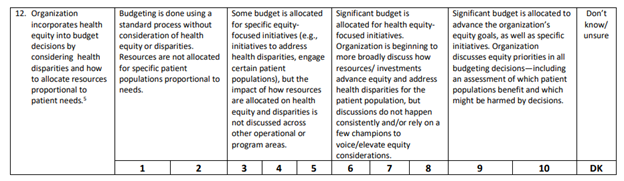
Figure 3. From the PhmCAT, Population Health Management Initiative (June 2023) – Budgeting for DEI initiatives.

Recruiting and hiring practices are another theme of the survey, with the highest points earned for organizations that hire and promote staff based on DEI, as well as those that offer regular DEI-based training.

Figure 4. From the PhmCAT, Population Health Management Initiative (June 2023) – Recruiting and hiring practices.

The last group of questions on the PhmCAT focuses on “social health,” and the questions are based on information from a report by the National Academies. The report describes “social care integration” by healthcare systems “to improve the nation’s health and reduce health inequities.” In other words, doctors and other healthcare providers are told that addressing their patients’ “social determinants of health” is their duty in the name of health equity, despite having no agency to deal with these issues.

Figure 5. From the PhmCAT, Population Health Management Initiative (June 2023) – Addressing social needs.

Improving access to medical services is an important focus for all areas of healthcare. But are California’s Medi-Cal providers being incentivized to provide higher quality medical care to specified minority populations than other groups of patients? Are physicians and medical practices being told that they must act as social service providers for certain patients in order to receive optimal reimbursement? With the structure of the EPT program, DHCS is assuming that the cause of health disparities is largely due to the character of the healthcare system. Yet there is no evidence that any of the efforts the program promotes will actually improve health outcomes. There is a distinct difference in deploying initiative that improve access to care versus those that simply target increasing diversity and equity, which aims to change the nature of the patient/physician relationship.

Do No Harm is monitoring this situation. Please contact us if you’re a Medi-Cal provider with concerns about this program.

https://donoharmmedicine.org/wp-content/uploads/2023/09/shutterstock_429415330-scaled.jpg 1700 2560 Laura Morgan https://donoharmmedicine.org/wp-content/uploads/DNH_Logo_Stethescope-1.png Laura Morgan2023-09-14 12:12:312026-02-11 15:33:36California Medical Association Advocates for $700 Million Project for “Equity and Practice Transformation”
Map,With,Pin,Point,Of,Detroit,In,Usa

Do No Harm Obtains Its 35th Federal Civil Rights Investigation as Case is Opened Against Wayne State University Scholarship Program

Uncategorized Michigan DEI Wayne State University School of Medicine Medical School Commentary Executive Do No Harm Staff

The U.S. Department of Education’s Office for Civil Rights (OCR) has opened a federal civil rights investigation against Wayne State University for a scholarship that illegally discriminates on the basis of both race and sex. This marks the 35th instance to date that a civil rights complaint filed by Do No Harm has resulted in a federal investigation.

The Detroit-Regional Elective Scholarship for Underrepresented Students (D-RESUS) at Detroit Receiving Hospital provides illegal preferences for students based on their race, color, or national origin and gender identity or sexual orientation. The D-RESUS award includes financial assistance for senior medical students – but only if they are “members of minority groups.” Specifically, applicants must self-identify as being “Black, Latino, Native American, Pacific Islander” or “gay, lesbian, bisexual, transgender.”

Figure 1. D-RESUS scholarship eligibility at Wayne State University.

The scholarship application confirms the intent to collect information on gender, race, and ethnicity.

Figure 2. D-RESUS scholarship application at Wayne State University.

Wayne State University School of Medicine is engaging in illegal discrimination in violation of Title VI and Title IX by operating a scholarship program that illegally excludes medical students based on their sex, gender identity, sexual orientation, race, color, or national origin. Do No Harm expects that the OCR investigation into the D-RESUS program will result in the Department of Emergency Medicine being forced to make its scholarship available to all eligible applicants in alignment with federal civil rights laws.

https://donoharmmedicine.org/wp-content/uploads/2023/09/shutterstock_330662045-scaled.jpg 1784 2560 Laura Morgan https://donoharmmedicine.org/wp-content/uploads/DNH_Logo_Stethescope-1.png Laura Morgan2023-09-13 17:28:112026-02-11 15:33:36Do No Harm Obtains Its 35th Federal Civil Rights Investigation as Case is Opened Against Wayne State University Scholarship Program
Concept,Of,National,Healthcare,System,-,Indiana

Progress At Indiana’s Main Medical Association

Uncategorized Indiana DEI Medical association Commentary Do No Harm Staff

Good news from Indiana. At its September meeting, the Indiana State Medical Association largely sided with common sense, medical ethics, and equal treatment over divisive ideology. As the primary representative of the state’s medical professionals, ISMA deserves credit for tackling tough issues and generally doing the right thing.

ISMA debated several resolutions, with positive outcomes:

  • No Trans Care For Children: ISMA passed a resolution opposing all “medical and surgical gender transition treatment for minors in the state of Indiana.” This is a big win for children, who deserve protection from invasive and irreversible treatments that can seriously damage their mental and physical health. This resolution also reinforces the fact that physicians oppose such treatments, which are largely pushed by radical activists and politicized medical associations.
  • No Condemnation of Anti-DEI Laws: ISMA refused to pass a resolution opposing state laws that get DEI out of medical schools. The resolution was introduced by a medical student, showing the radicalization that’s creeping into medical education. Instead of passing the resolution, ISMA kicked it to a board for further study – effectively killing it for now.

These positive steps should inspire the Indiana General Assembly to take up the torch of reform. State lawmakers should continue to protect children from transgender activists, while taking bold action to get DEI out of medical education – especially at the IU School of Medicine, which is one of the most politicized in America.

Lawmakers have the support of the state’s physicians. Now they just need the courage to act.

https://donoharmmedicine.org/wp-content/uploads/2023/09/shutterstock_249441286-scaled.jpg 1707 2560 Laura Morgan https://donoharmmedicine.org/wp-content/uploads/DNH_Logo_Stethescope-1.png Laura Morgan2023-09-13 14:31:112026-02-11 15:33:36Progress At Indiana’s Main Medical Association
shutterstock_1946989510x

California May Take Your Child From You

Uncategorized California Gender Ideology State legislature Do No Harm Staff

The radicalism of the transgender movement is boundless. Look no further than California, where Gov. Gavin Newsom may soon sign a bill that would take children away from parents who disagree with their child’s chosen gender identity. The message is clear: Support your child’s sex change, or lose your child.

The bill in question passed the California Assembly on September 8 by an overwhelming margin of 57 to 16. It previously passed the California Senate. Named the “Transgender, Gender-Diverse, and Intersex Youth Empowerment Act,” a more accurate title is the “No Freedom For Families And Forced Sex Changes for Children” Act. This news story describes what the bill would do:

“Under the proposed law, parents who fail to acknowledge and support their child’s gender transition could face potential consequences, including the loss of custody rights to another parent or even the state itself.” 

Will Gov. Newson sign this bill? Not if he’s honest. Gov. Newsom recently said that California is “a place where families — not political fanatics — have the freedom to decide what’s right for them.” He further declared that “there is no state in America that supports local control and parental engagement like the state of California.” Yet this radical legislation is the opposite of parental freedom and engagement. It will destroy parents’ fundamental rights, to say nothing of children’s physical and mental health.

Transgender activists will brook no dissent in their campaign to control America’s children, not even a child’s own parents. Gov. Newsom should realize that the right call is obvious: Parents who defend their child should be praised, not punished by having their child ripped away.

https://donoharmmedicine.org/wp-content/uploads/2023/09/shutterstock_1946989510x.jpg 1600 2400 Laura Morgan https://donoharmmedicine.org/wp-content/uploads/DNH_Logo_Stethescope-1.png Laura Morgan2023-09-12 17:32:252026-02-11 15:33:36California May Take Your Child From You
An,Aerial,Shot,Of,The,University,Of,Massachusetts,Amherst,Campus

Leaders at the UMass Medical School Notified of Federal Civil Rights Complaint Filing for a Discriminatory Pipeline Program

Uncategorized Massachusetts DEI University of Massachusetts T.H. Chan School of Medicine Medical School Commentary Do No Harm Staff

The chancellor the University of Massachusetts Chan Medical School (UMass Chan) in Worcester and the UMass General Counsel in Amherst have been notified of a federal civil rights complaint filed against a university-sponsored pipeline program that discriminates on the basis of race.

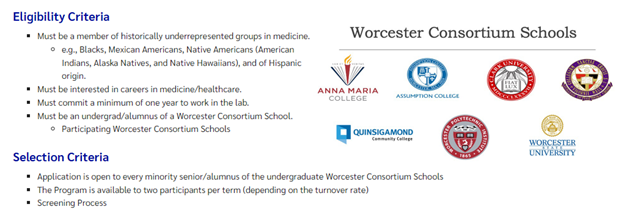
On September 7, as a courtesy to university officials, Do No Harm senior fellow Mark Perry provided a copy of his complaint to these officials regarding the Pipeline for underrepresented Students in Medicine (PRISM) program. Sponsored by the McManus Lab at UMass Chan, this clinical research opportunity’s eligibility criteria state that participants “must be a member of historically underrepresented groups in medicine; e.g., Blacks, Mexican Americans, Native Americans (American Indians, Alaska Natives, and Native Hawaiians), and of Hispanic origin.”

Figure 1. Eligibility criteria for the PRISM program at UMass Chan School of Medicine.

Perry’s complaint cites Title VI of the Civil Rights Act of 1964, as students who are not a member of the four groups above are being illegally excluded based on their race, color, or national origin.

Do No Harm will legally challenge and call attention to medical education programs that are engaging in illegal discrimination in violation of Title VI or Title IX, despite the prohibition of such unfairness in their non-discrimination statements. UMass is no exception to schools that endorse and publicize these statements. We encourage UMass Chan to take immediate corrective action regarding the PRISM program’s eligibility criteria, as racial exclusion and inequality are against the law and have no place in medical education.

Is your school engaging in discrimination with programs that exclude certain groups of applicants based on race or sex? Please let us know via our secure online portal.

https://donoharmmedicine.org/wp-content/uploads/2023/09/shutterstock_2323487761-scaled.jpg 1705 2560 Laura Morgan https://donoharmmedicine.org/wp-content/uploads/DNH_Logo_Stethescope-1.png Laura Morgan2023-09-11 21:16:372026-02-11 15:33:36Leaders at the UMass Medical School Notified of Federal Civil Rights Complaint Filing for a Discriminatory Pipeline Program
Workaround,2

Yet Another Attempt to Circumvent the Supreme Court’s Ruling to End Race-Conscious Admissions

Uncategorized United States DEI Medical association Commentary Do No Harm Staff

The American Medical Association is prodding medical schools to find workarounds to the Supreme Court’s ban on race-based college admissions. They aren’t alone. An article on a popular medical news and opinion site (KevinMD.com) features statements from other key players in the healthcare establishment who “retaliated [to the Court decision] by vowing to continue affirmative action practices.” For example:

  • The Association of American Medical Colleges: “We remain committed to enhancing health professional education and practice by emphasizing critical thinking, innovation, effective communication with all patients, and increased access to patient care for an increasingly diverse population … We will work together to adapt following today’s [June 29, 2023] court decision without compromising these goals.”
  • Thomas NASCA, CEO of the Accreditation Council for Graduate Medical Education: “ACGME standards do not require race-based affirmative action to achieve diversity, and this [Supreme Court] decision does not require programs and institutions to change their resident selection practices.”
  • Leaders at Stanford Medicine: “While we adjust to this new environment in a manner that conforms with the law, we want to emphasize that Stanford Medicine firmly believes in the transformative power of diversity, in all dimensions…While the ruling changes the landscape of university admissions, it does not change our resolve or our values.”

The article contrasts these statements with commentary from Do No Harm staff in claiming that “a vocal minority of physicians believe that admission to medical school should be based on merit alone.” Whether we’re truly a vocal “minority” or the voice of a dispossessed majority, we remain steadfast in the pursuit of common sense over ideology and reason over pseudoscience. These principles dictate our commitment to overseeing that the Court’s decision is implemented with fidelity. “Merit alone” must not simply be the rallying cry of “vocal” whistleblowers, but the modus operandi of all American medical schools.

https://donoharmmedicine.org/wp-content/uploads/2023/09/shutterstock_9012010-scaled.jpg 1699 2560 Laura Morgan https://donoharmmedicine.org/wp-content/uploads/DNH_Logo_Stethescope-1.png Laura Morgan2023-09-11 19:26:092026-02-11 15:33:36Yet Another Attempt to Circumvent the Supreme Court’s Ruling to End Race-Conscious Admissions
Map,Of,Iowa,City,In,Johnson,County,,Iowa.

The University of Iowa College of Nursing Takes Down Its “Anti-Oppression Statement” – But There’s Still Plenty of DEI To Go Around

Uncategorized Iowa DEI University of Iowa Nursing school Commentary Laura Morgan MSN, RN

The state of Iowa has a legacy of common-sense principles. Unfortunately, one needs to look no further than the University of Iowa – and especially the College of Nursing – for a heavy dose of woke ideology.

Do No Harm obtained documents from some of the university’s diversity, equity, and inclusion (DEI) training materials on “Social Justice;” “Practicing Pronouns;” “Oppression;” and “Barriers to Inclusion.” References to phrases such as “the system of oppression,” “fae/faer/faerself,” and “guilt is the glue that holds prejudice in place” prompted us to take a closer look at their other DEI endeavors. While exploring the school’s webpages, I readily found more concerning information within the nursing education program.

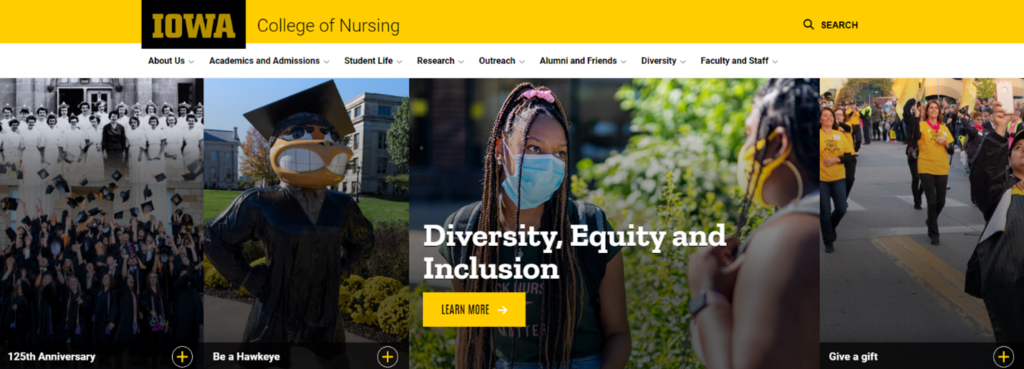
The University of Iowa College of Nursing (UICON) places its DEI initiatives front and center for website visitors. Unfortunately, that’s not unusual for major universities in states that have not taken legislative measures to remove DEI offices from higher education. But the UICON goes beyond the ubiquitous bias resources and DEI models.

Figure 1. University of Iowa College of Medicine homepage.

While reviewing the IUCON’s DEI pages on August 3, 2023, I located one specific item that was particularly eye-catching: UICON’s Anti-Oppression Statement, which includes the following excerpts:

Across this nation there has been an increase in acts of hate (ex. racism, xenophobia, transphobia, sizeism, heterosexism, religious oppression) in the form of threats, harassment, bullying, body shaming, intimidation, assaults, scapegoating, discrimination, injuries, vandalism, violence, and death for members of the Asian, Jewish, Latino, African American, transgender, plus size, and immigrant communities. 

We cannot ignore the fact that hate is the fuel that is perpetuating divisive sentiment, bias, discriminatory behavior, and hate crimes.

We recognize the physical, emotional, and traumatic impact that these acts of hate and injustice may be having on our students, their families, and our colleagues who may represent these diverse identities that enrich our overall American culture. 

The University of Iowa College of Nursing emphatically denounces all forms of individual and systemic social injustices, including all forms of overt and covert oppression.


In our efforts to achieve the highest level of excellence in nursing education, research, practice, and service, the College of Nursing is committed to an anti-oppression/social justice approach that continuously examines the processes that repeatedly advantage and develop the potential of one group over another. We are committed to condemning all forms of oppression and we support education, policies and practices that advocate for and implement equity and social justice for all people, including reducing disparities in the delivery of high-quality and culturally responsive health care. 


We ask our students, staff, faculty, alumni, and members of our UI and global health sciences communities to join us in advancing health, igniting leadership, and engaging in educational partnerships and­­­­ practices with diverse communities that dismantle all forms of hate.


Figure 2. UICON Anti-Oppression Statement (archived page).

However, a September 5 visit to the webpage that previously contained the Anti-Oppression Statement produced an error message:

Figure 3. IUCON webpage with the Anti-Oppression Statement as it appeared on September 5, 2023.

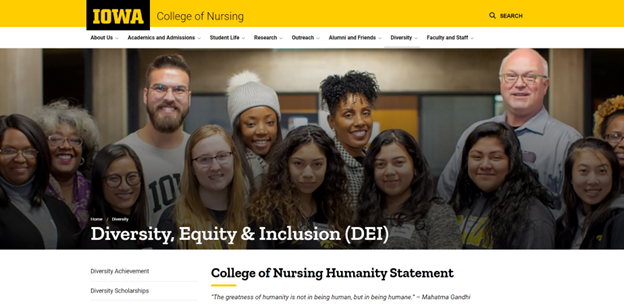
Turns out it wasn’t a change of heart: just a modest change of messaging. Much of the same information has now been placed into the College of Nursing Humanity Statement, including these excerpts:

Welcome! 

The University of Iowa College of Nursing values different backgrounds, perspectives, and life experiences across the lifespan. The resources you see listed on this site are available for everyone to use. Our College is a microcosm of the larger American community and experience. We strive to celebrate our similarities and embrace and learn from our differences through civil and reciprocal discourse that respects everyone’s right to freedom of expression. It is our goal to provide a welcoming, inclusive and accessible environment for everyone in our college and our profession.  We know our work today will graduate tremendous future nurses and build safer and healthier communities where everyone belongs and is valued, needed, and appreciated.  

However, we also recognize the physical, emotional, and traumatic impact that acts of bias, discrimination, misconduct, and hate may have on our students, their families, our healthcare colleagues, and our patients who may be representative of diverse identities and/or diverse perspectives that enrich the tapestry of our vibrant American culture. 

The College of Nursing emphatically denounces all forms of bias, discrimination, misconduct, and hate. We strive to hold our faculty, staff, and students accountable for our attitudes, actions, and words as we uphold the tenets of the College’s Seven Pillars of Diversity.       


In our efforts to achieve the highest level of excellence in nursing education, research, practice, and service, the College of Nursing is engaged in education, policies and practices that advocate for and implement equity and social justice for all people, including reducing disparities in the delivery of high-quality, ethical, and culturally responsive health care to improve patient outcomes. 

The American Nurses Association (ANA) Code of Ethics guides nursing practice and states that all patients will receive nursing care no matter their background, resources, or situation. The ANA recognizes bias, discrimination, misconduct, and hate as a longstanding public health crisis contributing to inequities impacting mental, spiritual, and physical health and well-being. The ANA seeks to strengthen the nursing profession by increasing intellectual diversity and inclusive leadership while striving to establish anti-discrimination nursing practices and environments.


We ask our students, staff, faculty, alumni, and members of our UI and global health sciences communities to join us in working to dismantle all forms of inequitable care by advancing health, building healthy work and educational environments, empowering leadership, and fostering innovative partnerships and­­­­ practices with a broadly defined diverse group of colleagues and communities that welcome and utilize the perspectives, talent and contributions of all. 

The University of Iowa College of Nursing is more than a college – we are a community that cares for all. 


Figure 4. UICON Humanity Statement (current page).

While reducing the level of hyperbole is a positive adjustment to the statement, the addition of statements from the American Nurses Association that describe concepts regarding discrimination and hate is not. As we have previously reported, the ANA has moved far beyond its original mission of advocating for nurses and is fully entrenched in extreme ideology.

Last year, Do No Harm obtained documents from the University of Iowa in response to a Freedom of Information Act (FOIA) request. Those documents exposed the UI medical school’s practice of training members of the faculty hiring committee in the concept of implicit bias. The training also provided instruction in hiring strategies based on advancing DEI instead of recognizing individual achievement when reviewing faculty candidates. Even so, the school has maintained entries on its website like the “Black Lives Matter at School – Iowa Teach In” event and the Anti-Racism Resource Guide.

Why is all of this bad for nursing? Spending the limited amount of time available to train students in ways to become skilled and competent nurses on topics that do nothing to achieve that objective is the obvious response. But the downstream effects on the profession as a whole are less visible, and they can be significant.

In my role at Do No Harm, I receive incoming messages from other nurses who are frustrated with the seemingly endless barrage of DEI training they are encouraged – and in some cases, required – to complete. They are insulted by ideological concepts pushing group identity politics being imposed on them in the name of continuing education. Some are close enough to retirement that they choose to give up nursing completely. Others, like Clete Weigel in Ohio, are forced out. These instances have resulted in the loss of highly experienced nurses in a time where the entire industry continues to sound the alarm about a critical U.S, nursing shortage.

It’s time for the University of Iowa to discard its commitment to divisiveness and dogma and provide the type of quality education that future nurses and physicians need. Their fellow Iowans (and future patients) care about the level of skill and talent of their healthcare professionals; not their knowledge of obscure pronouns and dedication to social justice activism.

Laura Morgan is a registered nurse and Do No Harm’s program manager.

https://donoharmmedicine.org/wp-content/uploads/2023/09/shutterstock_2331927313-scaled.jpg 1920 2560 Laura Morgan https://donoharmmedicine.org/wp-content/uploads/DNH_Logo_Stethescope-1.png Laura Morgan2023-09-09 13:10:512026-02-11 15:33:36The University of Iowa College of Nursing Takes Down Its “Anti-Oppression Statement” – But There’s Still Plenty of DEI To Go Around
Page 33 of 56«‹3132333435›»
COPYRIGHT © DO NO HARM 2025. ALL RIGHTS RESERVED.
  • Contact
  • Privacy
  • Disclaimer
  • Link to X
  • Link to Facebook
  • Link to Instagram
  • Link to LinkedIn
  • Link to Youtube
Scroll to top Scroll to top Scroll to top