
Gov. Katie Hobbs has vetoed Arizona’s proposed Detransitioner Bill of Rights – a policy that aims to help young people hurt by a growing industry of medical practitioners and insurers that fund and perform gender transition surgeries on minors.
Mounting research suggests that so-called “gender affirming care” is harmful to children’s physical and mental health, with adverse health outcomes that threaten their wellbeing for the long term. To address this, a bipartisan group of leaders on the ground in Arizona sought recourse on behalf of these children and their families, many of whom are adults living with the adverse impacts of these ill-advised procedures being performed as children.
Chloe Cole, a victim and advocate on behalf of other gender-transitioned children and their families seeking accountability, responded to Gov. Hobbs’s veto:
“I have experienced first-hand the destruction that the gender transitioning industry can wreck on children. Our kids deserve to know that the same industry that abused them will be required to help them rebuild and restore their bodies. Clearly, Gov. Hobbs has a different agenda. Not only does her veto signal complete disregard for the children who have been preyed upon by this industry, but she also reveals her tacit support for the reputation Arizona is gaining as the nation’s emerging hub for the mutilation of minors. That may be a badge Gov. Hobbs is proud to wear, but I am confident that the vast majority of Arizonians will be deeply ashamed, as I am today.”
You can learn more about the Detransitioner Bill of Rights here: https://donoharmmedicine.org/bill-of-rights/
Like many other institutions, the American Board of Emergency Medicine (ABEM) accelerated its promotion of diversity, equity, and inclusion after the killing of George Floyd and its public statement on systemic racism in June of 2020.
Four years later, there is now little room left for debate within the organization.
In early 2022, ABEM’s Board of Directors declared diversity, equity, and inclusion a “strategic imperative.” A new committee on DEI was tasked with reviewing ABEM documentation, studying the perceptions of DEI among ABEM stakeholders, and working with external consultants to create new recommendations to advance DEI.
ABEM also developed the Dr. Leon Haley, Jr. Bridge to the Future of Emergency Medicine Academy, a multi-week, all-expenses-paid mentorship program limited to medical students of certain races and identities prioritized by ABEM.
In July 2023, ABEM doubled down, issuing a revised Code of Professionalism that requires board-eligible and certified physicians to agree to “mitigate both implicit or explicit biases based on race, gender, age, sexual orientation, disability, national origin, or religion when providing patient care.”
Then, in November 2023, these efforts culminated in the Accreditation Council for Graduate Medical Education awarding the Barbara Ross-Lee, D.O., Diversity, Equity, and Inclusion Award to ABEM.
ABEM’s has transformed itself so rapidly that it has left little time or space for important questions about the foundations of its DEI policies. A major justification for DEI as an institutional priority was, for example, the claim by ABEM’s board of directors that diversity “leads to better patient care” served as a major justification for DEI as an institutional priority.
Of course, that claim is echoed by many other medical institutions, such as the American Association of Medical Colleges.
Yet, most of the evidence used to support the connection between race and patient outcomes does not actually evaluate outcomes, but perceptions of outcomes. This difference is subtly conceded by the AAMC. But even among studies that examine patient perceptions of outcomes based on the race of their doctors, the evidence is mixed.
Even the AAMC concedes the lack of evidence behind the claim that racial concordance between patients and doctors affects health outcomes: “that actual direct linkage… it’s not there.”
That concession, however, does not prevent AAMC, ABEM, or any other medical institution from continuing to spread misinformation about the link between the race of doctors and patient outcomes.
ABEM’s embrace of DEI and the lack of debate about its foundation are not unique. But the accelerated pace of change happening there serves as a cautionary example for other organizations that have not yet gone so far.
DEI acolytes are loathe to let facts get in the way of narratives. Hopefully, students and faculty at the Virginia Commonwealth University (VCU) School of Medicine can spot the difference.
On May 30th, internal medicine grand rounds featured a lecture from Dr. Quinn Capers, a professor at the Howard University College of Medicine. The topic was “Diversity in Medicine: Battling the Anti-DEI Backlash with Data.”

Dr. Capers began with the question: “Why do we seek diversity in medicine?” He offered possible answers in a multiple choice format:
- Underrepresented Minority Physicians Are More Likely to Serve the Undeserved.
- Because Minority Patients Are More Likely to Follow the Recommendations of Minority Physicians.
- Diversity on Research Teams Enhances Impact of Research
- A Diverse Physician Workforce Will Reduce Racial Healthcare Disparities.
Ultimately, to the surprise of no one, Dr. Capers claimed “all of the above.” The evidence cited reveals more about how DEI steers medicine away from the pursuit of truth than anything else.
The first claim—that physicians from minority groups are more likely to serve minority or low-income populations—is true. However, the claim represents a solution in search of a problem.
Constraints on the supply of physicians are due to a limited number of seats in medical schools, not the number of people who aspire to practice medicine. There are thousands of highly qualified applicants rejected from medical school every year who would gladly work in urban or low-income communities.
The best hope for closing health disparities between different racial groups is to ensure that everyone has access to high-quality doctors, not recruiting individuals from specific identity groups to treat members of that group.
The second claim—that minority patients are more likely to follow the recommendations of minority physicians—is simply untrue. Dr. Capers references two studies to justify this idea. However, he conveniently ignores that a larger body of evidence contradicts the theory.
For example, studies by Clark et al., 2004, Howard et al., 2001, Jibara et al., 2011, Konrad et al., 2005, Saha et al., 2003, Schoenthaler et al., 2012 and Walsh et al., 2009 contradict Capers’ claim. Cherry-picking evidence is a regrettably familiar tactic among DEI devotees, but that doesn’t make it any less concerning. Proper medical practice should entail considering the weight and quality of evidence on a topic, not selecting evidence that tracks with preferred narratives.
A lack of candor on the limitations of the two cherry-picked studies is also notable. The first (Saha & Beach, 2020) entails an experiment in which black and white patients with coronary artery disease view video vignettes in which a doctor recommends a coronary artery bypass graft (CABG). The study participants are randomly assigned to watch a vignette of a white doctor or a black doctor. Surveys administered right after the videos reveal that black patients who were assigned to watch the black doctor gave higher scores to the “perceived necessity of CABG” and the “likelihood of undergoing CABG.”
These findings represent tenuous evidence of the claim that minority patients follow the recommendations of minority physicians. It is well-documented that intentions reported on surveys are poorly predictive of behavior, including receipt of medical interventions. Respondents claiming that they are more likely to undergo CABG after watching a short video is a far cry from actually undergoing the procedure.
The other study (Alsan et al., 2019) referenced to plug the idea that minority patients follow the recommendations of minority doctors also offers tenuous evidence. The study consists of a two-part experiment. In the first part, black patients are shown a picture of a doctor and then surveyed about their willingness to undergo certain preventative health interventions.
Willingness to receive the treatments does not differ by the race of the doctor in the photo. Differences are only observed after the patients meet with the physicians. It wouldn’t be shocking if by random chance the six black doctors in the experiment happened to be more persuasive than the eight non-black doctors. It’s also possible that their persuasiveness was not coincidental. As the researchers admit, the doctors “could have inferred” that the study was about racial concordance and could have altered their behavior in response, a phenomenon known as a Hawthorne effect.
The third claim—that diversity on research teams enhances impact of research—is embellished. The authors of the paper cited by Capers (AlShebli et al., 2018) observe a correlation between research team diversity and the number of citations that papers receive. However, correlation is not causation, and there are confounding factors that more credibly explain the relationship. For example, liberals ascribe comparatively higher importance to racial diversity. That probably means, on average, racially diverse research teams produce research that more closely aligns with liberal orthodoxy and accrue more citations as a result.
Like the second claim, the fourth claim—that a diverse physician workforce will reduce racial healthcare disparities—is an assertion that relies on extreme cherry-picking. Dr. Capers cites one study—Snyder et al., 2023—to assert that black patients receive better care from black doctors. In fact, many studies address whether racial concordance is associated with improved outcomes, and those studied have been summarized across two systematic reviews published in the last five years, as Do No Harm documented, in a report on racial concordance in medicine. Systematic reviews are a useful mechanism to prevent cherry-picking and instead make sense of aggregated evidence. The two systematic reviews that touch upon racial concordance and outcomes emphatically reject a connection between them.

The one study that Dr. Capers cites to justify the claim that black patients receive better care from black doctors purports to show that, at the county level, a higher proportion of black primary care providers is associated with a longer life expectancy for black residents and a reduction in the black-white mortality gap. The way that it derives a result at odds with other studies on racial concordance and outcomes is not difficult to decipher. There are a limitless number of arbitrary decisions that researchers make in developing mathematical models. For example, researchers must decide which variables to include, what time periods to observe, and which statistical techniques to use. Generally, researchers demonstrate that their findings would have been the same if they made different judgements about these things. Doing so shows readers that the researchers did not engage in p-hacking, a regrettably common practice whereby researchers try different model specifications until they find one that produces their preferred result. That the authors of this study did not demonstrate whether their findings are sensitive to model specification represents an enormous red flag.
Wherever it appears, DEI inevitably reveals itself to be an ideology at war with reason, facts, and logic. Medical students at VCU and across the country deserve better.
On June 12, 2024, Do No Harm Board Chairman Dr. Stanley Goldfarb submitted a comment on the Centers for Medicare and Medicaid Services’ (CMS) recently-proposed rule regarding the Increasing Organ Transplant Access (IOTA) Model, which will incentivize hospitals to create so-called “health equity” goals to reduce disparities in treatment for end-stage renal disease. If the rule takes effect, providers will almost certainly and intentionally select patients for kidney transplantation based on race. A more sensible solution—one focused on patient education—is possible and advisable.
In an effort to prevent CMS from encouraging such race-based practices with regards to kidney transplants, Dr. Goldfarb and Do No Harm are calling on CMS to withdraw its proposed rule.
Read the full comment below:
The Chronicle of Higher Education is at it again. Its new report, “The Future of Diversity Training: Better Ways to Make Your College More Inclusive,” is in line with its webpage dedicated to combatting “The Assault on DEI” complete with a “DEI Legislation Tracker”.
Of course, the new report features all the usual talking points: DEI is good. Microaggressions are bad. Implicit bias training is necessary. And so on.
But there’s a twist this time. Buried in the report is an implicit – and occasionally explicit – admission that DEI training is not well-liked.
The Chronicle’s own data suggest that 47 percent of survey participants find it, at best “neither helpful nor unhelpful” or, at worst, “very/somewhat unhelpful”.

The authors of the report state that DEI training is good as long as no one speaks out against it or dares to express their concerns, which could “prompt people to avoid it, or even cause it to backfire.”
So, to recap, half of folks will either hate it or won’t get anything out of it. But you need to be trained. And it will be good – as long as nobody pushes back.
For their $8 billion per-year investment, the pro-DEI crowd isn’t getting much bang for their buck.
Another classic from the report: “Bad diversity training is worse than none at all.”
Really? Did the copy editor fall asleep?
At least good training makes a real difference though, right? Nope. Even the report acknowledges that the jury is out on DEI trainings, stating in clear terms that “A large body of research on the effectiveness of diversity training is inconclusive,” and “Some studies show that diversity training may actually backfire.”
The report goes on:
Diversity-training programs are now practically a rite of passage for college faculty and staff members, yet the evidence that they are effective is underwhelming…While there is a significant body of research on diversity training dating back decades, many studies rely on surveys that ask how participants felt about the training or assess what they’ve learned, while relatively few try to determine whether the training changed how people behave…The studies that do exist have found mixed results. Some show that participants learn about people from other backgrounds and that training can have an effect on beliefs and behaviors (although the latter fades over time). Others show that diversity-training programs can trigger negative feelings in participants and even harm the very groups they’re intended to help.
The Chronicle of Higher Education’s “The Future of Diversity Training: Better Ways to Make Your College More Inclusive” report
Critics of DEI could not have put it any better. Put simply, the report acknowledges the blatant failures of DEI up to this point, admits the lack of statistical rigor in many DEI evaluations, and showcases lackluster support for DEI.
One chart from the report even suggests that certain DEI trainings actually decrease diversity, with a 13.9 percent drop in black female managers following diversity trainings—a sharper decline than any other subgroup.

Yet, the report concludes that more DEI – even “bad” DEI – is the solution.
It is long-past time for the DEI industrial complex and higher education to take a long, hard look in the mirror.
While campus administrators across the country continue to grapple with political protests, some of them violent and destructive, a more positive trend appears to be taking shape at two North Carolina universities with medical schools.
But with policymakers watching, how sincere is it? And how long will it last?
At least on paper, East Carolina University and the University of North Carolina are moving away from the divisive policies of the diversity, equity, and inclusion (DEI) culture toward strategies that instead emphasize a candidate’s academic competency and personal readiness for the rigors of medical school and, ultimately, a medical practice.
In the recent past, according to documents Do No Harm obtained through the Freedom of Information Act (FOIA), East Carolina University had injected DEI ideology into several aspects of its application process. For example, an interview question for applicants included as recently as 2022 was: “Name at least 3 ways in which classmates who differ from you in regard to their cultural, ethnic, religious, socioeconomic background, or sexual orientation could contribute to your development as a future physician.”
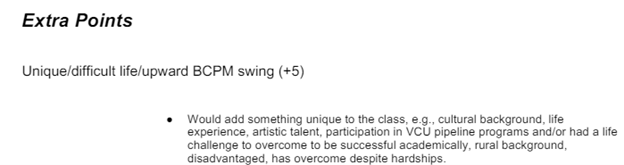
Even before the interview process, East Carolina’s screening guidelines in July 2022 gave points for life experiences and obstacles overcome such as discrimination, substance abuse, family violence, homelessness, or “mental issues with clear evidence of healing and recovery,” among other factors. Candidates also gained points for conducting research, demonstrating leadership, teamwork and service to others, as well as clinical experience. Those guidelines gave extra points for applicants who were underrepresented minorities, first-generation college students, and those who had “served minorities or marginalized populations.”
According to additional documents Do No Harm obtained, East Carolina has moved away from DEI. Now, interview questions cover situations involving compassion/empathy, responsibility/reliability, teamwork, and professionalism.
More publicly, the University of North Carolina-Chapel Hill is also taking positive steps. The Board of Trustees in May voted unanimously to redirect $2.3 million that funded DEI programs toward public safety initiatives on campus. “I think that DEI in a lot of people’s minds is divisiveness, exclusion and indoctrination,” trustee Marty Kotis told Chapel Hill-based public radio station WUNC.
Why the shift? For one thing, compliance with the June 2023 Supreme Court ruling ending affirmative action in education, based on the work of Students for Fair Admissions at Harvard College and the University of North Carolina, may be contributing to these changes.
Another factor is the potential for legislative efforts to prohibit DEI spending in public higher education. North Carolina would follow a number of other states including competitors Florida and Texas.
Under this microscope, North Carolina’s public university system is actively considering a policy to eliminate DEI system-wide.
The legislature seems content to watch and wait for now. And the public should encourage and embrace the state’s university system moving away from DEI on its own.
But members of the public and policymakers alike should regard any step in that direction with a healthy dose of skepticism unless and until a clear prohibition is codified into state law.
States across America are rolling back the pervasive influence that DEI has had in medical schools across the country. Some members of Congress, on the other hand, have rushed to its defense. And medical organizations have their backs.
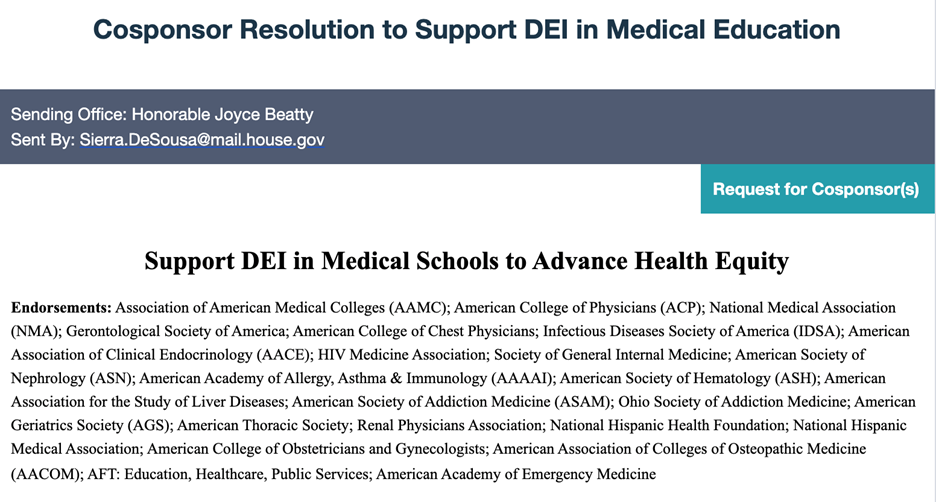
Last month, five members of Congress introduced a resolution, H.Res.1180, entitled “Recognizing the importance of diversity, equity, and inclusion efforts in medical education.”
It contains the predictable platitudes. Among these are particularly dubious claims about racial concordance between providers and patients leading to better healthcare and the importance of DEI principles in medical education.
How many times must the disproven notion of racial concordance be disproven? Laymen and providers alike should understand that a patient’s access to high-quality care is far more predictive of health outcomes than access to care from providers of the same racial backgrounds. Increasing the quality of care and access to that care, not segregation, should be the priority.
And, of course, the resolution features the predictable contradiction that “discrimination, bias, and racism in medical education directly impacts the delivery of equitable health care throughout the United States,” as if DEI represents the repudiation, rather than the continuation, of discrimination, bias, and racism.
Concerned providers and members of the public have grown accustomed to virtue signaling and silly resolutions in Congress. But what might surprise some are the groups standing behind it.

More than two dozen major medical organizations in the United States have signed on to “endorse” this radical resolution. These include notable entities like the Association of American Medical Colleges (AAMC), the American College of Physicians (ACP), the American Association of Colleges of Osteopathic Medicine (AACOM), the American Society of Addiction Medicine (ASAM), and more.
Unfortunately, these groups have publicly weighed in on the side of DEI many times. For example, the AAMC has previously come under fire for advancing critical race theory on students, while also training physicians to become activists for DEI. Similarly, AACOM has pushed DEI policies in its accreditation standards for colleges of osteopathic medicine.
This resolution has been referred to the House Committee on Energy and Commerce, where it is likely to remain in limbo for some time.
Indeed, several members of the committee have co-sponsored Rep. Greg Murphy’s EDUCATE Act, which would ban DEI in medical schools which receive federal funding. Of course, the AAMC and other medical organizations have lobbied against the EDUCATE Act.
Dues-paying individuals in these organizations would do well to remember what these groups stand for and do with their resources when asked to renew their membership. And policymakers unamused by this resolution and these medical organization’s pro-DEI stands should remember this moment when these organizations lobby for more power and money.
Policymakers and the public push back against DEI in the public square with increasing confidence. Why should the world’s leading medical journal be immune?
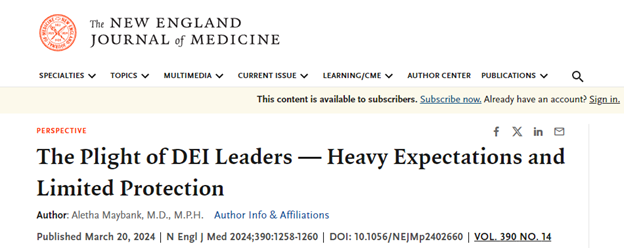
Enter Dr. Kathleen Brown, with a recent commentary submitted to the New England Journal of Medicine in response to an article published in March. That article was written by the American Medical Association’s “Chief Health Equity Officer,” Dr. Aletha Maybank. Among other things, it rebuked earlier efforts by Dr. Brown and colleagues to sunset DEI in dermatology, characterizing it as an assault on efforts to promote “equity” in medicine.

The New England Journal of Medicine, predictably, rejected Dr. Brown’s response. Of course, this makes it all the more worth reading:
In January 2024 I joined more than 80 other dermatologists in requesting that the American Academy of Dermatology sunset its DEI initiative. In a recent Perspective, Dr. Aletha Maybank rebuffed our concerns and warned that “eliminating DEI efforts negatively affects not only Black people, but all racially and religiously marginalized groups,” including “non-Christians.”
These assertions are emblematic of issues with DEI praxis. That is, dogma and politics are treated as substitutes for reason and evidence. There is no indication that DEI fosters harmonious group relations, but there is mounting concern that the reductive “oppressor/oppressed” paradigm regularly adopted by DEI advocates shelters and instigates antisemitism. Indeed, the many Jewish doctors agitating for change in dermatology would plainly disagree that DEI efforts are “rooted in values of belonging.”
Meaningful debate about DEI has rightly reached the public square. I hope the American healthcare system is allowed to follow suit and that The New England Journal of Medicine plays a leading role in fostering constructive dialogue.
Kathleen Brown, M.D., member of the American Academy of Dermatology.
As Dr. Brown writes, there is no evidence that DEI improves patient care or outcomes and good reason to suspect the opposite. Similarly, there is no evidence that DEI fosters inclusivity in medicine, but ample evidence that it shelters and instigates hostility against Jews.
A medical journal interested in the dispassionate, apolitical pursuit of truth would recognize these shortcomings and allow open debate about the merits of an ideology that manifests in medical recruitment, training, research, and practice. Unfortunately, the New England Journal of Medicine is too ideologically committed to racial separatism to take on that role.
We salute Dr. Brown for her efforts to engage in fruitful debate about DEI. Judges, policymakers, and members of the public are listening, even if the editors of this once esteemed journal aren’t.
When it comes to virtue signaling, the Medical University of South Carolina (MUSC) spares no expense.
On January 1, 2024, Dr. Michael de Arellano became MUSC’s new chief equity officer. In his official duties, he leads the Office of Equity team and “is responsible for ongoing and new efforts to promote a culture of equity, eliminate disparities, and foster an inclusive environment for students, faculty, staff, and patients.”
Documents obtained from MUSC by Do No Harm via a Freedom of Information Act (FOIA) request indicate that Dr. de Arellano will be paid a base compensation of $370,000 annually. But that’s just his base salary. He has the potential for “executive variable compensation” of 5%, 10%, or 15%. The Department of Psychiatry will fund $50,000 of Dr. de Arellano’s base compensation for his clinical role.
Additionally, Dr. de Arellano was due to be paid a $20,000 bonus within 30 days of his start date, as well as a $20,000 bonus for completing his “onboarding goals.”
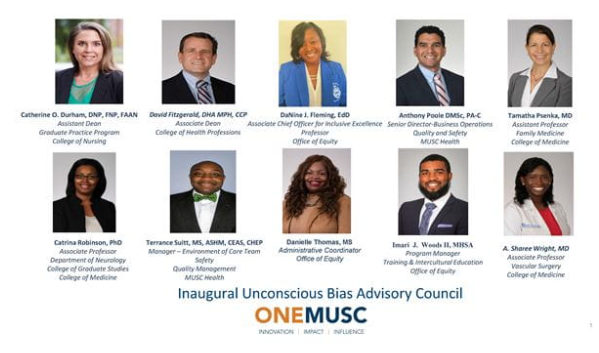
What does MUSC get for its money? The typical jargon-filled commitments, awards, and initiatives already litter the Office of Equity at MUSC: an “Inclusive Excellence Certificate Program”, the “Unconscious Bias Advisory Council”, a “Safe Zone” program, and many more.

[Perhaps de Arellano’s first order of business will be asking MUSC to practice what they preach, given that the university’s Board of Trustees is comprised of over 80 percent white males—hardly a model for the diversity they claim to embody.]
MUSC joins a lamentable club of public universities that pay DEI staff exponentially more than their full-time tenured professors. Unfortunately, this is not a new phenomenon, as seen in a March 2022 article on Fox News. Speaking on behalf of the Heritage Foundation, Do No Harm senior fellow Jay Greene stated that DEI on campuses creates a “political orthodoxy, which fundamentally distorts the intellectual and political life on campus.”
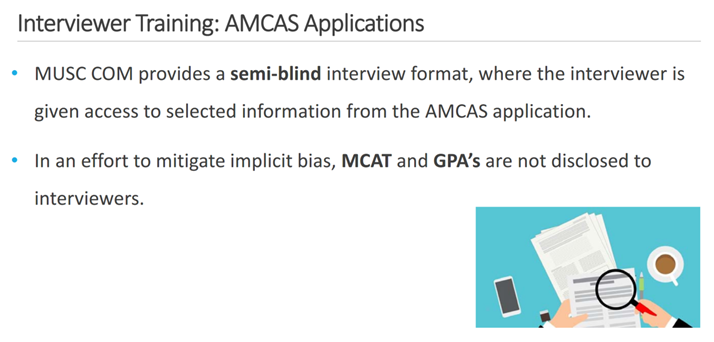
But perhaps MUSC’s willingness to spend so much on a DEI hire is unsurprising, given the university’s blatant use of DEI criteria in its admissions process. For example, admissions interviews include screening for “cultural competency” and “cultural experiences/diversity”, with an evaluation scale for “cultural awareness”. An extra rubric provided to evaluate applicants gives up to 20 points based on candidates scoring on a “Cultural Experiences/DEI Efforts” scale. And interviewers are not even provided applicant GPAs or MCAT scores, in order to protect the process from “implicit bias”.
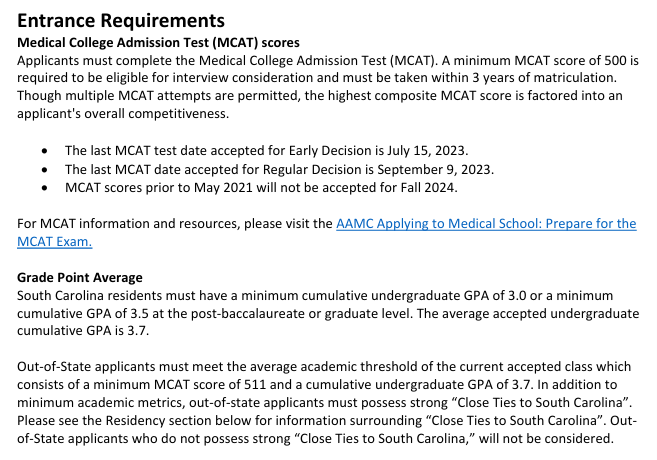
However, the school places a great deal of emphasis on GPA and MCAT in the information it provides to prospective applicants. They are told that they must have a GPA of at least 3.5 and a minimum MCAT score of 506 to apply or to be considered for an invitation to complete a secondary application – below the averages that MUSC claimed during the 2023-2024 admissions cycle.

Yet, the same document notes that “to be eligible for interview consideration,” the MCAT minimum is 500 and the minimum GPA is 3.0 for South Carolina residents.

Members of the MUSC College of Medicine (COM) faculty and staff who conduct applicant interviews were provided with training by the College of Medicine Office of Admissions. Learners are reminded of the COM mission to foster “a diverse educational community” to “promote the equitable health and well-being” of South Carolina residents. Interestingly, the training notes that American Medical College Application Service (AMCAS) applications, managed by the Association of American Medical Colleges (AAMC), “are semi-blind for all reviewers.” Interviewers are “given access to selected information from the AMCAS application.” In addition to the academic minimums and residency requirements, interviewers are instructed to use metrics with “potential for added value.” Topping that list is “Cultural and DEI efforts.”

The slides listing the “attributes” to consider and structured questions to evaluate them were redacted.
At a time when public colleges and universities in several states are dissolving their DEI offices, MUSC is demonstrating its dedication to divisive concepts in the name of “health equity” – with no credible evidence to support their effectiveness. And, despite the Supreme Court’s ruling making affirmative action in college admissions illegal, MUSC is among the schools that are sticking to the AAMC’s “holistic admissions” agenda to skirt the Court’s decision.
South Carolina taxpayers must ask why their tax dollars are going toward funding such an initiative at MUSC, and look to their neighbors to the north for inspiration on how to restore merit as the cornerstone of medical education.
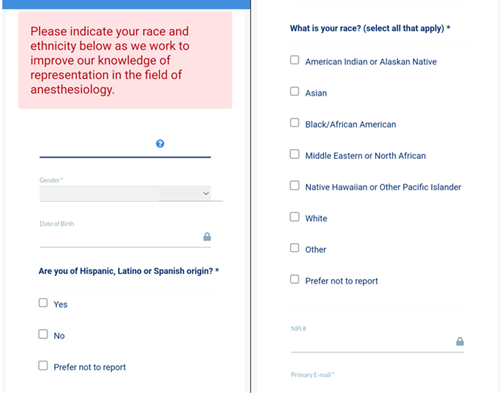
Want to log in to your account at The American Board of Anesthesiology (ABA)? Need to maintain your certification?
First, you will need to decide whether or not to declare your race and ethnicity.
Think you can bypass it? Think again. While a “Prefer not to report” choice exists, the site displays a red-letter announcement to “Please indicate your race and ethnicity below as we work to improve our knowledge of representation in the field of anesthesiology.”
Why?

Why are ABA members being prompted to choose a racial group before they can access their services? Like all physicians, anesthesiologists need to complete ongoing education to maintain their board certification. Their employment depends on it.
Why must physicians who have already taken an oath to “do no harm” and treat all patients with the utmost care and dignity give yet another organization data that could be to be distorted in service of racist DEI efforts?
To its credit, the ABA does note in its 2024 Policy Book that data on “gender, race, and ethnicity” is collected on members. This reflects a continuation of a revision made to the Winter 2023 Policy Book, section 7.11: Data Privacy and Security Policy.


But, again, why? Elsewhere in the Policy Book, it simply states that data can be collected “to conduct research.” But a press release is more revealing, explaining the organization’s decision to collect private ethnicity data on their candidates so “that we are properly supporting” people.
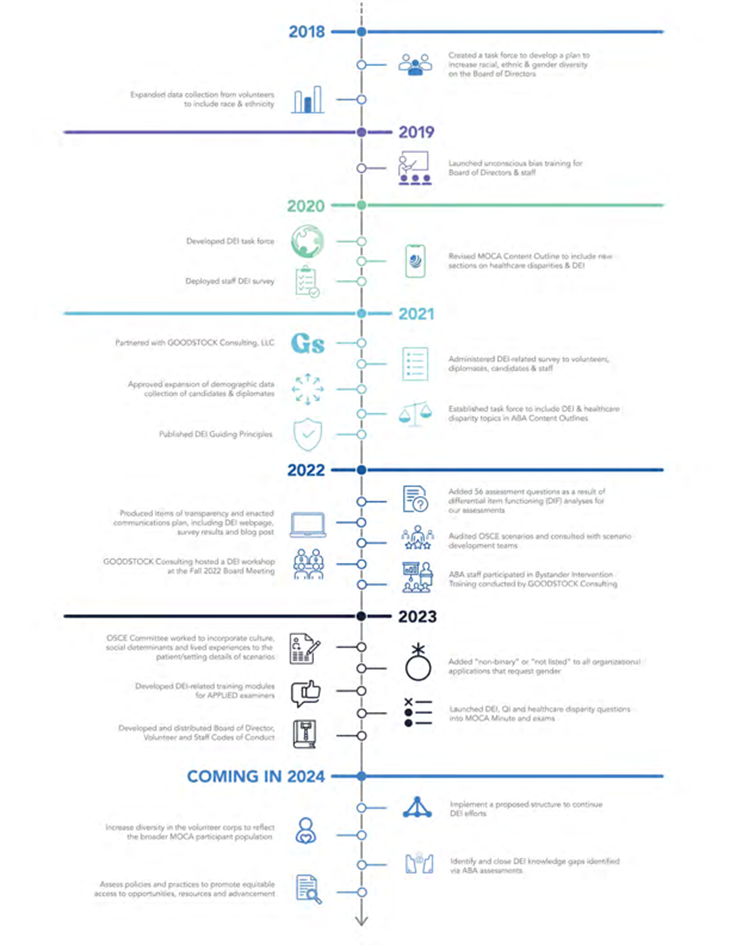
At this point, individuals familiar with today’s equity jargon know that such language is far from innocuous. And the public jargon is clearly having an impact behind the scenes. The ABA proudly highlights it DEI efforts, posting a timeline of changes over the years, including developing a DEI taskforce in 2020.

According to the timeline, the ABA is taking steps to “increase[e] diversity” in the organization’s volunteer corps and reassessing “policies and practices to promote equitable access to opportunities, resources, and advancement.”
Here’s an alternative path forward: focus on competence, not color. Patients understand this. Professional medical organizations should too.
As Kingbury and Greene noted, “attempts to match patients to doctors on the basis of race hold no promise for producing better care or better outcomes.” And medical institutions should always put health outcomes for patients above placating activists and furthering race-based preferences.
To that end, almost one year has passed since the Supreme Court struck down affirmative action programs in higher education as constitutional violation. A growing number of states have prohibited public funding for DEI programs. The tide is turning.
Yet, racial classifications continue to play a role at the ABA and for anesthesiologists seeking to obtain and maintain board certifications. Why? And when will it end?
Do No Harm believes in making healthcare better for all – not undermining it in the pursuit of a political agenda or identity politics. Do No Harm seeks to highlight and counteract these divisive trends in medicine.
Do you know of policies that promote discrimination in healthcare? Please let us know – securely and anonymously.
Ohio University Heritage College of Osteopathic Medicine (OUHCOM) has discontinued its Physician Diversity Scholars (PDS) Program (archived page here) as the result of a federal civil rights investigation by the Department of Education’s Office for Civil Rights (OCR).
As we reported last December, OUHCOM was partnering with the Cleveland Clinic to offer the program, which was “open to all underrepresented minority medical students.” The school defined “underrepresented minority” as “Black/African-American, Hispanic/Latino, Native American/Alaskan Native and pacific Islander/Native Hawaiian,” in violation of Title VI of the Civil Rights Act of 1964.
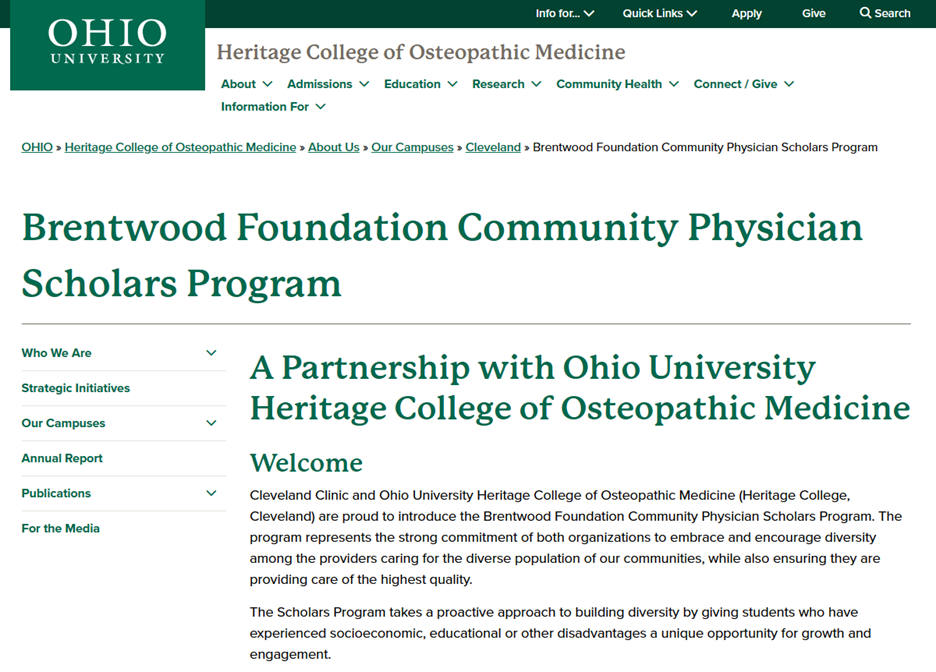
Following the complaint (filed by Do No Harm Senior Fellow Mark Perry) and subsequent federal investigation, OUHCOM has discontinued the discriminatory program and replaced it with the Brentwood Foundation Community Physician Scholars Program – free of race-based eligibility criteria.

“The Scholars Program takes a proactive approach to building diversity by giving students who have experienced socioeconomic, educational, or other disadvantages a unique opportunity for growth and engagement,” the updated program landing page states.
The Cleveland OCR issued an investigation closure notice on May 13, 2024, citing that OUHCOM had discontinued the PDS program and stopped promoting the program on its website, and verified the new program “does not include any eligibility or participation criteria restricted by race or national origin.”
Race-based mandates may sound like long-abandoned antiquities of the pre-civil rights era. But one organization purporting to represent family medicine wants to roll back the clock.
In an email anonymously shared with Do No Harm, the Association of Family Medicine Residency Directors (AFMRD) details that they are “deeply concerned” regarding the “erasure” of Diversity, Equity, and Inclusion (DEI) in medical institutions. What is that erasure? Recent legislative efforts across the country to defend equal treatment regardless of race. The email points to thirty pending bills which would “dismantle” DEI initiatives and specifically highlights seven anti-DEI bills that have been signed into law, as well as the federal EDUCATE Act.

These bills should be a cause for celebration. States like Florida, Utah, Texas, and more have worked to curtail the influence of DEI in colleges and universities (including medical institutions of higher education). These meaningful reforms protect students and faculty from loyalty oaths, mandatory diversity trainings, and other discriminatory policies. Meanwhile, the EDUCATE Act, sponsored by Congressman Greg Murphy of North Carolina, would rightly cut off federal funding to medical schools’ DEI programs.
But rather than celebrate these successes, the AFMRD is up in arms. In its latest email, the organization is urging members to take matters into their own hands by contacting legislators and taking to social media using the “#diversity” as the hashtag.
One of the resources linked in the AFMRD’s email is to the Society of Teachers of Family Medicine (STFM) and their “Family Medicine DEI Advocacy Toolkit”. This so-called “toolkit” includes a map tracking these “deeply concerning” pieces of legislation, links to an online “advocacy course”, social media graphics, and more.

STFM also decries the EDUCATE Act, noting that the act would “ban race-based mandates at medical schools and accrediting institutions”—as if ending racist quotas and policies would harm healthcare instead of helping it.
These organizations are hardly the first entities to embrace divisive DEI concepts. From osteopathic medicine to psychiatry, organizations representing members in countless medical subfields have embraced identity politics in healthcare at the expense of individual merit and evidence-based healthcare.
However, the AFMRD and STFM’s call to political action to salvage DEI in medicine represents a much deeper commitment.
What if these medical organizations actually focused on, say, medicine? What progress could be made with this time and energy if it were devoted to research, evaluations of new practices, or moral and ethical considerations?
It is difficult to comprehend how, in the 21st century, it is controversial to claim that racial discrimination in medicine is a bad idea. But it is.
The sooner these organizations are called out for their clearly harmful views and actions, the better it will be for medical providers and patients alike.
Medical schools and organizations have made defiant statements against the Supreme Court’s ban on race-based admissions
Richmond, VA; May 15, 2024 – Prestigious medical schools continue to discriminate based on race and are committed to continue to find work arounds to the Supreme Court’s ruling in Students for Fair Admissions v. Harvard and Students for Fair Admissions v. North Carolina are the findings in a report released today by Do No Harm.
The report reveals prestigious medical schools such as Stanford made defiant statements in wake of the ruling: “Stanford Medicine firmly believes in the transformative power of diversity, in all dimensions… While the ruling changes the landscape of university admissions, it does not change our resolve or our values. We reaffirm that commitment to you today and in the days to come.”
In addition to Stanford, leading medical organizations also were dissatisfied with the court curtailing their political agenda. The report warns the Association of American Medical Colleges (AAMC), a group with a track record of forcing progressive political agendas into the accreditation process, could attempt to compel medical schools to follow the AAMC’s politized DEI standards.
“Abolishing DEI at medical schools is also instrumental in redirecting admissions committees toward merit and aptitude rather than identity politics. DEI corrupts all facets of academic life and compels a fixation on group representation, including within the admissions process.” said Dr. Stanley Goldfarb, Chairman of Do No Harm.
Click here to read the report in its entirety.
About Do No Harm:
Do No Harm, established in April 2022, has rapidly gained recognition and made significant strides in its mission to safeguard healthcare from ideological threats. With more than 7,000 members, including doctors, nurses, physicians, and concerned citizens across all 50 states and in 14 countries, DNH has achieved more than 7,800 media hits in top-tier publications and garnered widespread attention through numerous broadcast news appearances.
Ohio State University (OSU) is up to its same old tricks, living up to its nickname as a “Destination for Indoctrination.” OSU hosted a DEI conference on May 6 and 7 for The National Conference on Diversity, Race & Learning (NCDRL).
NCDRL explains that “the conference offers a multi-leveled examination of ‘diversity’ as a concept and its implementation within institutions of higher education, the corporate world, the religious community, [and] the larger community, including public service.”
Instead of genuinely bridging “the economic, political and socio-educational divides that continue to be pertinent in the American social landscape and beyond,” as is the stated goal, OSU’s Office of Diversity and Inclusion pushes divisive ideology on faculty and students.
The conference’s registration page warns that the event is already as “maximum capacity,” having convinced a full house of attendees to pay between $250-$460 each. It also appears that OSU may have paid employees to attend or, at least, on their behalf given that W9 tax forms were provided for payment.

The title of the conference is “What’s Next? Equity in a Changing World.” But the real question is what’s next for Ohio in a changing nation as smart states crack down on DEI? Ohio’s flagship university continues to deepen its commitment to woke indoctrination without pushback from policymakers.
Don’t miss Do No Harm’s comprehensive report on OSU last summer: The Ohio State University College of Medicine: A destination for indoctrination in health equity and anti-racism – Do No Harm (donoharmmedicine.org).
In the wake of the Supreme Court’s ruling which prohibits race-conscious college admissions, is West Virginia University School of Medicine following the law? Maybe. But materials included in an admissions committee training workshop raise serious questions. And the school’s leadership owes applicants, lawmakers, and the public clear answers.
The training slideshow, obtained by Do No Harm through a public records request, offers mixed signals about the school’s understanding of the Court’s decision in Students for Fair Admissions v. Harvard (2023). In summarizing the decision, a slide first notes that applicants “must be treated based on his or her experiences as an individual – not on the basis of race.” This is, of course, true. However, it goes on to claim that race is considered “as one factor among many, in an effort to assemble a student body that is diverse in ways broader than race.”

This language can be traced to a different Supreme Court ruling, Grutter v. Bollinger (2003), the very decision that SFFA explicitly overruled. And that most recent ruling made it clear: Race can’t be a factor in the admissions process at all.
Other slides suggest that the admissions committee understands the Court’s decision and intends to comply with it. For example, the updated diversity policy removes references to race-conscious admissions and instead affirms a focus on selecting “a diverse student body, faculty, and staff, including the socioeconomically disadvantaged rural Appalachian population.”

Previously, in 2022, the policy stated that “the School endeavors to select a gender-balanced and diverse student body, faculty, and staff including underrepresented in medicine groups, including those who identify as African-American, Hispanic, and Native American/Pacific Islander.”

Hopefully the attribution of a quote from Bollinger to SFFA is an honest mistake and the admissions committee understands that race-conscious admissions are a violation of the Fourteenth Amendment’s Equal Protection Clause. Either way, WVU has some explaining to do.
I recently toured the now-defunct Project Greek Island at the Greenbrier Resort. Built in 1958, this top-secret government facility was a fortified bunker into which the U.S. Congress would relocate in the event of a national emergency, i.e., nuclear war.
Today, advocates for equality and fair, non-discriminatory competition for positions in schools or the workplace hide in another kind of bunker. They shelter in place avoiding the DEI (Diversity, Equity, Inclusion) storm. They are safe from being looked upon by their peers with faux moral revulsion, being labelled a racist or a Neanderthal for not pledging fealty to the 21st Century diversity movement. But their bunker is one of silence, not concrete. And it is only a matter of time before the risk they are avoiding reaches them.
The quest to expand the American Dream to all Americans has made progress. Sometimes, it is organic as people are exposed to those with different backgrounds and ethnicities. Other advancements required legal or political action. President Truman desegregated the armed services. President Eisenhower desegregated the federal workplace. The Supreme Court desegregated public schools. Congress passed laws in the 1960s that ensured de jure non-discrimination in many facets of American life.
Disturbingly, the movement toward harmony has morphed into a campaign that promotes racial stereotyping and drives us apart. As early as kindergarten, children are grouped by race for certain activities and lessons. In higher education, students are placed in affinity groups—Newspeak for segregation.
In short, DEI adherents are echoing the 1950s rhetoric of the opponents to integrated schools: people of different races learn better in separate environments where they can be their true selves. How is this diversity and inclusion?
Like the Cold War that necessitated a bunker in West Virginia, I thought the Red Scare-inspired loyalty oaths to root out communists were in history’s dustbin. Not true. Despite a prohibition against political tests for employment in the California public college system, at U.C. Davis, for example, the application for a faculty position as a surgical oncologist requires a “Statement of Contributions to Diversity, Equity, and Inclusion” while a statement of research or teaching is optional.
Thankfully, a return to fairness is on the march. Do No Harm, a non-profit organization fighting identity politics in medicine has filed civil rights complaints and lawsuits attacking, among other things, racial quotas on medical boards and discriminatory hiring incentive programs that exclude qualified individuals. Full disclosure: I am a plaintiff in the California lawsuit against mandatory implicit bias training.
But too many Americans who believe in merit, evidence-based healthcare, and equal treatment under the law remain silent. Racial silos rob all individuals, but especially black persons, of their dignity. When we lose our individuality, we lose our true selves. Let’s get out of our bunkers and fight this fight before it’s too late.
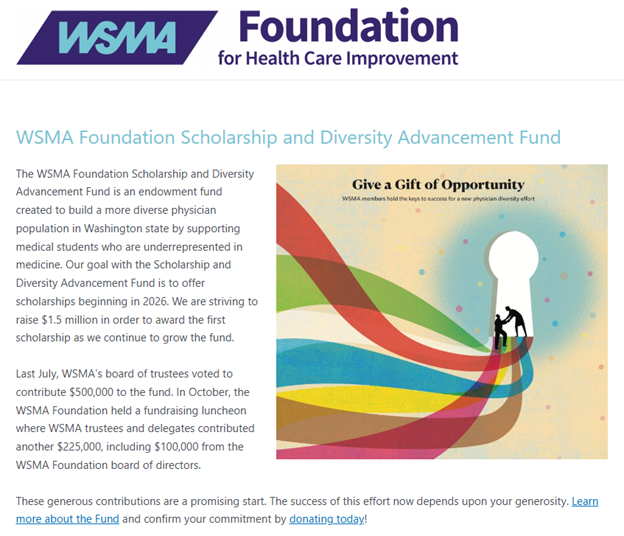
The American Academy of Psychiatry and the Law (AAPL) is promoting a scholarship for early career forensic psychiatrists to attend its annual conference in Vancouver, Canada later this year. The Charles Dike Scholarship, established by AAPL in 2021 and named after its now-president, is not, however, available to all young psychiatrists—only “people of color” may apply. Scholarships such as this have become increasingly common among institutions that support diversity, equity, and inclusion by specifically excluding white applicants from consideration.
The AAPL’s diversity, equity, and inclusion efforts accelerated after a self-critical article was published in the Journal of the American Academy of Psychiatry and the Law (JAAPL) in 2019. The authors examined nearly a decade’s worth of AAPL newsletters and found no mentions of the value of diversity in their field. Despite finding more than 500 JAAPL articles containing references to diversity, the authors further criticized the AAPL because only ten of those articles specifically addressed why diversity is important to their field. They also pointed to broader indicators of “underrepresentation” among black, “Latinx,” Native American, and “LGBTQ” people in the psychiatric field. The solution, the authors argued, was to follow the model of the American Psychiatric Association, which pursued a “structural reorganization plan with inclusivity, diversity, and effectiveness as guiding principles.” The APA also incorporated DEI concepts into its Diagnostic and Statistical Manual.
The AAPL had anticipated these criticisms, forming a Diversity Committee and creating designated seats on its governing Council for minorities and women before the article was published by JAAPL.
The most recent newsletter from AAPL echoes these sentiments. The incoming medical director for AAPL wrote that “concepts of radical inclusion and attention to diversity” are at the core of AAPL’s educational mission. AAPL’s Membership Engagement, Recruitment, and Retention Task Force extended this mission even further, citing the need for AAPL to engage to a greater degree with social issues, based on insights from its leadership team.
Yet, insights from AAPL’s membership suggest these efforts are quite unpopular. The newsletter also noted a 2022 survey of AAPL’s membership, which found that members were most satisfied with the organization’s professional education, networking opportunities, and scholarly activities. Social issue advocacy ranked lowest. More than one in five members reported that they had considered ending their association with AAPL, and the top reasons were related to disagreement with the organization’s activities, concerns about politicization, and loss of objectivity in search of advocacy.
AAPL’s drift into social justice is clearly driving away some members who object to the discriminatory and political practices that it entails. But another reason might be that these efforts are simply not necessary to meaningfully improve the field, even on some of the race-based metrics outlined by DEI initiatives. In the thirty years prior to these explicit efforts to diversify the field, underrepresentation in psychiatry was actually diminishing. AAPL makes no mention of this organic success, but only of its continued shortcomings and need for structural change.
Yet, structural changes such as diversity policies, DEI committees, and discriminatory eligibility criteria have proven to be as ineffective as they are unfair. Explicitly race-based diversity policies reduce the complexity of psychiatrists and patients alike to their immutable racial characteristics. And these practices do so at the expense of identifying the types of skills and talents that might prove to be innovative or especially worthy of elevation or praise. Despite the mounting evidence against their usefulness, organizations like AAPL continue to insist on expanding DEI into their policies, governance structures, and scholarships.
Elevating characteristics based on race or ethnicity does little to promote excellence in the field or reward exceptional individuals on an even playing field; instead, they create unnecessary cleavages within the medical community. If AAPL continues to ignore its membership by expanding discriminatory practices like race-based scholarships, the divisions among its members will only grow wider—which is precisely the opposite of the welcoming environment that AAPL’s leadership pays lip service when rolling out these efforts.
In recent years, Florida has been on the cutting edge of pushing back against DEI and other woke concepts, including in medicine. Last year, Governor DeSantis signed two bills into law which prohibited colleges and universities (including medical schools) from spending state or federal dollars on DEI initiatives, while also banning “loyalty tests” and creating freedom of conscience protections in higher education. This was followed up by an outright ban on DEI in the entire Florida College System by the State Board of Education in early 2024.
But now, certain faculty at the University of Florida are expected to participate in a questionable survey produced by the Accreditation Council for Graduate Medical Education (ACGME). The survey includes questions that specifically investigate the prevalence of DEI concepts related to the “diversity” of fellows at the school.
Now, both the University of Florida and ACGME have been repeat offenders when it comes to their fixation on DEI. Time and time again, the University of Florida has repeatedly followed a highly politicized agenda that has rightfully drawn sharp scrutiny. Do No Harm even filed a civil rights complaint after the University targeted scholarships available only to members of certain racial and ethnic groups. After media reports—including articles by Do No Harm—called the school out, the college quickly took to scrubbing its webpages of woke content.
(However, it appears the University may have missed a few webpages when completing its broad scrub.)
ACGME is seemingly no better. The organization has placed pressure on residency program directors to prove their allegiance to DEI, all while adding a series of head-scratching sessions on topics like “addressing structural racism to promote equity” to their annual education conference.
Interestingly, this past March, ACGME was in Orlando partnering with the Orlando Veterans Affairs Healthcare System and another Florida medical school – the University of Central Florida – on an event entitled “ACGME Paving the Path to Medicine: Promoting Diversity, Equity, and Inclusion”. According to ACGME, over 78 college students attended the event—as well as 22 University of Central Florida medical student volunteers—in order to “gain first-hand experience participating in a pathway program they can replicate at their own institutions for a lasting impact on diversifying the physician workforce.” The day substituted for a full day of classes. In other words, ACGME’s DEI meddling is not limited to just the University of Florida, nor is the University of Florida the only school that seems to engage with these divisive—and in some cases, prohibited—concepts.
But the ACGME’s 2024 annual survey, which faculty members in medical residency programs are asked to complete, contains some queries that raise concerns about DEI-related expectations. A link to complete the survey was recently sent to certain medical faculty at the University of Florida, illustrating a potential continued collaboration on these controversial ideas between the two organizations.
While the initial survey questions ask faculty members about their perspectives on the quality of their programs, effectiveness of program leadership, and their specific work with residents, others are more concerned about applying DEI principles to recruitment and retention.

Notably, the survey form does not allow a responder to skip a question. Although he or she could answer “not at all” and still be in compliance with Florida law, the fact remains that these DEI-related questions from the ACGME are mandatory.
Since the University of Florida—the state’s flagship university—accepts and uses taxpayer dollars, they would inherently be covered by the legislation signed last year prohibiting the use of any such dollars on DEI initiatives.
This raises several questions. Why is the ACGME inquiring about activities that are ostensibly banned at Florida schools? Does ACGME have knowledge that the University of Florida and other Florida schools are circumventing the new laws? Have other Florida medical schools received the same questions? And have faculty provided answers to the survey questions that suggest non-compliance with this new legislation?
Put simply, ACGME asked a lot of its survey participants. But as it turns out, the survey sparked even more questions that need answering.