
It took 14 months to obtain the information, but the University of Connecticut School of Medicine (UConn) finally provided Do No Harm with the Diversity, Inclusion, Culture, and Equity (DICE) Inventory document it submitted to the Association of American Medical Colleges (AAMC) back in 2021.
In December 2022, we began reporting on the DICE Inventory results of other public medical schools across the country, which we received via freedom of information requests. The FOIA requests were made in response to AAMC’s November 2022 report showing that the vast majority of medical schools have embraced identity politics, despite their divisive and even discriminatory nature. We asked for a copy of UConn’s survey response so that Connecticut taxpayers and policymakers could learn the truth about this institution.
The UConn School of Medicine self-reported that it has an “office, staff, or resources”dedicated to DEI. This means there’s a permanent bureaucracy pushing politicized ideology on faculty and students. UConn claims to be “one of the nation’s top medical schools for diversity.” Yet, the person filling out the survey commented that “the landscape is fractured and dysfunctional” with “much infighting and no funding.” And, at the time of the submission, it was noted, “We do not have a formal diversity plan that covers the entire school. Things are in pieces.”
Eleven of the 14 categories that make up the overall DICE Inventory score were answered as “not applicable,” and no comments were offered in these sections. However, a perfect 100% was achieved in the “Diversity, Inclusion, and Equity Policies” portion of the survey.
Even with its minimal responses, the UConn School of Medicine managed to institute 76.7% of the divisive and discriminatory DEI-related policies listed by the AAMC, indicating “moderate Diversity, Inclusion, Culture, and Equity efforts.”
Figure 1. UConn School of Medicine DICE Inventory overall score.
Connecticut taxpayers help fund the UConn School of Medicine. They, and the policymakers who represent them, should ask why they’re giving so much money to an institution that dedicated itself to putting divisive and discriminatory ideology at the heart of medical education.
https://donoharmmedicine.org/wp-content/uploads/2024/03/shutterstock_2001270161-scaled.jpg13502560Laura Morganhttps://donoharmmedicine.org/wp-content/uploads/dono-logo.pngLaura Morgan2024-03-25 20:14:562024-03-25 20:14:56After More Than a Year, the UConn School of Medicine Shares its DICE Inventory: “Things Are in Pieces”
State Rep. Ben Baker has served others in many roles, from ministry and mission work to education and public office. Now, he’s speaking up on behalf of concerned students, professors, and patients as a sponsor of the “Do No Harm Act,” a bill that would fight back against toxic DEI in Missouri’s publicly funded higher education institutions.
https://donoharmmedicine.org/wp-content/uploads/2024/03/DNH-Podcast-Graphic-Baker-min-scaled.png14402560rededge-rachelhttps://donoharmmedicine.org/wp-content/uploads/dono-logo.pngrededge-rachel2024-03-20 14:26:062024-03-20 14:26:06S2E10: Rep. Ben Baker on Pushing Back Against DEI in Missouri’s Publicly Funded Colleges and Universities
RICHMOND, Va. – Do No Harm announced support for the EDUCATE Act introduced today by Congressman Greg Murphy (NC-03). If passed, the bill would cut off federal funding to medical schools DEI programs.
The EDUCATE Act would defund programs that compel students or faculty to adopt specific beliefs or discriminate based on race or ethnicity. It would also defund medical schools that have diversity, equity, and inclusion (DEI) offices or any functional equivalent. The bill would also require accreditation agencies to check that their standards don’t push these practices, while still allowing instruction about health issues tied to race or collecting data for stats.
“Allowing rebranded race-based discrimination to infiltrate medical education is dangerous for future doctors and patients alike,” said Dr. Stanley Goldfarb, Chairman of Do No Harm. “I have witnessed firsthand the alarming rate at which DEI ideology has spread through medical schools across the country. If we fail to stop it, we risk a generation of physicians ill-equipped to meet the needs of their patients. Do No Harm applauds Congressman Murphy for taking this critical first step to end harmful DEI practices and make academic excellence the priority for medical schools once again.
American medical schools are the best in the world and no place for discrimination,” said Congressman Greg Murphy, M.D. “The EDUCATE Act compels medical schools and accrediting agencies to uphold colorblind admissions processes and prohibits the coercion of students who hold certain political opinions. Diversity strengthens medicine, but not if it’s achieved through exclusionary practices. Medicine is about serving others and doing the best job possible in every circumstance. We cannot afford to sacrifice the excellence and quality of medical education at the hands of prejudice and divisive ideology.”
The EDUCATE Act is designed to ensure medical schools educate the next generation of medical professionals without perpetuating discrimination in the name of diversity, while keeping free speech and anti-discrimination laws intact. Do No Harm urges Congress to advance this important piece of legislation to safeguard medicine from divisive political ideology.
Click here to read Congressman Murphy and Dr. Goldfarb’s op-ed on the EDUCATE Act in the Wall Street Journal.
About Do No Harm:
Do No Harm, established in April 2022, has rapidly gained recognition and made significant strides in its mission to safeguard healthcare from ideological threats. With more than 6,400 members, including doctors, nurses, physicians, and concerned citizens across all 50 states and in 14 countries, DNH has achieved more than 7,870 media hits in top-tier publications and garnered widespread attention through numerous broadcast news appearances.
https://donoharmmedicine.org/wp-content/uploads/2022/11/DNH_ContentCards_PressRelease.png6751200Laura Morganhttps://donoharmmedicine.org/wp-content/uploads/dono-logo.pngLaura Morgan2024-03-19 14:31:422024-03-19 14:31:42Do No Harm Supports the EDUCATE Act Introduced by Rep. Greg Murphy
The following testimony was given before the Arizona legislature on March 11, 2024. Read this mother’s powerful story about her son’s experience and her concerns for his long-term health.
As the mother of a young adult son who is now trans identified and medically transitioning with anti-androgens and cross sex hormones, I worry about his long-term health and well-being. While researching the issue, finding little in published medical evidence regarding the health implications, I began to encounter both trans-identified and detransitioned adults suffering health consequences.
In February 2021, I met Forrest, a 25-year-old man, through social media who had begun the process of detransitioning. This is the act of reverting to presenting as one’s birth sex after medical transition – many aspects of transition cannot be reversed. In addition to the cross-sex hormones, Medicaid and insurance had paid for this young man to have breast implants and an orchiectomy, which is the removal of his testes. He no longer produces his own sex hormones which are critical for health. Soon after the surgery, he decided to detransition, but was denied coverage for the removal of the breast implants or the procedure of testicular implants for cosmetic reasons. Both of these procedures are still fully covered for cross sex appearance, but not if your “gender journey” takes you back to attempting to live as your birth sex. This story and others led me to draft and propose legislation to help this young man and others who are experiencing insurance discrimination when detransitioning.
In a Reuters article on detransitioners from December of 2022, even WPATH is quoted as saying “many detransitioners expressed difficulties finding help during their detransition process and reported their detransition was an isolating experience during which they did not receive either sufficient or appropriate support.”
How many trans identified patients detransition? We have no idea. How many are enough to deserve care? On the sub-Reddit, r/detrans, there are now 53,000 participants. While we know not all are in the process of detransition, how many are enough to deserve care and coverage? Lisa Littman’s study, Individuals Treated for Gender Dysphoria with Medical and/or Surgical Transition Who Subsequently Detransitioned: A Survey of 100 Detransitioners [Archives of Sexual Behavior, November 2021, showed that 75% of detransitioners did not return to their providers to report their detransition.
Per the Williams Institute 2022 study, there are over 41,000 trans identified adults in Arizona and over 7,000 between the ages of 13-17. How many will seek to return to living as their birth sex? We have no idea, however, with the recent rise in those who seek transition related drugs and surgeries, no matter what we believe to be the true rate of detransition, the actual number of those seeking care to detransition will also inevitably rise. Ensuring insurance coverage cannot wait until we know. This vulnerable group deserves our help NOW and I will not stop fighting for Forrest and my son’s health and wellbeing.
https://donoharmmedicine.org/wp-content/uploads/2024/03/shutterstock_34411390-scaled.jpg17072560Laura Morganhttps://donoharmmedicine.org/wp-content/uploads/dono-logo.pngLaura Morgan2024-03-19 11:03:002024-03-19 11:03:00A Mother Testifies to the Arizona State Legislature About the Consequences of Gender Transition
The last thing you would expect to see after opening up a medical journal is a deluge of articles about the “climate crisis”. Yet, that’s exactly what is contained in the latest volume of the journal of the American Board of Family Medicine (ABFM).
Roughly 35 percent of the 26 articles contained in the most recent email to ABFM members detailing their journal’s table of contents are principally about climate change or the environment. These include commentary pieces, original research, the editors’ note, and more. Pieces such as “Climate Change: How Will Family Physicians Rise to the Challenge?” and “When Climate Change Shows Up in the Exam Room” nearly outnumber articles about conventional medical conditions or research.
For certain subcategories of research products, the climate-theme is even more overwhelming. For example, five out of the six commentary pieces in the latest addition of the journal pertain to climate change; the one non-climate change commentary piece is entitled “Lack of Diversity in Female Family Physicians Performing Women’s Health Procedures.”
The overwhelming argument contained in these research products is that climate change is discussed too little in family medicine (which somewhat ironic considering the sheer number of pieces dedicated to the topic), yet is of the utmost importance.
For example, in “Climate Change: How Will Family Physicians Rise to the Challenge?”, Audrey Hertenstein Perez argues that much more needs to be done in immersing physicians with the climate change agenda. She states: “There is an emerging field of Climate Health with fellowship training programs and residency curriculums available for collaboration. We must make this education a standard part of medical school and residency training to ensure that future physicians are adept to address climate change both within an office encounter and the communities in which they practice.” She goes onto condemn much of the medical field in her claim that “Hospitals and clinics rely heavily on fossil fuel-based energy and each laboratory test, imaging study, and pharmaceutical intervention increases this intensive energy demand.” The solution, according to Perez, is for doctors to become climate activists: “We also have a powerful voice as advocates. We must use that voice to approach local or national legislators to support measures that will mitigate climate change while assisting communities to adapt to the changes already at hand.”
Mona Sarfaty echoes some of these sentiments in “How Physicians Should Respond to Climate Change” by calling for climate change to be incorporated into medical education, stating “Medical schools should waste no more time in ensuring that medical education is up to date about climate change.”
In “Climate Change Psychological Distress: An Underdiagnosed Cause of Mental Health Disturbances”, Jessica de Jarnette details the symptoms of “Climate change psychological distress (CCPD), also known as climate anxiety” which is “a chronic fear of environmental doom…ranging from mild stress to clinical disorders like depression, anxiety, post-traumatic stress disorder and suicide.” The evidence cited by de Jarnette for this so-called crisis in family medicine is simply a handful of cherrypicked public opinion polls of Americans indicating they are worried about climate change. Meanwhile, the National Alliance on Mental Illness (NAMI) ranks the most prevalent mental health conditions in the United States— “Climate Change Psychological Distress” is nowhere to be found on their list.
In “Considering the Environmental Impact of Practice-Based Research”, several authors decry the “carbon footprint” generated by “the need to commute by automobile to and from [medical] practices” for practice-based research. The authors suggest virtual practices, e.g. telemedicine, are a necessary solution. While there are many virtues of telemedicine, the authors conveniently make no mention of the countless patients who may be one of the 42 million Americans without access to broadband. Are these patients to forgo their medical care for the sake of reducing carbon emissions?

Figure 1. “Greenhous gas equivalences for carbon dioxide production prevented by virtual practice facilitation” (from Considering the Environmental Impact of Practice-Based Research, JABMF, January 2024).
Put simply, the general theme of these pieces is quite similar: climate change is bad. Medical schools must incorporate the climate agenda into their curriculum. Doctors must become climate advocates both inside and outside of the exam room. Carbon emissions must be reduced. And repeat.
This is hardly the first instance of activists attempting to use family medicine as a means to promote a social or political agenda. As Dr. Goldfarb pointed out roughly two years ago, “When someone walks out there with their white coat on and their stethoscope and starts talking to you about the dangers of climate change, that changes the discussion about climate change. And I think that’s really been the motivation to try to generate more social activity on the part of physicians.”
At this pace, it will be refreshing to stumble upon articles in medical journals that actually pertain to legitimate discussions of medical issues, ethics, and research. However, if current trends continue, these types of articles may become the exception rather than the rule.

https://donoharmmedicine.org/wp-content/uploads/2024/03/shutterstock_308558309-scaled.jpg18152560Laura Morganhttps://donoharmmedicine.org/wp-content/uploads/dono-logo.pngLaura Morgan2024-03-18 13:47:112024-03-18 13:47:11The Most Pressing Issue in Family Medicine Is…Climate Change?
We worked with philanthropic experts to answer a simple question we were getting from many of our members: How do I make sure my donations are not being used to advance woke ideology?
Donors must be aware of what the universities they’re underwriting are doing in order to hold them accountable.
This resource provides some of the most important questions donors should ask the leaders of these institutions.
https://donoharmmedicine.org/wp-content/uploads/2024/03/shutterstock_126678536-scaled.jpg17142560Laura Morganhttps://donoharmmedicine.org/wp-content/uploads/dono-logo.pngLaura Morgan2024-03-17 15:22:002024-03-17 15:22:00Ten Questions Donors Should Ask When Making Gifts to Universities with Medical Schools or Healthcare Education Programs
The Leadership and Education Advancement Program (LEAP) for Diverse Scholars has a March 17th deadline for their fellowship program funded by the National Institute of Diabetes and Digestive and Kidney Diseases (NIDDK). Benefits include $2,000, mentorship, and the LEAP Boot Camp. The only catch? You can’t be white.
The application on the American Psychological Association (APA) website expressly asks for racial identification. Applicants “Must be of an underrepresented racial/ethnic background (e.g., African American/Black, Latinx, American Indian/Alaska Native, or Asian-American).”
Figure 1. LEAP for Diverse Scholars program from the APA.
NIDDK is part of the National Institutes of Health (NIH) and is part of the U.S. government under the Department of Health and Human Services. Once again, the federal government is using taxpayer money to allot benefits based on race.
From the program’s landing page: “The Leadership and Education Advancement Program (LEAP) for Diverse Scholars is an evidence-informed mentoring and leadership development program for early career behavioral scientists from underrepresented racial and ethnic populations. These early career scientists perform research related to the National Institute of Diabetes and Digestive Kidney Diseases (NIDDK) mission. LEAP prepares fellows to submit a high-quality National Institutes of Health or foundation grant application, supports their research and career development, and connects fellows to a network of senior researchers in a variety of academic settings and leadership positions.”
The APA lists current LEAP fellowson its website. Several current fellows are researching issues like the “challenges of navigating diverse spaces, including those most likely to trigger social identity threat,” and “constellations of multiply-minoritized statuses.”
Current discrimination is never the answer to past discrimination; and taxpayer money should never be used to further this twisted cause. What really matters is the quality candidates and scientific research, regardless of skin color, allowing the best research to lead to medical progress and treatments.
Do you know of a government policy that brings discrimination into healthcare?
https://donoharmmedicine.org/wp-content/uploads/2024/03/shutterstock_126648734-scaled.jpg17072560Laura Morganhttps://donoharmmedicine.org/wp-content/uploads/dono-logo.pngLaura Morgan2024-03-15 22:46:002024-03-15 22:46:00Minorities Only! NIH, NIDDK, and APA Are Discriminating Against Race Again in LEAP Program
Does your family physician subscribe to politicized ideologies? According to the American Academy of Family Physicians (AAFP), that may not be quite enough to meet the organization’s goals.
Do No Harm has previously covered the AAFP’s obsession with DEI concepts, which have manifested themselves in a blatantly discriminatory ideology. In 2022, Do No Harm flagged materials and presentations from the AAFP’s primary annual event, where the organization held at least 10 sessions on DEI-inspired concepts, pushed a discredited “implicit association test”, and emphasized physicians focusing on a patient’s race rather than their medical needs.
Less than a year later, Do No Harm reported that the AAFP’s Vice President of Medical Education decried the U.S. Supreme Court ruling on affirmative action and called for new ways to discriminate and indoctrinate the next generation of physicians.
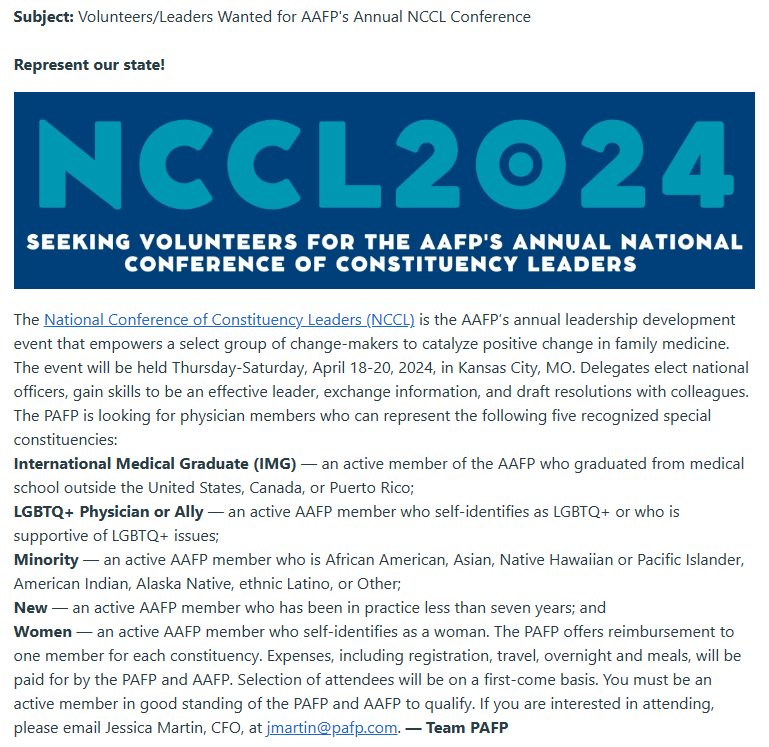
Today, it seems like AAFP is at it again. The AAFP’s National Conference of Constituency Leaders—its primary annual leadership event—will be held in April. The AAFP is looking for all participants, but is really interested if you represent “recognized special constituencies”.
Figure 1. From an email sent to AAFP members (December 2023).
One of these constituencies is a member of a minority group, defined as “an active AAFP member who is African American, Asian, Native Hawaiian or Pacific Islander, American Indian, Alaska Native, ethnic Latino, or Other.” Members of these constituencies may be eligible for reimbursements—but only one member per constituency, on a first-come first-serve basis.
And for participants who make it to the conference beforehand, they can join in early on the indoctrination for the pre-conference programming entitled “Advancing Health Equity and Social Justice in Family Medicine: Bridge Care Gaps by Breaking Barriers”.
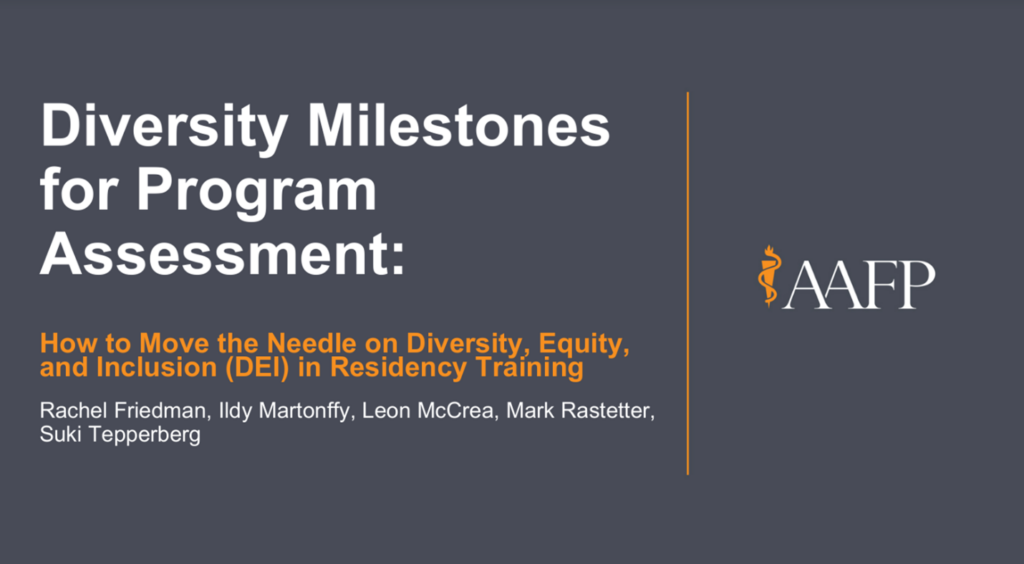
Aside from their annual conference, the AAFP is also promoting “diversity milestones for program assessment”, a type of scorecard to gauge compliance with DEI-related initiatives. The milestones emerged out of a “Diversity and Health Equity Task Force” spearheaded by the Association of Family Medicine Residency Directors (AFMRD).
Figure 2. From a joint presentation by the AAFP and the AFMRD (2022).
Each of the five “domains” identified by the task force for medical education programs—which are “institution, curriculum, evaluation, resident personnel, and faculty personnel”—have controversial and divisive criteria. These include such milestones as: “all evaluators participate in bias training annually”, “curricula in inclusion, antiracism, structural oppression is integrated longitudinally throughout the entire curriculum”, “partners with the community in anti-racist and equity work in the community/population served”, and many more.
Medical education programs are encouraged to self-reflect and score themselves, with the goal of being as committed to DEI concepts as possible. Perhaps ironically, scores of residency programs in the initial pilot assessment averaged at just between 2.0 and 2.65 out of 5, depending on the domain graded. Surely, from the AAFP’s vantage point, there is much more ground for them to cover. [However, even the AAFP fails to practice what they preach. For example, the organization’s Board of Directors has a notable minimum level of diversity.]
Put simply, the AAFP has fully embraced a DEI-rooted ideology that promotes selective discrimination, controversial bias trainings and curricula, and even unfair selective standards for their own conference participants. Family physicians across the country would do well to distance themselves from these concepts and the woke organization that is pushing them.
https://donoharmmedicine.org/wp-content/uploads/2024/03/shutterstock_617822795-scaled.jpg17072560Laura Morganhttps://donoharmmedicine.org/wp-content/uploads/dono-logo.pngLaura Morgan2024-03-15 14:57:592024-03-15 14:57:59The American Academy of Family Physicians Continues Its March Towards Woke-Ism
On March 13, Indiana Governor Eric Holcomb signed Senate Bill 202 (SB 202) into law, paving the way for the removal of divisive practices and ideologically-driven initiatives from the state’s colleges and universities, including those with medical schools and healthcare education programs.
Prohibits educational institutions from imposing mandatory diversity statements from applicants in the hiring process and faculty members in the promotion and tenure process
Bans required adherence to DEI tenets for staff and students
Promotes intellectual diversity in classrooms and among faculty
Expands resources that were previously focused on student groups based on race (e.g., first-generation college students who need assistance, regardless of race/ethnicity)
Examples of divisive concepts that this bill addresses have been seen at the Indiana University School of Medicine (IUSM) in recent months, such as its DEI Leadership Certification Program. And, a training module that instructed job search committee members to consider their “implicit bias” and “whiteness” while evaluating applicants was offered by the IU Office of Academic Affairs last fall.
“Indiana just sent a strong signal that our state is committed to academic freedom, free expression, and intellectual diversity for all students and faculty,” Sen. Deery said in a press release. “While some Indiana public universities are already working on creating truly diverse communities,” he continued, “this law makes it an expectation across the state, and it does so without mandating or prohibiting any content and with no interruption to the important ongoing efforts to recruit and retain minority students in higher education.”
Do No Harm applauds the efforts of these legislators to restore merit and eliminate DEI-inspired practices in Indiana’s public universities.
https://donoharmmedicine.org/wp-content/uploads/2024/02/shutterstock_1237459798-scaled.jpg17072560Laura Morganhttps://donoharmmedicine.org/wp-content/uploads/dono-logo.pngLaura Morgan2024-03-15 14:07:592024-03-15 14:07:59Indiana’s Governor Holcomb Signs Bill Into Law
As DEI gains traction at colleges and universities across the country, so has pushback against this woke intrusion into academia and medicine.
In 2023 alone, Do No Harm filed 150 federal civil rights complaints with Offices for Civil Rights (OCR) at the Department of Education and Department of Health and Human Services, resulting in 40 federal civil rights investigations and multiple favorable decisions.
Already just a handful of months into 2024, Do No Harm is seeing positive outcomes in several key cases before OCR. Below is a sampling of success in just three such cases in New York, Arkansas, and California:
In 2022, Do No Harm Senior Fellow Mark Perry filed a complaint against the NYU Grossman School of Medicine, making two critical allegations. The first pertained to the school’s use of state grant funding in its Science and Technology Entry Program (STEP) to represent “historically underrepresented groups”—a thinly-veiled form of discrimination. The complaint was dismissed by OCR–but only because NYU is facing a parallel class action lawsuit against it for the same allegations of discrimination.
The second allegation pertains to the school’s sponsoring of the “Visiting Elective for Underrepresented in Medicine Program,” which offers a stipend of up to $2,000 for individuals from the following backgrounds: “Black or African American, Latinx, Native American, Native Pacific Islander, or Native Alaskan.”
Figure 1. Eligibility criteria for the NYU Grossman “Visiting Elective for Students Underrepresented in Medicine” as it appeared in 2022.
Again, in this instance, the OCR complaint was dismissed—but that is apparently only because NYU changed the name and eligibility requirements of the scholarship, almost certainly as a direct response to the OCR investigation prompted by Do No Harm. Indeed, the language on the application page has been broadened to merely encourage minority participation, while clarifying that “All interested individuals are welcome to apply.”
Figure 2. Eligibility criteria for NYU Grossman’s “Office of Diversity Affairs Visiting Elective Fund” as they currentlyappear.
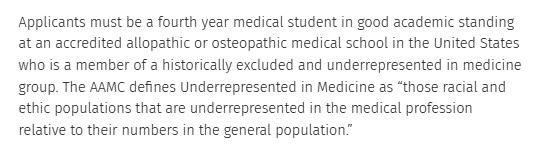
The University of Arkansas for Medical Sciences (UAMS) mirrored this approach, adjusting their eligibility criteria for a scholarship following the filing of an OCR complaint. Originally, applicants for UAMS’s “Gloria Richard-Davis, M.D., Scholarship for Diversity, Equity and Inclusion” had to be from a “racial” or “ethnic” population that is “underrepresented in the medical profession relative to their numbers in the general population.”
Figure 3. Eligibility criteria for the University of Arkansas Gloria Richard-Davis, MD DEI scholarship as they appeared in 2023.
But today, the eligibility requirements for the scholarship are quite different—all mentions of race and ethnicity are removed, and instead the eligibility criteria are open to students who “come from impoverished backgrounds, who are first generation college graduates, or those who come from or intend to return to medical underserved areas of the state.”
Figure 4. Eligibility criteria for the University of Arkansas Gloria Richard-Davis, MD DEI scholarship as they currently appear.
Put simply, following the OCR complaint, UAMS changed its scholarship from one based on discriminatory criteria to one based on a broader range of factors with no mention of race.
Finally, the UCLA Geffen School of Medicine launched an “Underrepresented in Medicine – Center of Excellence” (UIM-COE) program offering two separate racially-based research and travel stipends to students who “identify as Black/African-American, Latina/o/x, Native, American/Alaskan Native, and/or Native Hawaiian/Pacific Islander.”
Figure 5. Eligibility criteria for UCLA Geffen School of Medicine’s “Medical Student Conference Travel Stipend” as they appeared on January 15, 2024.Figure 6.Current appearance of the Medical Student Conference Travel Stipend page.
In addition, the school offered a fellowship opportunity called the “Integrated Community Engaged, mHealth, and Data Science to Enhance Clinical Trial Diversity and Cardiometabolic Health (iDIVERSE) Fellow” available only to those who are “from a racial or ethnic group that is under-represented in science (Black/African-American; Hispanic/Latino; Native American or Alaska Native; and/or Hawaiian or other Pacific Islander) or an LGBTQ+ person or a woman.”
The victories here are straightforward: UCLA removed the racial criteria for the research and travel stipends in the UIM-COE program, and discontinued the iDIVERSE fellowship altogether. A win-win for getting woke out of medicine.
In each of these three cases, Do No Harm was instrumental in raising the issues, filing the complaints before OCR, and ultimately achieving multiple victories. These universities pulled back their discriminatory eligibility criteria as soon as the rubber met the road, caving under the prospect of facing federal scrutiny.
These outcomes demonstrate the powerful impact that Do No Harm and other like-minded individuals and entities can have on pushing back against woke-ism. And they are neither the first nor the last victories that Do No Harm will secure in fighting against blatantly discriminatory policies at academic and medical institutions across the country.
https://donoharmmedicine.org/wp-content/uploads/2024/03/shutterstock_534162046-scaled.jpg17072560Laura Morganhttps://donoharmmedicine.org/wp-content/uploads/dono-logo.pngLaura Morgan2024-03-14 18:44:002024-03-14 18:44:00From New York to Arkansas to California, Woke Medicine Retreats Before the Feds Can Crack Down
Dr. Sheila Nazarian is a plastic surgeon at the top of her field, and the star of her own Netflix show called, “Skin Decision: Before and After.” In this podcast, Dr. Nazarian talks about fleeing Iran at a young age and warns others of the dangers of the DEI agenda and its connection to antisemitism.
https://donoharmmedicine.org/wp-content/uploads/2024/03/DNH-Podcast-Graphic-General-Nazarian.png10801920rededge-rachelhttps://donoharmmedicine.org/wp-content/uploads/dono-logo.pngrededge-rachel2024-03-13 13:32:252024-03-13 13:32:25S2E9: Dr. Sheila Nazarian on Escaping Iran and the Rise of Antisemitism in Medicine
Even as European standards for so-called “gender-affirming care” are revised to follow science-based and common-sense guidelines, the Children’s Hospital of Pittsburgh (CHP) is forging ahead with controversial practices for its youngest and most vulnerable patients.
At CHP, a part of the University of Pittsburgh Medical Center (UPMC) network, children as young as nine years old can seek questionable treatments through the hospital’s Gender and Sexual Development program. The center offers hormone blockers to prevent a child’s natural pubescent process in addition to cross-sex hormones to help a child “transition” to their chosen new gender. A child can also seek mental health counseling through the center that will affirm the child as the opposite gender.
CHP’s Gender and Sexual Development program discloses limited risks for children taking puberty blockers, such as a stalling of cognitive development and reduced bone density. However, many doctors and researchers warn of serious risk for children prescribed these medications, including mood disorders, blood clots, diabetes, cancer, and infertility.
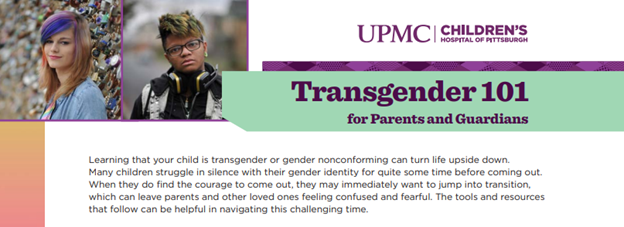
The website for the Gender and Sexual Development program at CHP also offers resources geared towards children who want to learn more about “tucking,” “packing,” and “binding”. These controversial practices assist a trans-identifying child to appear as the opposite gender through the use of devices and techniques that alter the appearance of their chests and genital areas, despite the pain and possible injury associated with these practices. Children are encouraged to explore tucking, packing, and binding and suggestions are offered in these handouts on how to purchase products to help with this process.
Figure 1. “Transgender 101” Glossary of Terms on the UPMC CHP website.
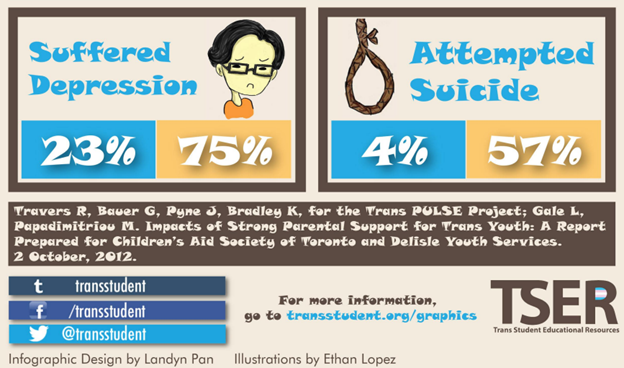
Parentalresources on their website warn that misgendering your child can be “dangerous.” Another graphic threatens parents with the possibility of their child experiencing low self-esteem, poor mental health, depression, homelessness, and suicidal ideation/ attempts if they do not support their children by allowing them to transition. According to the CHP, trans regret is a myth and all children should be supported by their parents and medical professional to socially and medically transition to their chosen gender.
Figure 2. From the UPMC CHP parental resources website.
Parents who are seeking resources to help their trans-identifying child must seek assistance through credible sources. Our Parent Resource helps parents learn the facts about gender dysphoria, and how to find evidence-based information to help their children. While instilling fear in parents is a common tactic of activists who support children’s hospitals that offer so-called “gender affirming care,” Do No Harm equips parents with the actual evidence as they navigate the pitfalls and myths associated with gender ideology.
https://donoharmmedicine.org/wp-content/uploads/2024/03/shutterstock_1121033444-scaled.jpg17072560Laura Morganhttps://donoharmmedicine.org/wp-content/uploads/dono-logo.pngLaura Morgan2024-03-12 20:56:462024-03-12 20:56:46Children’s Hospital of Pittsburgh Subscribes to the “Gender-Affirming Care” Model
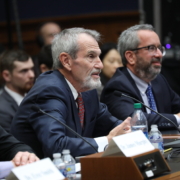
The hearing began with an exceptional opening statement by the committee’s chairman Representative Burgess Owens (R-UT). His prepared remarks painted the dangers of DEI in medicine, from the turmoil it causes to those who practice to how it divides us on the basis of race.
Following the opening remarks, the witnesses engaged in a candid Q&A session with the Members. Heritage Foundation Senior Research Fellow (and also a Do No Harm Senior Fellow) Dr. Jay Greene explained how DEI and antisemitism are irrevocably linked.
Dr. Goldfarb later commented on how DEI initiatives specifically fuel antisemitism on college campuses.
Congresswoman Virginia Foxx (R-VA) asked Dr. Goldfarb about UCLA medical school’s requirements for students to segregate by race.
These are just a few of the several excellent exchanges that occurred during the hearing. We have prepared a full playlist of the opening statements and highlights of the lengthy Q&A session for your reference.
It is our hope that this hearing is another significant step in raising awareness of what is really happening on medical school campuses – and in your doctor’s office.
https://donoharmmedicine.org/wp-content/uploads/2024/03/531A6647-scaled.jpg17072560rededge-rachelhttps://donoharmmedicine.org/wp-content/uploads/dono-logo.pngrededge-rachel2024-03-07 23:43:432024-03-07 23:43:43Dr. Goldfarb Testifies to the United States House of Representatives Subcommittee on Education and Workforce Development
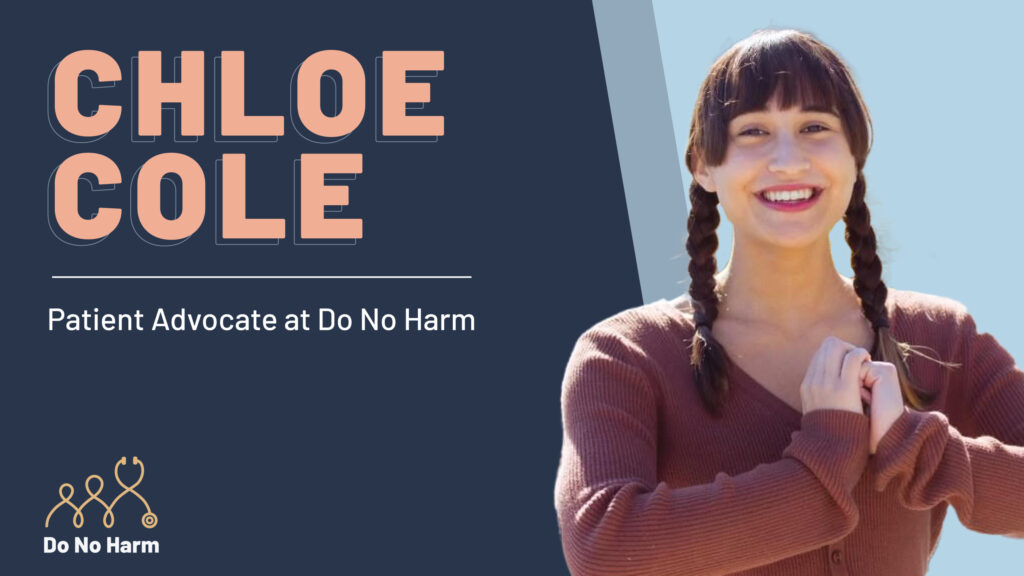
Do No Harm senior fellow and patient advocate Chloe Cole is among the invited guests of Speaker of the House Mike Johnson for tonight’s State of the Union Address.
“I am honored to host these special guests and spotlight their personal stories,” Speaker Johnson stated in a press release. “[T]hese individuals remind us of America’s greatness, even in the face of such challenging circumstances.”
The State of the Union Address will be livestreamed on various platforms from the United States Capitol on Thursday, March 7, 2024 at 9 PM ET.
https://donoharmmedicine.org/wp-content/uploads/2024/03/shutterstock_110970671-scaled-1.jpg16962560Laura Morganhttps://donoharmmedicine.org/wp-content/uploads/dono-logo.pngLaura Morgan2024-03-07 21:52:002024-03-07 21:52:00Chloe Cole to Join Speaker Johnson at the State of the Union Address
The Association of American Medical Colleges (AAMC) unveiled a new ‘Advocacy Toolkit for Physicians in Training’ in a recent webinar, “Developing the Next Generation of Physicians as Policy Advocates to Advance Health Equity.” The webinar is an installment of the AAMC’s Inclusion, Diversity, Equity, and Anti-racism Learning Series (IDEAS), which aims to equip politically progressive members of the medical community with concrete strategies to inculcate ideology into their professional and academic institutions, as well as the medical field more broadly.
The webinar brought together a panel of physicians, residents, medical students, and community advocates to discuss the importance of political activism in the medical field and offer insight into how the AAMC’s new advocacy toolkit can be used in practice. The scope of both the panel and the toolkit is sweeping—according to the AAMC’s own description, “all policy is health policy.” While this perspective might be dismissed as a vague platitude, its implications are more insidious. Through this lens, racial and ethnic disparities in any segment of society translate into health inequities that can be framed with the unique urgency that policymakers and the public associate with public health crises. This kind of alarmism is misguided, as it delegitimizes genuine public health issues and distracts from the central mission of the medical community to provide high quality health care.
The panelists of AAMC’s IDEAS Learning Series, of course, disagree. According to one panelist, the physicians should leverage the respect they get from policymakers to advocate for broad policy change. Indeed, the panel discussion framed a doctor’s decision to deploy the social capital of their position for political purpose as a professional obligation, rather than a matter of personal and reputational discernment that should be used sparingly. The panelists failed to consider how over-politicizing the medical field could erode the confidence of policymakers and the public and prove short-sighted.
A key emphasis of AAMC is widespread and constant training for physicians and medical students to be effective advocates. This training takes many different forms. One panelist noted the importance of exposing medical students to legal studies. So-called ‘medical-legal partnerships’ offer students law clinics during their rotations.
Extracurricular trainings in political activism present little to worry about, but another panelist did not see trainings as optional. According to Dr. Olanrewaju Falusi, Children’s National Hospital includes advocacy as part of its written mission. The leadership of hospital mandates political advocacy from the top management down through the hospital’s residents. Activism is embedded into the curriculum of the residents, the priorities of faculty, the mentorship of fellows, and even bedside care. Politics encompasses every aspect of the hospital’s work.
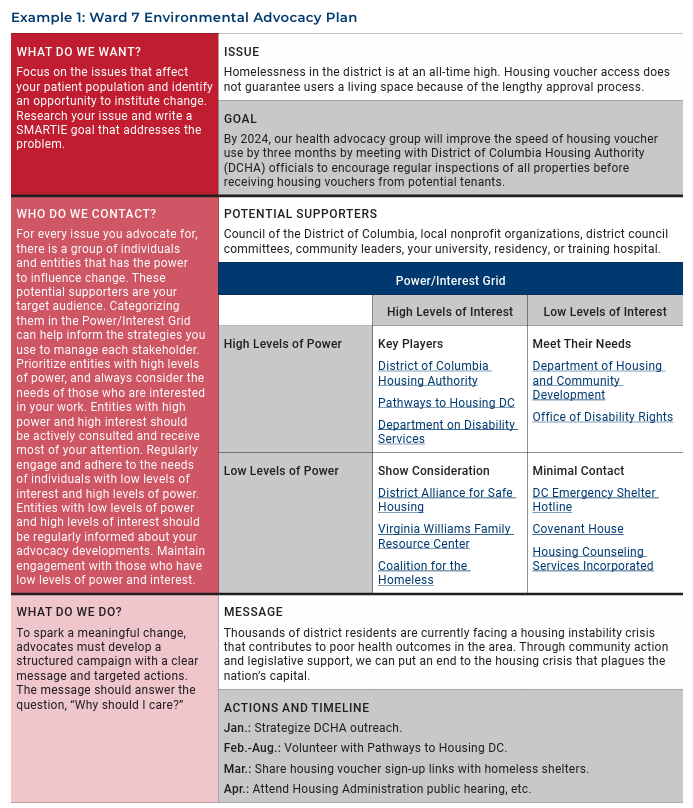
The AAMC’s new advocacy toolkit is central to the organization’s vision for expanding curricula in political activism throughout the medical field. One panelist explored its potential impact in the classroom or during residency by offering an example from the toolkit that outlined a sample advocacy plan for a physician or resident working with the homeless population. Notably, the scenario did not offer a process by which the reader could create a plan that reflects their own beliefs; instead, the toolkit outlines specific policy positions that the individual should adopt and pursue advocacy toward. The toolkit fails to mention any of the research upon which its policy recommendations are based, relying on an understood acceptance of broad progressive policy frameworks. Consistent with the rest of the panel discussion, there was no mention of the potential for physicians promoting uninformed policy positions to jeopardize the reputation of the medical field.
Figure 1, From the AAMC’s “Advocacy Toolkit for Physicians in Training” (pg. 21).
The latest installment of the AAMC’s IDEAS Learning Series is a testament to the arrogance of their ideological position. Even discounting legitimate questions about the place of politics in the medical field in the first place, the AAMC further failed to offer a nuanced discussion free from political presumptions. Moreover, the AAMC’s advocacy toolkit serves more as a manifesto than as a resource guide.
https://donoharmmedicine.org/wp-content/uploads/2024/03/shutterstock_2370239265-scaled-1.jpg16132560Laura Morganhttps://donoharmmedicine.org/wp-content/uploads/dono-logo.pngLaura Morgan2024-03-07 14:44:002024-03-07 14:44:00AAMC Unveils DEI Manifesto for Medical Students
Dr. Tabia Lee was hired to lead the DEI department at De Anza College. Within two weeks, she was called a “dirty Zionist” and “the wrong kind of black person” for trying to create an inclusive environment for everyone, including Jewish students. In 2023, Dr. Lee was fired from her tenure-track position. She’s now an advocate for removing toxic DEI initiatives from higher education.
https://donoharmmedicine.org/wp-content/uploads/2024/03/DNH-Podcast-Graphic-General-1.png10801920rededge-rachelhttps://donoharmmedicine.org/wp-content/uploads/dono-logo.pngrededge-rachel2024-03-06 14:50:002024-03-06 14:50:00S2E8: Dr. Tabia Lee on being fired from a college for being the “wrong kind of black woman”